New tools allow users to modify and load modified VBIOS on GeForce RTX GPUs without flashing

The screenshots show how it works in practice. On what appears to be an RTX 5090 Founders Edition ROM, the card’s power cap increased from 600W to 700W and the NVVDD and MSVDD voltage caps increased from 1,110mV to 1,150mV. An RTX 4090 ROM had its power cap increased from 666W to 750W and its base offset range doubled to +2000MHz, and nvidia-smi later confirmed that this card’s power cap increased from 550W to 671W. Apparently an RTX 5090 hit 800W, an RTX 5080 went from 360W to 500 W and an RTX 5060 Ti from 185 W to 300 W according to the developer’s own tests. The RTX 40 laptop GPUs cannot be changed yet and memory timings cannot be changed since the card reads them directly from the flash chip.
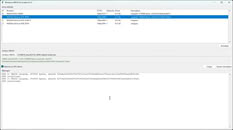
The Windows Loader needs driver 616.56 or newer, which is interesting because NVIDIA disabled the RTX 50 power limit unlock from mVolt+ with a driver update in August. The loader even writes the same register values that mVolt+ uses to load a VBIOS, and it’s unclear if NVIDIA plans to close this route as well. Both loaders are open source, although the publisher’s GitHub page lists them as closed-source binaries. Increasing the power and voltage limits also carries real risk, and readers attempting this are advised to keep a copy of their original ROM and test on a GPU that does not drive the display.
Gn tech