
New York horse-drawn carriage ban: Mamdani and council reach agreement to end rides

new York
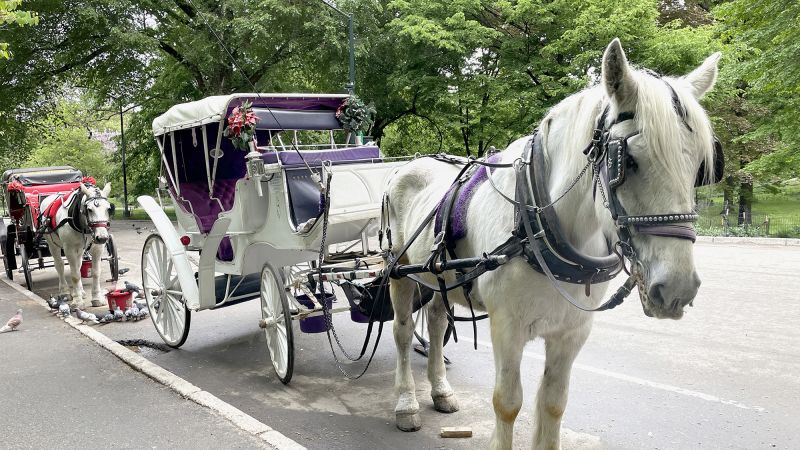
New York’s Central Park’s iconic horse-drawn carriage industry is coming to an end after Mayor Zohran Mamdani and City Council Speaker Julie Menin reached an agreement on legislation to abolish horse-drawn carriage rides.
Menin is expected to bring the bill to the council for a vote later this month, a spokesperson told CNN. The ban, which will be implemented in stages, will take effect on June 1, 2028, according to a copy of the legislation reviewed by CNN.
The move follows years of criticism from animal rights activists, who accuse the horses of being overworked, easily frightened and living in inadequate stables with drivers who flout city regulations. Horse and carriage owners have denied the allegations, arguing that the animals are well cared for and the stables are up to standard.
“We have worked closely with the City Council, labor partners, horse-drawn carriage drivers, animal welfare advocates and community leaders to ensure a just transition that protects workers while ending horse-drawn carriages in Central Park once and for all,” City Hall spokesperson Sneha Choudhary said in a statement.
New Yorkers for Clean, Livable and Safe Streets, a group that has advocated for the ban for several years, along with two city governments, said the agreement would finally put an end to “cruel and dangerous horse-drawn carriages.”
“This moment belongs to the advocates and supporters who have spent years fighting alongside NYCLASS to protect horses and people on the streets of our city,” Edita Birnkrant, executive director of NYCLASS, said in a statement.
Momentum to ban the century-old attraction was renewed after the death of 18-year-old tourist Romanch Mahajan, who was killed after being thrown from a runaway horse-drawn carriage in Central Park last summer.
Mahajan would be the first person to die in a car crash since the rides were introduced more than 150 years ago, according to the industry union and the Central Park Conservancy, which manages the park.
“The tragic and preventable death of 18-year-old Romanch Mahajan made it clear that the status quo is no longer acceptable,” Menin said in a statement. “Horse-drawn carriages have long been a part of New York City’s history, but in an increasingly crowded Central Park, this tradition has become a growing public safety issue. Next week, the Council will take decisive action by passing the Romanch Act to protect New Yorkers, visitors and the horses themselves.”
Councilor Chris Marte, the bill’s lead sponsor, told CNN the bill currently has 29 co-sponsors. Marte said he expects the bill to pass the council and receive a majority of votes.
Marte said last-minute negotiations between the City Council and City Hall also resulted in a provision outlining what will happen to the horses once the industry is eliminated. Horse owners will be required to notify the Mayor’s Office of Animal Welfare before disposing of the animals, and the bill explicitly prohibits horses from being sold or transferred for slaughter or use in another horse-drawn business.
The decision to ban the practice is a blow to Transportation Workers Union TWU Local 100, the union that represents horse-drawn carriage drivers. The union has been saying for years that its workers will be left without a way to earn a living. In recent years, as industry criticism has intensified, the union has stepped up training and safety measures for drivers.
“Council Speaker Menin’s bill does not provide any significant economic aid to workers. It only says that the city should prepare a transition plan for workers by April 2027 and include weak measures like job fairs and employment counseling,” Transport Workers International Union International President John Samuelsen said in a statement. “Council President Menin used the tragic death of a tourist to provoke a public safety crisis. This is shameful political opportunism, and Zohran should not just accept it, especially when the livelihoods of immigrant families are destroyed. This whole situation is reprehensible.”
As part of their negotiations, Mamdani and Menin also reached an agreement to include an “industrial transition framework,” a Menin spokesperson told CNN. The framework will require the city to develop a plan to help workers transition to new jobs.
According to a copy of the legislation reviewed by CNN, Mamdani will designate a city agency to implement the transition and offer potential jobs and training in different agencies, including the New York Taxi and Limousine Commission, the MTA, NYC Transit, the Port Authority and the hospitality and tourism industries.
Correction:
An earlier version of this story misspelled Mayor Zohran Mamdani’s first name.
This is a developing story and will be updated.
Gn headline


