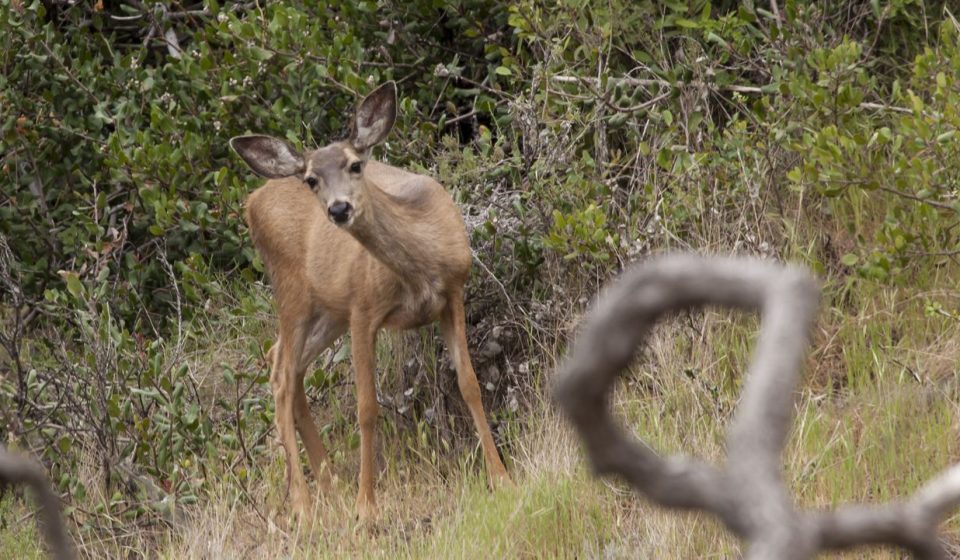
For the first time since 2005, a wild deer has been found to have chronic wasting disease (CWD). Although this case originated in Livingston County, the New York State Department of Environmental Conservation is warning hunters to be careful.
The towns of Conesus, Groveland, North Dansville, Sparta, Springwater and West Sparta are all in a containment zone for at least the next five years. The DEC says it could expand or add containment zones depending on the location of any new positive samples.
All hunters who hunt deer in the containment zone must submit tissue samples from the deer to the DEC for CWD testing. Collection stations will be available at the following locations starting November 12:
- Beckers Meat Processing11789 Schrader Road, Wayland — 585-303-0746
- Piggy Pete’s (Processor)9730, chemin Whiteman, Dansville — 585-991-8011
- Wester’s Deer Transformation54 rue Franklin, Dansville — 585-519-7036
- Earner’s Deer Transformation70, rue Ossian, Dansville — 585-447-8114
- Robin Coombs (processor)10926 Pfaff Hollow Road, Wayland — 585-728-3979
- Taxidermy Ridge Runner6737 Wrights Road, Wayland — 585-376-4283
- Finger Lakes Taxidermy11638 Reservoir Road, Wayland — 585-213-0931
- Brian Pragle’s Custom Carpentry and Skull Brackets1130, chemin Lemon, Dansville — 585-329-5579
Here’s what to watch out for: In the later stages of the disease, a deer may be extremely thin and out of shape; this may include drooling, walking in circles, or keeping your head down. But CWD is a slow-growing disease. Deer may appear healthy when shot.
The DEC says New York’s deer hunting industry is worth more than $1 billion. This is why the agency takes this epidemic extremely seriously and calls for vigilance and cooperation.
“So our first step will be to determine the extent of the outbreak and the prevalence of CWD in wild deer,” said Brendan Quirion, section leader of DEC’s Big Game Unit. “From there, we will determine the next management actions. This could include reductions in the local population to ensure prevalence remains low, or ensuring the spread of the disease is limited as much as possible.”
After hunters kill a deer, many of them take it to game processing centers. However, some no longer accept deer from the confinement site.
“That’s the one thing I look forward to more than anything else is going out hunting with my buddies and stuff and being in the woods,” said hunter Alan Paul.
Paul has been hunting deer since he was a teenager and explains his reaction to news of the discovery of chronic wasting disease in a Livingston County deer.
“I was even more surprised that they found it because I didn’t even know the DEC was testing it elsewhere,” Paul said.
“With CWD, we are very, very concerned about its potential presence in the state,” said Jim Farquhar, chief of the DEC’s wildlife office. “The good news here is that we hope that our detection may have been early, and if it is detected early, there is a chance that we can manage the disease or potentially even make it disappear in the state.
“This is where we skin, and then we cut here,” Joe Payne said.
Payne is the owner and deer butcher at Payne’s Processing.
“So we bring them over here and hang them on the wall over there,” Payne said. “And then they’re broken down into smaller pieces and then ground up. And then it’s all put in the package and vacuum sealed and then put back in the freezer.”
But Payne will refuse any deer from the DEC containment zone. The DEC says it prohibits the movement of deer outside the area to allow testing of as many deer as possible.
“As a collective, it will work a lot better for everyone if everyone respects it and tries to work with the DEC,” Payne said.
Paul hunts primarily in Steuben and Tompkins counties and consumes his catch.
“I’m more worried about a tick bite and Lyme disease…I’m not worried about venison,” Paul said. “I’m not in any way, shape or form until they can show the connection between something happening in a human and the deer itself. That doesn’t worry me. And if I get killed by a deer, it’ll probably be a good reward for anyone I’ve ever captured.”
The New York State Department of Agriculture and Markets detected CWD in a captive deer herd in Herkimer County in 2024. But the Livingston County case is the first case of CWD in a savage deer in New York State since 2005.
If you have hunted in the containment zone and your deer tests positive, you will be contacted and asked to surrender the game. You will receive a replacement carcass tag for the deer.
The DEC says there have been no known cases of hunters or other people getting CWD. But the CDC says you shouldn’t eat venison from a deer with the disease.
If you are not in the containment zone, but believe a deer may need to be checked, you are asked to report any sick or dying deer to the DEC. If you harvest a deer outside of the containment zone, you can pay to have it tested at Cornell University.
The DEC will host a virtual information session to discuss the disease and its future management, as well as containment plans. This webinar will take place on November 17 at 7 p.m. There will also be in-person public outreach in Livingston County.
Gn Health