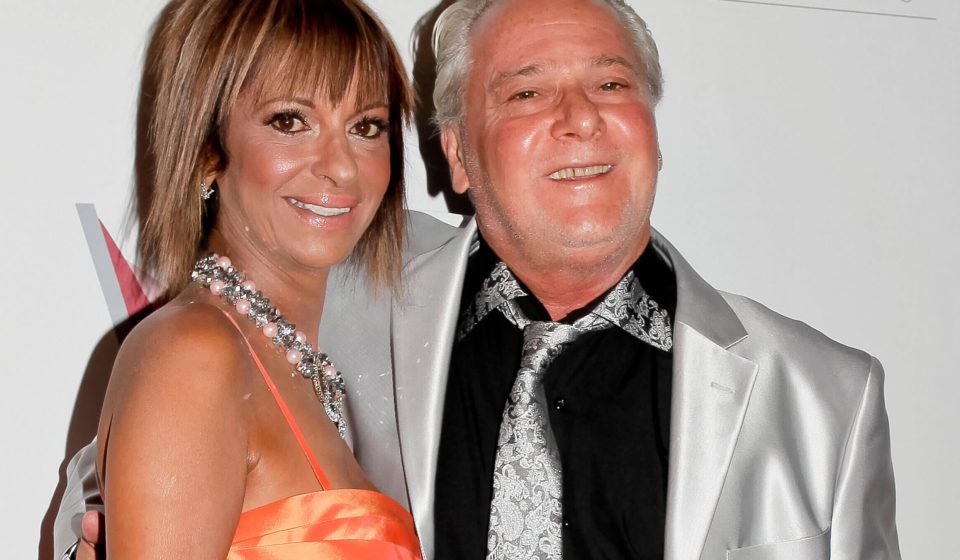


Daphna Weingarten and Eli Weingarten, co-owners of Mazal Brands, at a launch party for one of their skincare brands in 2012. Photo by Tibrina Hobson/Getty Images
By Louis Keene
October 16, 2026
They’re common in American malls across the United States: skincare kiosks manned by charming Israeli salespeople. For American Jews, they can be a place to practice Hebrew, greet expats or play Jewish geography.
But for hundreds of shoppers, an experience that started with a smile and a free sample at one of those kiosks ended in thousands of dollars in unauthorized credit card charges, according to an investigation published Monday by NPR.
Drawing on court documents, online reviews, consumer complaints obtained through the Freedom of Information Act and interviews with more than 50 customers, NPR linked the apparent fraud to the Mazal Group, a conglomerate of dozens of skin care brands owned by Eli Weingarten and Daphna Oded Weingarten, an Israeli-American couple living in the Los Angeles area.
Many of the company’s alleged victims were elderly, disabled or vulnerable to exploitation, NPR reported.
NPR has reported cases of overcharging and forced purchases at thousands of independent kiosks, stores and spas selling Mazal products across the country. An elderly man with dementia in Michigan was unknowingly charged $42,000 for skin care products and devices, NPR reported; In Hawaii, a disabled woman filed a complaint with the state that a spa salesman took her walker and refused to let her leave for hours until she spent $2,600, NPR reported.
A similar pattern was discovered by the FBI in kiosks connected to Mazal a decade ago – which the agency called a “credit card overcharging scheme.” That investigation resulted in more than a dozen guilty pleas and prison sentences for two traders, Shai Cohen and Omer Gur. Today, the company has contracts with some 2,000 stores worldwide, according to a former employee cited by NPR, although the exact number is unknown.
Mazal Group, headquartered in Chatsworth, Calif., responded to NPR’s questions by shifting responsibility for overcharging to individual store owners — but as the story was about to be published, the company terminated its own business license. Today, their headquarters bears the logo of Innovation Brands Inc., a company founded by the Weingartens in 2024.
Mazal led dozens of skincare brands, including Voupre, Avinichi, Introstem, CbGäRDN, Venofye, Lionesse and Orogold Cosmetics.
Although the kiosks are independently owned – sometimes bearing the names of these brands – NPR obtained documents showing the Mazal Group’s aggressive price recommendations, sometimes with markups of more than 100 times the wholesale price.
For example, the company suggested selling Voupre’s Cannabis Caviar Transformative Mask for $3,000, or 130 times the wholesale price of $23. Luxury skincare brands rarely stretch the suggested retail price up to 20 times the wholesale price, according to a retail expert cited in the article. The products themselves would have no price tags, making it easier for customers to be charged at checkout, former employees told NPR.
But NPR also said the makeup itself was a defective product whose labels may have falsely advertised its contents. Lab tests funded by NPR showed that a Mazal anti-aging cream called Voupre Anti-Aging Rescue Solution, which claimed to contain vitamin A and vitamin E, appeared to contain neither.
Another element of the investigation concerned immigration fraud. According to former employees, many of the kiosk vendors were Israelis living in the United States on tourist visas – a direct violation of visa terms, which prohibit performing work or services for compensation. When an NPR reporter posing as a potential employee messaged a recruiter asking if she was OK if she only had a tourist visa, the recruiter reportedly said yes.
Mazal Brands could not be reached for comment.
We believe there should be no barriers to quality, independent Jewish news. That’s why we invite millions of people to read and share our journalism without paywalls or subscriptions.
But did you know that only 2% of Before readers donate to support us?
While the Before is free to read, it is not free to produce. Big stories — like in-depth data analyzes on anti-Semitism, political scoops, or reporting trips to college campuses — require months of research and fact-checking. While keeping you informed of what you need to know every day.
Reader support is the only way we can do this work. If you find value in what we do, please support our nonprofit newsroom.

Gn bussni