


A Valar Atomics microreactor is seen on a C-17 aircraft, without nuclear fuel, at March Air Reserve Base in California, February 15. The reactor was transported from March Air Reserve Base to Hill Air Force Base in Utah.
Matthieu Daly/AP
hide caption
toggle caption
Matthieu Daly/AP
A startup whose founder pledged to “make nuclear great again” plans to install hundreds of reactors on federal lands in Utah, according to documents reviewed by NPR.
Valar Atomics is planning what it calls “Project Beehive” on more than 9,000 acres of land owned by the Bureau of Land Management near Price, Utah. The facility would include data centers and some 456 small nuclear reactors, as well as a nuclear fuel production facility and others for storing nuclear waste, according to a company proposal to federal regulators.
In total, the reactors would produce about 9.6 gigawatts of power for data centers and even more thermal heat for other industrial applications. Currently, the entire state of Utah produces on average only about 4 gigawatts of electricity (although peak capacity in the summer can reach about 10 gigawatts).
The project schedule calls for non-nuclear construction to begin at the end of this year, with the first reactors commissioned during 2028.
Valar also sought to use about 650 acres of state land in the same project, according to state records. THE Salt Lake Tribune first reported the project’s use of state lands last week, but not the much broader proposed use of federal lands.
The project has alarmed local activists, who already face a slew of data center proposals in the state.

“It is concerning to see that the Trump administration, with the support of the state of Utah, is moving forward with this project on a significant amount of public land,” said Neal Clark, wilderness director at the Southern Utah Wilderness Alliance, a Utah-based nonprofit that seeks to protect public lands.
“The coalition of people concerned about these things completely cuts across political lines,” added Lexi Tuddenham, executive director of the Healthy Environment Alliance of Utah, which has tracked nuclear-related industries in the state. Tuddenham said his main goal right now is to raise awareness. “The most important thing we can do now is let people know.”
In a written statement, the Utah office of the Bureau of Land Management confirmed it received a request from the company.
“We are currently reviewing the application to ensure it is complete,” he told NPR in an email. As the application progresses through the process required by the National Environmental Policy Act, “we will ensure that the public has meaningful opportunities to provide feedback,” he adds.
Valar did not immediately respond to NPR’s request for comment. In an interview with NPR in July, Valar CEO Isaiah Taylor said his company was committed to safety and community engagement. “We’re doing it responsibly and responsibly to this community,” he said of a smaller test reactor the company operated in a neighboring county.
Small reactors, big project
The Beehive project reveals the scale of the ambitions of a new generation of companies considering a return to nuclear power. The companies are backed by the Trump administration, which has passed a series of regulatory reforms over the past year and a half to make their “small modular reactors” easier to test and build.

Valar Atomics CEO Isaiah Taylor (right) and Secretary of Energy Chris Wright (left) stand behind President Trump as he makes an announcement on U.S. nuclear innovation on July 24. Valar has been both a supporter of nuclear regulatory reform and a beneficiary of changes made by the Trump administration.
Eric Lee/Getty Images
hide caption
toggle caption
Eric Lee/Getty Images
Valar was both closely involved in and benefited from these reforms. Taylor was in the room when President Trump signed a series of executive orders last year aimed at accelerating the development of nuclear power, and his company was accepted into the Department of Energy’s reactor pilot program in August 2025. Last February, the U.S. military flew the Valar test reactor from California to Utah aboard a C-17 transport plane.
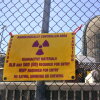
The reactor, known as Ward 250, received early approval this year after the Energy Department carried out a quiet overhaul of its internal safety and security regulations for nuclear reactors. It reached its critical level by reaching a self-sustaining nuclear reaction in June, in a tent-like structure in the Utah desert, about 30 miles from the Beehive Project site.
At a press conference on July 1, the company took the next step in using the 250 district to generate electricity. Taylor powered up the test reactor and used a simple thermoelectric system to operate a single Nvidia chip.
“Ladies and gentlemen, Valar Atomics has just become the first startup in history to produce nuclear electricity here,” he told the crowd.
The scale of the Beehive project far exceeds that of the July demonstration. Since the turn of the century, the United States has commissioned only three new nuclear power plants, producing a total of about 3.4 gigawatts of electricity. These reactors are much larger than the small modular reactors Valar plans to use, and each costs several billion dollars to build.
Valar and other companies hope to disrupt the nuclear business model because the small reactors can be mass-produced and placed in series, like a set of nuclear batteries. Valar’s 25-megawatt power units could be installed one at a time, allowing the Beehive project to be built in phases over several years. This would reduce costs and allow the site to come into operation relatively quickly. The full site could be completed by 2032, according to a document reviewed by NPR.
Tuddenham said she believes the use of federal land for such a project is unprecedented. “In this case, I think it goes beyond the local community,” she said. “If we have facilities like this on public lands for waste storage, for massive nuclear development, for data centers, that will have huge implications for how public lands are used.”
NPR’s Shannon Bond contributed to this report.
Contact Geoff Brumfiel on Signal at gbrumfiel.13
Gn headline