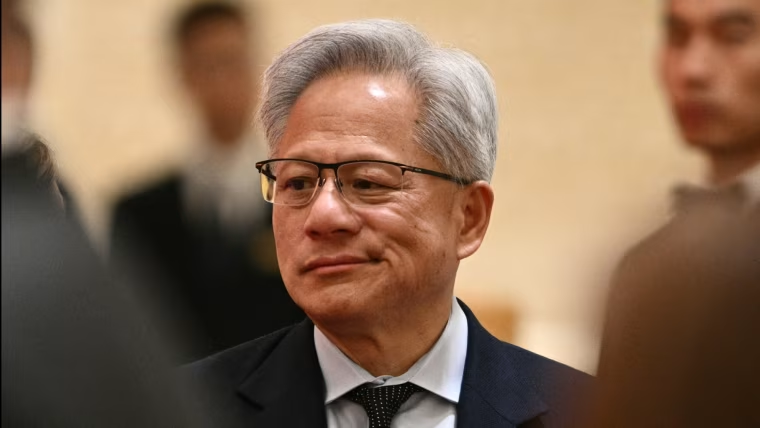
Major stock indexes closed slightly lower after it was announced that Jensen Huang, one of the most important leaders of the AI boom, would resign effective immediately from his position as CEO of Nvidia.
After plunging as much as 16%, Nvidia’s stock ended the day down 4.3%, as the company and investors grappled with multiple scandals that engulfed its co-founder and now former CEO, Jensen Huang.
Throughout the day, the company was among the biggest decliners on the Nasdaq and S&P 500 indices. This was the biggest decliner on the Dow Jones.
Without a formal succession plan, Nvidia, which designs the chips that power the entire AI sector, has been plunged into crisis. This is a pivotal moment for AI, as Anthropic prepares for its potentially $1 trillion-plus IPO next week.
Anthropic relies heavily on Nvidia’s chips and has signed hundreds of billions of dollars in deals with cloud providers to lease them.
Nvidia has named its longtime CFO as interim leader. Huang’s departure from Nvidia came after a New York Times report indicated that the CEO had a relationship with an Nvidia executive who reported to him.
This follows his admission Sunday that he was “unfaithful” to his wife, an announcement that came after the Financial Times reported Saturday that Huang had a relationship with a businesswoman who a source told NBC News was a Chinese spy.
There are few companies as important to the artificial intelligence sector as Nvidia.
“We are probably the only AI company in the world that works with all the AI companies in the world,” Huang told Bloomberg in an interview in October.
As reports swirled around Huang this week, Nvidia shares plunged, wiping out about $500 billion in value. Nvidia’s total market value fell below $4 trillion for the first time since 2025 in early trading. He finished the day barely above that level.
The news about Huang, a confidant of President Donald Trump, also raises the prospect of tighter regulation of the chip and AI sector, which could put further pressure on stock indexes, fueled for years by the boom in AI stocks.
“In total, given national security concerns, we believe the risk of more restrictive guidance on direct or indirect shipments to China has increased,” JPMorgan analysts said Thursday before Huang’s dismissal.
Industry experts widely believe that American leadership in AI rests with Nvidia. This too could be called into question.

“We hope the (Nvidia) team maintains its leadership in AI,” the JPMorgan team said, while cautioning that “history has shown that one misstep in execution often leads to more.”
“Maintaining flawless execution” will be critical for Nvidia and the industry going forward, they said.
News from cloud AI startup Nebius, which announced it beat profit expectations, also put pressure on stock indexes. But the company also gave disappointing guidance to investors.
Investors are nervous about AI-related companies, especially smaller startups, given that they need tens of billions of dollars to run their data centers. Overall, the industry has invested hundreds of billions of dollars in developing AI systems, data centers and equipment, but investors remain concerned about how quickly these investments could bear fruit.
Nebius shares fell 17%. Its data center peer CoreWeave also fell 7% after a sharp rise on Wednesday.
Both companies’ suppliers also fell. The Philadelphia semiconductor index fell 0.5%, while an ETF that tracks memory suppliers fell 2.6%.
Gn bussni