Unlock Editor’s Digest for free
Roula Khalaf, editor-in-chief of the FT, selects her favorite stories in this weekly newsletter.
Nvidia has asked its manufacturing partners to stop shipping servers to four Southeast Asian countries, as the United States tightens export controls to prevent China from accessing AI computing power.
Manufacturing partners such as Dell and Supermicro, which package Nvidia’s chips into servers, have told buyers in Malaysia, Singapore, Thailand and Indonesia that Nvidia would not allow their orders to be shipped, according to three people with knowledge of the matter.
It’s unclear whether the shutdown is temporary as Nvidia and its partners try to find a way to comply with Washington’s new export controls, the sources said.
The four Southeast Asian countries have become favored destinations for Chinese AI developers seeking access to Nvidia’s most advanced chips, whose exports are restricted by Washington.
The region is lucrative for Nvidia. The chipmaker reported $104 billion in revenue through its Singapore subsidiary in 2025, an increase of 72% in 12 months, according to company accounts. Nvidia also records some of its revenue in Taiwan and China through its Singapore unit.
Many Chinese groups circumvent U.S. export controls by leasing access through cloud computing providers that buy servers containing Nvidia chips.
The U.S. Commerce Department introduced new rules last week aimed at stopping the practice. The moves came after Jensen Huang was briefly ousted as Nvidia’s chief executive following reports of extramarital affairs, including with a woman linked to a cloud provider that leased access to Chinese companies and who is under investigation for alleged involvement in smuggling.
These revelations complicated Huang’s position that the United States should continue selling Nvidia chips to Chinese companies to increase its dependence on American technology.
Despite Beijing’s efforts to develop domestic alternatives, China’s leading AI labs remain heavily dependent on Nvidia’s processors to develop their flagship models, especially during initial compute-intensive training.
While many hoped that Huang’s return to lead Nvidia this week would pave the way for less strict enforcement of the new rules, there is no indication the company will refrain from enforcing them, the sources said.
The Commerce Department set a 90-day deadline for cloud providers to obtain a license by proving that their end users do not include restricted entities.
“There is this new rule but no guidance on its execution,” said an official at a cloud provider. “No one knows how to apply for this license while the 90-day deadline is running out. This is causing real chaos in the region.”
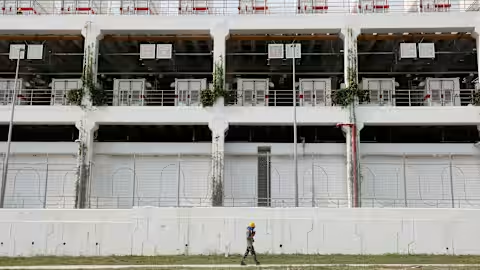
Demand from Chinese tech companies has fueled the data center boom in Southeast Asia, including Malaysia and Indonesia, where billions of dollars have been invested in building AI infrastructure. New US restrictions have put a large part of these investments at risk.
Among those affected was Aolani, a Singapore-based cloud company that planned to provide advanced computing power to ByteDance, TikTok’s Chinese owner, through leasing deals, two of the people said.
This disruption led some bankers who had previously agreed to finance the project to stop issuing credits worth around $500 million and for ByteDance to potentially abandon the deal.
Nvidia declined to comment. Dell, Supermicro, ByteDance and Aolani did not respond to requests for comment.
Additional reporting by Owen Walker in Singapore
Gn bussni