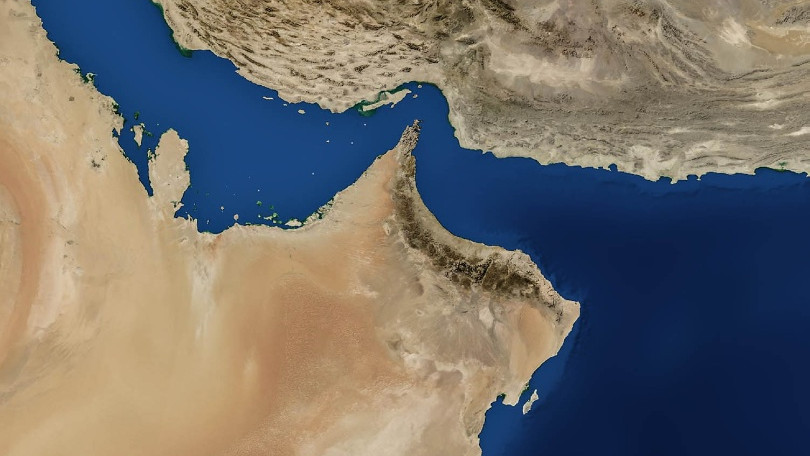

Reports of resuming oil flows into the Persian Gulf and Red Sea have dominated headlines in recent weeks. Yet oil prices have only continued to rise, suggesting that the barrel figures are not enough to convince the world that everything is back to normal. This is not the case.
According to the latest figures from Kpler, total Middle East oil exports in October are actually higher than they were before the United States and Israel launched their first strikes against Iran in late February. Flows out of the Strait of Hormuz alone averaged 11.7 million barrels per day this month, Kpler estimated, up from 9.8 million barrels per day in September, and close to the pre-war average of 14.5 million barrels per day in February, Reuters’ Ron Bousso reported.
However, these numbers are the result of a lot of effort, expense and risk, as reports of a rebound in Persian Gulf oil exports are not the only news coming out of the region. The other major development is the intensification of Iranian strikes against oil tankers. According to UK Maritime Trade Operations data and statements from Iran’s Islamic Revolutionary Guard Corps, at least 25 ships were hit in Hormuz in the first 20 days of October. Yet media outlets tracking these incidents note that many do not report whether they were attacked, for various reasons, suggesting the number could be higher, as many as 40 to 50 vessels. Most are oil tankers. Related: Middle East physical crude falls as Brent hits five-month high
Meanwhile, Kpler itself reported a sharp drop in tanker traffic through Hormuz this month following the strikes. “Crude crossing the Strait fell 27% from the previous week’s war high, to at least 10.1 million barrels per day,” two Kpler analysts reported in early October, when the company counted just seven commodity carriers crossing the Strait on October 6. This is the lowest figure since the end of July, according to analysts.
Additionally, Reuters earlier this week reported at least 18 tanker attacks over the past two weeks, based on Kpler data. The company reported earlier this week that the average daily flow of oil out of the Persian Gulf had fallen to 8.5 million barrels, from “more than 20 million barrels per day” two weeks ago. This is a fairly sharp and deep drop in export rates.
This type of conflicting data from the same sources doesn’t really contribute to a sense of security about the Middle East’s oil supply, especially when reports of strikes against oil tankers are increasing. Meanwhile, much of the oil coming from the Persian Gulf does so via ship-to-ship transfers that have pushed freight rates to record levels and kept them there. The problem has become so serious that President Trump is reportedly considering lifting sanctions on some tankers used to transport Russian oil to address the tanker shortage caused by the expansion of the STS off the coast of Oman.
But that won’t help. Because the supply of so-called ghost fleet tankers is also limited – because they are busy transporting this permitted oil. “Sanctions relief does not equate to immediately usable mainstream tanker capacity,” said Rahul Kapoor, global head of shipping analysis and research for S&P Global Energy, as quoted by Bloomberg earlier this week. “The number of vessels that could realistically re-enter traditional trade would likely be significantly less than the overall sanctioned fleet. »
With all of these factors at play, and with the chances of a U.S.-Iran peace deal as distant today as they were three months ago, it’s no wonder prices are rising – at least in the futures market. In the physical market, prices are actually falling, Bloomberg reported this week. The reasons: this famous rebound in outflows from Hormuz, despite the tanker attacks, and a slight drop in tanker prices, which is a very welcome development.
“There’s still a lot of risk involved. Oil stocks are quite low and it’s hard to see them rebuilding given the current dynamics,” a senior commodities analyst at Marex told Bloomberg. Ryan Fitzmaurice added that there was still hope for a drop in heating demand this winter, if El Niño met expectations. A fall in heating demand, in turn, would provide some relief to prices. Betting on the weather, however, is not the wisest strategy, which is why it is likely that prices will remain high at least until the end of the year.
What the latest developments in the Middle East have shown is that there is always a workaround, even for a serious problem like the closure of Hormuz – but these workarounds come at a price and do not replace the status quo. One way or another, the world is adapting to this new energy security situation. In reality, he has no other choice.
By Irina Slav for Oilprice.com
More important reading on Oilprice.com
Gn bussni