Skip to content
-
Subscribe to our newsletter & never miss our best posts. Subscribe Now!
Today's News. Tomorrow's Perspective. Today's News. Tomorrow's Perspective.

Deliver fast, factual, and easy-to-understand news covering global events, technology, business, science, AI, health, entertainment, and lifestyle.

Today's News. Tomorrow's Perspective. Today's News. Tomorrow's Perspective.

Deliver fast, factual, and easy-to-understand news covering global events, technology, business, science, AI, health, entertainment, and lifestyle.

  • Home
  • Breaking News
  • Business
  • Sports
  • Health
  • Politics
  • Technology & AI
  • World
  • Home
  • Breaking News
  • Business
  • Sports
  • Health
  • Politics
  • Technology & AI
  • World
Close

Search

Subscribe
Pedro Almodóvar talks about bitter Christmas and the dangers of autofiction
Entertainment

Pedro Almodóvar talks about bitter Christmas and the dangers of autofiction

remon
By remon
November 14, 2026 7 Min Read
Comments Off on Pedro Almodóvar talks about bitter Christmas and the dangers of autofiction

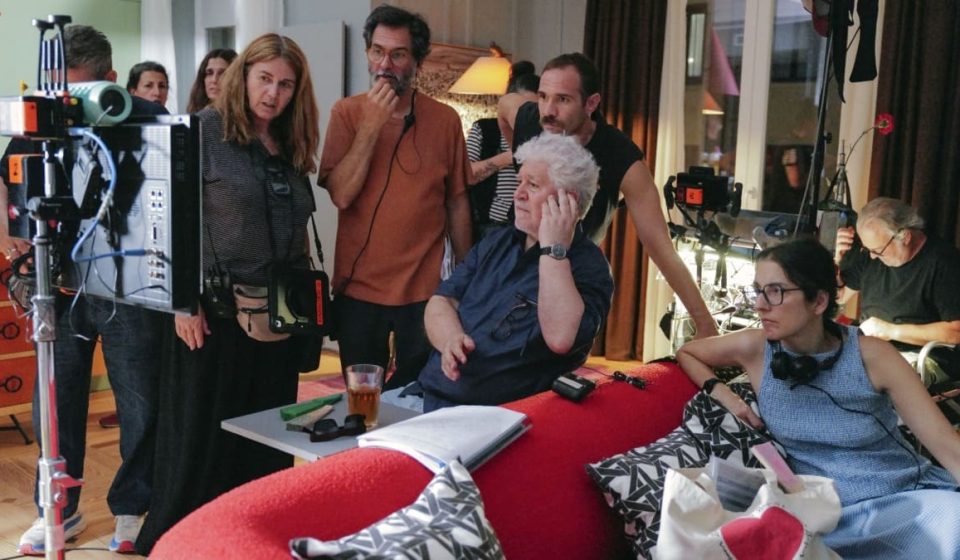
Over the past decade, Pedro Almodóvar has been in a thoughtful mood. He revisited memories of his own career in films like Pain and gloryexplored the trauma left by the Spanish Civil War in Parallel mothers, and, with his last movie, Bitter Christmashe re-examines his own creative process and its capacity to hurt those from whom he draws inspiration. In the process of looking back, he also incorporated different lessons and sources of inspiration from his previous films, creating a self-referential tapestry less directly autobiographical than Pain and glory but just as thoughtful.

Almodovar spoke to The AV Club about Bitter Christmas being the latest film in his series of reflections, the perils of autofiction and learning from other artists like Chavela Vargas and Pina Bausch.

The AV Club: I want to ask about the concept of autofiction in Bitter Christmas. What pushed you to take a closer interest in this creative process which borrows so much from reality and lived experiences?

Pedro Almodóvar: When you talk about fiction, you’re really talking about how you’re going to base your story on real events (and) things that actually happened. Sometimes it’s based on people around you, and you’ll turn those stories into fiction. I have always been someone who was very interested in the origins of creativity. From the moment you sit down at your computer, let’s just say to write, you transform reality into fiction. Autofiction in general is more of the romance genre. In France, there are many authors who work in this genre. In my case, what really draws me to the genre is the question of (whether) there are moral limits to what you can adapt into a fictional story. Once you start writing and you find the idea that’s actually going to resolve the story you’re working on, at that point you hold on to the idea, you develop the idea because the idea itself becomes the most important thing. In this sense, writers are very selfish, because they do not think about the person who could have inspired this idea. In my case it happened maybe two or three times, but I tried not to hurt anyone. I would say that’s the limit I impose on myself.

AVC: Speaking of these limits, a character from Bitter Christmas pushes back and accuses the writer of a kind of vampirism for having taken details of his life and integrating them into his story. How did you frame this side of the argument, that people feel exposed and have their lives used as inspiration for someone else’s art?

PENNSYLVANIA: This happened about an hour after I started writing the script. This idea came to me that a character was literally going to confront the writer about what he was doing. If you like an interesting exercise in dramaturgy and the development of a narrative where the writer draws on that inspiration to construct their story, it’s not something you see so often in cinema. It’s something more theatrical, like that of Luigi Pirandello Six characters in search of an author. I found this very exciting because I didn’t want to be complacent with myself. So, Monica (in Bitter Christmas) here becomes a character who criticizes the author in a way that I would criticize myself.

AVC: So many Bitter Christmas revisits themes and collaborators, like Chavela’s music, from your previous films. How did you decide what you were going to include in the plot of your latest film?

PENNSYLVANIA: Obviously, this film is most similar to Pain and glorywhere we have a director who is also in pain, but it’s physical pain. He had back surgery. He has other illnesses. In this particular film, the pain is more of a moral pain. It’s a heartache because you have a writer-director who’s not happy with what he’s doing. Just like me, he needs to be passionate about what he’s writing, and he doesn’t feel caught or gripped by the story he’s writing. This causes him great agony. His assistant has a line in which she tells him, “We’re all losers here and you in particular have lost your grace.” » In this case, by grace she means something like inspiration. She said to him, “I can imagine how painful this is for you. »

These two directors are similar in this sense. They also look alike because they also look like me and each of them reflects a part of my own story. In the case of Chavela’s songs, which also recur in other films, in this case, Chavela’s song actually causes a change in the character listening, who decides at that moment to leave her husband. Another theme that we see in the film, I would go back to my first film, Pepi, Luci, Bomand it has to do with what I would call a kind of sisterhood, the relationships between female female characters, especially female characters dealing with pain. In this particular film, Elsa provides some sort of shelter or some sort of blanket to her friends who are suffering. This kind of sisterhood is something I have experienced since I was a child. I have always seen women talking to each other, helping each other, solving their problems, like (in) All about my mother.

AVC: Your films are also known for their bright colors, but each color palette is altered ever so slightly, so they each have their own identity that is reflected in the production design, the costumes, and even the makeup and the way the women wear their hair. How did you find the visual identity of Bitter Christmas?

PENNSYLVANIA: One of the key elements of the film was the island of Lanzarote, with its black volcanic sand, where my characters go to hide or perhaps even say goodbye to life. This black sand envelops my three female protagonists and is like a character in the universe of the film. Other than that, I approached the other colors quite intuitively. Red, of course, is a color that appears a lot in my films and has multiple meanings in Spanish culture. I intuitively change colors almost as if I were a painter, but I am a painter working in three dimensions. For example, I will first choose the color of the floor, floor, and then the color of the walls. Then I could ask for a particular piece of furniture to be brought. I’m a nightmare for my art directors because it’s maybe five different pieces of furniture that I request. Then, I bring in my actress already made up, dressed and done. I also try her in different dresses, makeup and hairstyle.

AVC: You were inspired by musicians like Chavela, dancers like Pina Bausch and many other artists. How do you continue to find inspiration and incorporate it into your work?

PENNSYLVANIA: I find all these inspirations by chance. You suddenly hear a song and you love it, it inspires you. This was the case with Chavela. With Pina’s case, it was a special case. I was already waiting for it when I found it because I had already finished the scenario of Talk to himand I needed something moving to include at the beginning of the script because my script started with two men watching a stage show. One of them began to cry and the other looked at him in surprise and marveled at the fact that the man was crying. I also needed something that would make me cry. The script being finished, I was looking for this scene. I went to flamenco shows. I went to different types of theater. For three months I was looking for something. And suddenly, Pina Bausch came to Madrid to present Café Müllerand I realized that it was exactly what I was looking for because I was very moved. The show actually moved me to tears. The women, the dancers, who are in a way like sleepwalkers in the theater, have become for me like a metaphor for women (in Talk to him) who are in a coma. That’s how you find things by chance.

In Chavela’s case, it had been 25 years since she was on stage due to a single drunken episode, according to her. But she had returned to singing and no one really remembered who she was at that point. The people who were going to run the show asked me if I was willing to pitch her, that if I was willing to pitch her they would hire her, and that’s what I did. Then I came into very direct contact with Chavela, and just like with Pina, it became an essential life lesson for me. In Chavela’s case, she sang about abandonment in a way that I think few people – or anyone, perhaps – have sung about. I also really admired her bohemian lifestyle, where she was free in her way of being. She and Pina became my teachers.

AVC: Are you looking forward or looking back for your next project?

PENNSYLVANIA: I’m going to stop looking inside myself. I’m not going to write about any directors. I’m going to leave my house. My next one, which I have almost finished making, will be very different from the previous two. I can’t wait to get out of myself, get out of the house and take care of things that have nothing to do with myself.


Gn entert

Views: 3
remon
Author

remon

**Remon** is a staff writer at **DailyVoxa**, covering world news, business, technology, artificial intelligence, and emerging global trends. He is dedicated to producing accurate, timely, and informative journalism that helps readers understand the events shaping today's world.With a strong commitment to fact-based reporting, Remon researches multiple credible sources, verifies information carefully, and presents complex topics in a clear and engaging way. His reporting focuses on delivering balanced coverage, meaningful context, and practical insights for a global audience.As a member of the DailyVoxa editorial team, Remon follows the publication's Editorial Policy, Fact-Checking Policy, Corrections Policy, and Ethics Policy. Every article is reviewed to ensure accuracy, transparency, and editorial independence, reflecting DailyVoxa's commitment to trusted journalism.

Follow Me
Other Articles
Presentation: Studio Underd0g Launches 04SERIES Calendar with Smart Weekend Indicator - Monochrome Watches
Previous

Presentation: Studio Underd0g Launches 04SERIES Calendar with Smart Weekend Indicator – Monochrome Watches

Putin's grandson banned from using his name due to irony
Next

Putin’s grandson banned from using his name due to irony

Deliver fast, factual, and easy-to-understand news covering global events, technology, business, science, AI, health, entertainment, and lifestyle.
  • About Us
  • Accessibility Statement
  • Advertise With Us
  • AI Usage & Transparency Policy
  • Contact us
  • Cookie Policy
  • Corrections Policy
  • Meet Our Team
  • Privacy Policy
    • Disclaimer
    • DMCA & Copyright Policy
    • Editorial Policy
    • Ethics Policy
    • Fact-Checking Policy
  • Terms and Conditions
Copyright 2026 — Today's News. Tomorrow's Perspective.. All rights reserved.