
September 30, 2026, 10:24 p.m. ET
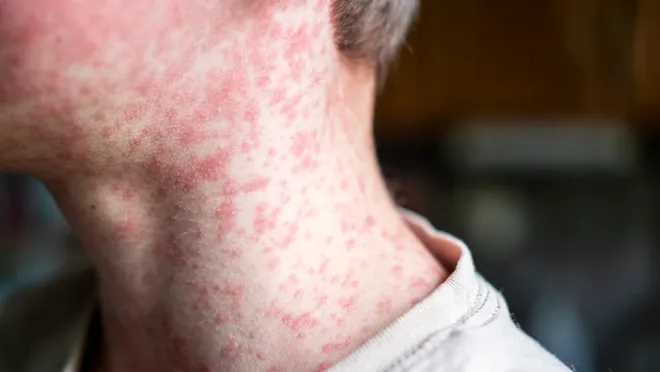
A Pennsylvania resident has died after contracting measles, state health officials announced Sept. 30, bringing the number of measles-associated deaths to five this year as officials grapple with one of the nation’s largest outbreaks.
The Pennsylvania Department of Health said the latest death involved a Lancaster County resident, but it did not release additional information about the case. The five people who died were not vaccinated, according to state health officials.
The latest death comes as Pennsylvania became the state hardest hit by a resurgence of measles in 2026, with 943 cases reported in 39 counties. Nationally, the Centers for Disease Control and Prevention reported 3,659 confirmed cases of measles as of September 24.
The death also adds to an ongoing dispute between Pennsylvania officials and federal health authorities over how measles-related deaths should be defined and counted. The CDC’s national tally includes only two deaths associated with measles in 2026, although the agency has not disclosed which states were involved or when the deaths occurred.

A note on the CDC’s website says the number of deaths “is subject to change” and that the agency “will update its reports as additional information becomes available and relevant reviews are completed.”
Health officials continue to warn that measles — a highly contagious but preventable disease — poses the greatest risk to unvaccinated people, including infants too young to be vaccinated, and can cause serious complications.
Measles outbreak toll rises amid reporting dispute
The latest reported death occurred in Lancaster County, where two measles-associated deaths reported in August were the first in the United States this year. Two more deaths were then reported in Jefferson and Mifflin counties in mid-September.
Pennsylvania continues to report a “measles-associated death” when a person infected with measles dies and meets a set of state criteria. The differing totals reflect a broader disagreement between state and federal officials over how measles deaths should be defined.
Health and Human Services Secretary Robert F. Kennedy Jr., a known vaccine skeptic, has questioned whether Pennsylvania deaths should be included in the CDC’s national tally. Reuters previously reported that Kennedy requested the removal of two Pennsylvania deaths from the federal tally after CDC staff initially accepted the state’s characterization.
Kennedy and Pennsylvania Gov. Josh Shapiro clashed over the state’s reporting of deaths associated with measles. Kennedy accused the governor of “fabricating” measles-related deaths, while Shapiro accused Kennedy of “downplaying the seriousness of measles.”
The CDC then announced that it was now using mortality data from the National Center for Health Statistics for its national tally of measles deaths, rather than relying on state health departments, a change that has drawn scrutiny.
In a Sept. 24 statement, the CDC said it was also working with the Council of State and territorial epidemiologists to establish a standardized definition of measles deaths, with the goal of ensuring consistent reporting across jurisdictions.
Reuters reported earlier this month that Pennsylvania requested emergency aid from the CDC on the condition that the federal government acknowledge the measles-associated deaths reported by the state.
Measles cases rise as vaccination concerns grow
The United States has recorded more measles cases this year than in all of 2025, extending a resurgence that public health experts have linked in part to declining vaccination coverage. There were 2,289 confirmed cases of measles, including three deaths, last year, according to CDC data.
Measles had already been declared eliminated in the United States in 2000, a milestone that health officials hailed as a major public health achievement. But falling vaccination rates in some communities have contributed to new outbreaks.
According to the CDC, about 90% of unvaccinated people exposed to the virus become infected, and about one in five infected people require hospitalization. Young children face some of the highest risks of serious illness and complications.
The measles, mumps and rubella (MMR) vaccine remains the most effective protection against measles. The CDC says two doses of the MMR vaccine are 97% effective in preventing measles.
The measles epidemic grew amid debates over vaccines. Last month, President Donald Trump criticized the combined MMR vaccine and called for it to be split into three separate shots. A Reuters/Ipsos poll released in September also found that Americans’ confidence in vaccines against childhood illnesses, including measles, has declined in recent years.
Health officials continue to emphasize that higher vaccination rates are essential to curbing transmission and protecting those at highest risk of severe illness. Pennsylvania officials said health care providers administered more than 53,000 doses of MMR vaccine in September alone, as concern over the outbreak grew.
Contributor: Mary Walrath-Holdridge, USA TODAY; Reuters
Gn Health