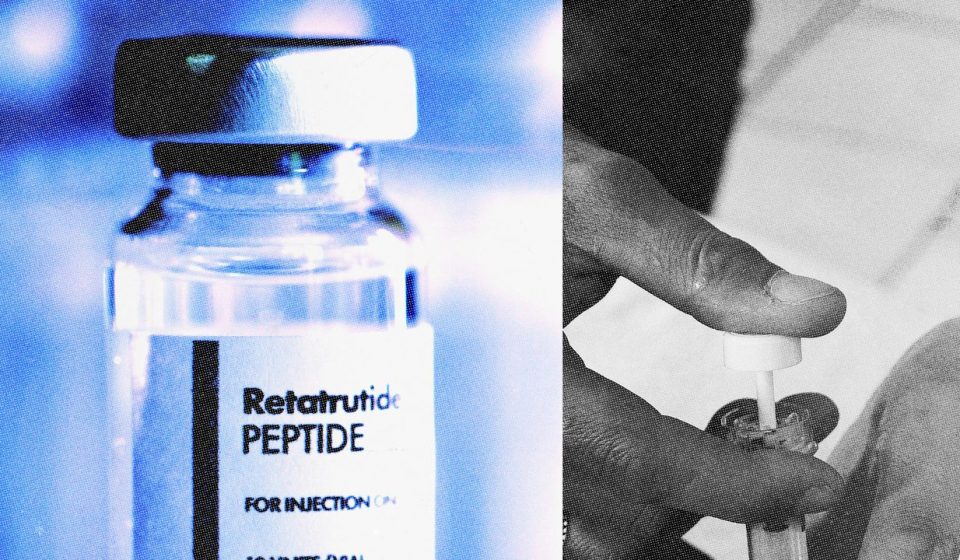
Last February, Health and Human Services Secretary and final boss of MAHA, Robert F. Kennedy Jr., indicated in an interview with Joe Rogan that he intended to direct the FDA to ease restrictions on a handful of peptides that had previously been banned under the Biden administration. The peptides in question, which included influencer favorites BPC-157 and TB-500 (collectively dubbed the “Wolverine stack” for their reported regenerative properties) had been placed on the FDA’s “do not compound” list, effectively banning pharmacies from supplying them to patients, for reasons including serious safety concerns and a general lack of comprehensive human testing. No new research was released to justify RFK Jr’s announcement. Rather, the HHS chief, a self-described “big fan” of peptides, believed the drugs should never have been banned in the first place — a decision he said was responsible for the subsequent explosion of a thriving online black market for peptides. So, for eight months, healthcare professionals have been impatiently waiting for the other shoe to drop.
And then last Wednesday, it hit a thud.
In a seemingly unilateral decision—one that flies in the face of FDA scientists who warned earlier this year about the potential, largely unknown, implications of actually releasing poorly-studied injectables into the wild—RFK announced that patients (or anyone with a prescription) would now have access to six of these previously banned peptides through a loophole-style policy called “enforcement discretion.”
To explain exactly what that means, I called Edgar J. Asebey, a life sciences regulatory and transactions attorney and partner at the Frier Levitt law firm who leads the FDA’s practice group. “I always tell people that I speak three languages: English, Spanish and FDA,” he says. “Enforcement discretion means the FDA won’t enforce a certain regulation. And in this case, it’s the ban on mixing these six peptides. That’s what it comes down to.”
Enforcement discretion is generally seen as a way to break in during an emergency to free up the availability of certain medications when warranted, Asebey explains. “For example, when GLP-1s were in short supply, pharmacies could legally prepare exact copies of Ozempic and Wegovy.” In other words, the six peptides in question – BPC-157, TB-500, MOTS-c, Semax, KPV and Epitalon – are still not approved outright by the FDA for human use, but Kennedy is going to allow pharmacies to dispense them as if they were, until further notice.
While this may seem outrageous, not everyone is outraged. On the one hand, peptides are obviously big business. (Market research firm Grand View Research has valued the global peptide industry at more than $140 billion in 2025, with North America accounting for more than 60 percent of that revenue.) Beyond that, however, one of Kennedy’s stated motivations is to reduce the incentive for people to obtain peptides from regulation-circumventing med spas and the dark corners of the Internet, where substances like BPC-157 can be ordered to your door with the same ease as buying paper towels on Amazon. Since July, the Alliance for Safe Online Pharmacies (ASOP Global) has tracked nearly 21,000 peptide listings across more than 300 websites, including more than 8,800 for BPC-157 alone. As you can imagine, quality and safety present serious concerns for anyone choosing to go this route – that is, beyond the potential risks of using these peptides even in their purest forms – hence the thriving cottage industry of peptide purity tracking and testing services.
Gn bussni