

Updated September 25, 2026 at 7:20 a.m.
What if you could recover from your cycling workouts as quickly as Wolverine, the self-healing super mutant who plays the antihero of the Marvel universe?
It’s the carrot dangling in front of everyday athletes as a hurricane of peptide hype sweeps through popular media.
Peptides – short chains of amino acids – are ubiquitous today. It’s a wellness craze that goes far beyond Fibermaxxing, matcha, or apple cider vinegar.
Bodybuilders and biohackers sing the praises of the famous “Wolverine Stack,” a dual peptide composed of BPC-157 and TB-500, believed to speed recovery and be injury-proof.
Superstar podcasters and hiking influencers are injectables that promise to plump your skin, pump your muscles, and boost your mojo.
Even U.S. Health Secretary Robert F. Kennedy Jr. says he is “a big fan” of peptides, which are now moving toward a regulatory reclassification that will take them out of a shady gray market and into medical prescriptions.
In July, the U.S. Food and Drug Administration (FDA) advisory committee controversially voted against expert advice and recommended easing restrictions on six popular peptides.
It was an explosive decision that could make these so-called wonder drugs even easier for Americans to access. A prescription would be enough.
And for everyone else, untested and unregulated peptides are just a few clicks away.
A basic Google search and your reliable banking details are all you need to get a delivery of injectable BPC-157 and TB-500 – the two pillars of the infamous “Wolverine Stack” – at your disposal. (RIP your algorithm if you try this search out of curiosity, trust me.)
Fast recovery and injury prevention are just a few injections away

Peptides are – in theory at leastt – prohibited for pros. The World Anti-Doping Agency (WADA) banned them in 2022.
But for hobbyists who don’t need to worry about the WADA code?
The promise of peptides to boost recovery is very tempting.
Imagine the gains.
You’ll recover from VO2 Max workouts faster than Wolverine heals his claw tears. You’ll never be injured again, no matter how hard you workout. Hell, you’ll be able to work so hard that you’ll have the same power as Tadej Pogačar.
As a runner and rider who has suffered countless serious bone strains and tendon injuries, I understand the appeal.
Yet these trendy supplements may not be the medical miracle they appear to be.
They have almost no evidence in human clinical trials and their long-term impacts are unknown. Scientists have theories about cancer risk. What about self-injection? Let’s not even look down that rabbit hole.
And possible FDA approval does not guarantee product quality either.
Pharmacology specialists are already warning against authorized drugs that have been poorly synthesized and fear a renewed interest in peptides from dubious and unauthorized suppliers.
Peptides are the health and fitness trend of the moment. FDA approval would add several million additional visits to the #peptide craze.
Here’s what cyclists should know before the hype gets out of control.
What are peptides?
Peptides are short chains of amino acids. Proteins are also made of amino acids, but in longer chains.
Peptides are naturally present in the body and play multiple, sometimes crucial, roles. For example, insulin and oxytocin are natural peptides. They are essential for blood sugar regulation and childbirth, respectively.
Peptides are also produced synthetically for medical purposes.
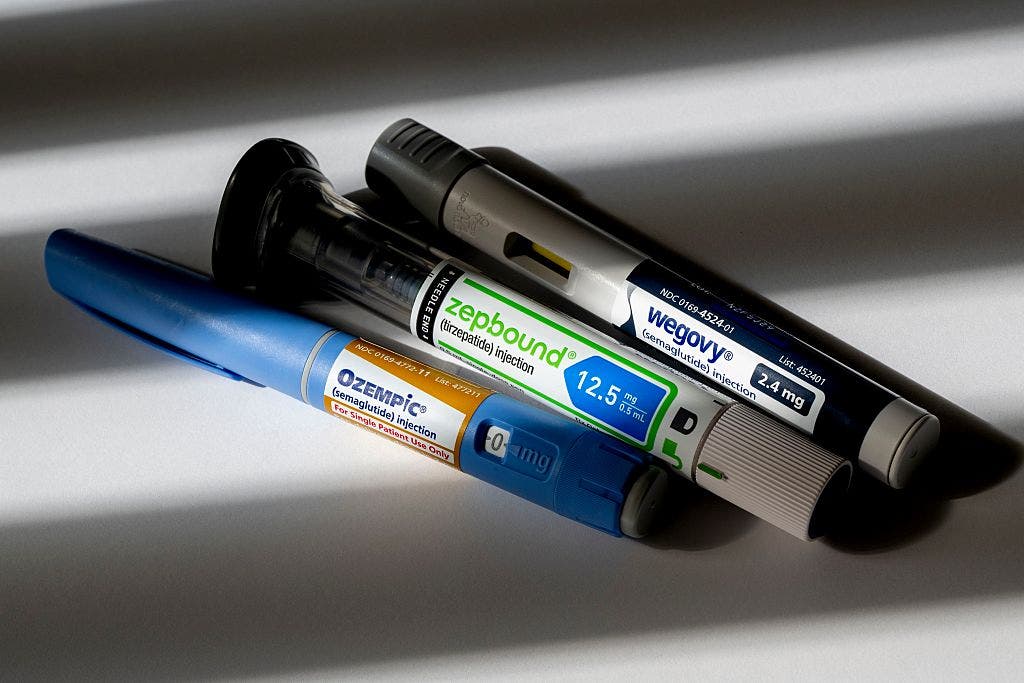
Popular diabetes and weight loss drugs like Ozempic, Mounjaro, and Wegovy (also called “GLP-1”) are the best-known exogenous peptides.
Synthetic peptides like insulin and these GLP-1 treatments have been shown to be safe and effective and are approved by the FDA. They are prescribed by doctors around the world.
But these legitimized drugs represent only a fraction of the peptides available to curious consumers.
BPC-157, TB-500, and the “Wolverine Stack” of healthcare superheroes

There is a growing “gray market” of unregulated experimental peptides that are sold as miracles in bottles. Eternal youth and physical mastery are just a few injections away.
These providers are not licensed, but that’s not a problem: all you need is the “for research purposes only” label to bypass the legal red tape.
BPC-157 and TB-500 – two of the hottest peptides around – fall into this dubious “experimental” category. Other trendy experimental options include MK-677, MKV, and Ipamorelin.
Taken together, the BPC-157 and TB-500 form the “Wolverine Stack” praised by the world’s most controversial podcaster, Joe Rogan. This pair of peptides is the wellness and recovery remedy of every biohacker, looksmaxxer, and gym on the internet.
And it’s easy to see the hype.
BPC-157 is said to promote healing by promoting the formation of new blood vessels. TB-500 is sold as a key signaling molecule for cellular repair.
It’s a combination that almost guarantees superhero status. They speed up recovery and stop the aging process.
“I had tendonitis in my elbow, I started using BPC-157 and it went away in two weeks,” Rogan once said on his podcast.
“It’s a phenomenal stack and it really helps with injuries,” Rogan said more recently of the Wolverine duo.
Where does this peptide boom come from?
Rogan was one of the first high-profile advocates of peptides, back when they were primarily the preserve of bodybuilders and strength athletes.
They are now everywhere on social media.
When GLP-1s started to explode in 2022, these proven diabetes and weight loss drugs brought with them all kinds of stragglers.
Peptides are now making daily headlines in celebrity gossip columns and “manosphere” websites. In fact, analysts recently found that the number of new confirmed PBC-157 users increased 33-fold between 2020 and 2026.
Doping bans and ongoing controversies
It’s no surprise that the peptide craze has also affected global sport. They are a quick way to get quick wins.
Dozens of professional athletes have been criticized for using peptides. Triathletes, cross fitters and volleyball players are among the many professionals currently serving sanctions.
The running world, in particular, has been rocked by scandals linked to peptides.
This spring, Cameron Hanes — a famous podcaster, bowhunter and ultrarunner — sparked a heated ethical debate when he admitted to using BPC-157 while en route to an age-group victory at the Eugene Marathon.
Likewise, former Cocodona 250 ultramarathon winner Mike McKnight is canceled as we speak. He admitted to using BPC-157 during the winter to avoid back surgery, and won the Arizona Monster 300 miler a few months later. Since then, he has been questioned.
There are few reported cases of peptide use in the professional peloton – after all, they are specifically banned by the WADA.
S’annara Grove was temporarily suspended this summer after returning an adverse analytical finding for the popular product Ipamorelin, but she is one of the few to have been found wanting.
Bike We haven’t heard any whispers of peptides in the peloton after asking our reliable sources.
It’s surely a different matter in the amateur ranks.
For some recreational cyclists, peptides are as innocent as a quick fix to an injury that has affected their work and family lives for months.
For the most zealous weekend warriors, the temptation to cheat in the lucrative but largely unregulated and untested gran fondo scene must be strong.
A controversial FDA vote could change everything

Sporting preferences aside, Kennedy and the FDA put peptides in front of everyone this month.
The FDA advisory committee – reportedly influenced by RFK and criticized for its financial ties to the peptide industry – recommended making BPC-157, TB-500 and four other popular peptides (KPV, MOTS-c, Epitalon and Semax) available.
The controversy?
Many longtime FDA scientists opposed the move on the grounds that there is little evidence of their safety and effectiveness.
Evidence for BPC-157, the most popular “performance peptide,” is currently limited to animal studies that have found benefits for soft tissue and bone repair, organ damage, and more.
There have been only three minor pilot studies on human subjects.
And there’s no guarantee that what works on a lab rat will work on a gym bunny.
The United States Anti-Doping Agency (USADA) states that “because BPC-157 has not been studied extensively in humans, it is not known whether there is a safe dose or a way to safely use this substance to treat specific medical conditions.” »
Quality and safety issues
The FDA is not required to act on the advisory committee’s approval vote for peptides. But if that’s the case, licensed pharmacies get the green light to prepare peptides for legal sale.
Compounding pharmacies are typically small-scale, local operations that produce variants not produced by multinational manufacturers. They can be as small as those at your neighborhood pharmacy and they are not regulated by the U.S. government.
Naturally, this makes experts nervous.
According to an in-depth analysis of The guardianThe American team of, compounding pharmacies have always…
News Source : velo.outsideonline.com
Gn Health