Persian Gulf oil flows return to pre-war levels, but Iran may resort to ‘scorched earth campaign’

Iran is losing influence over the Strait of Hormuz as oil exports resume under the protection of the US military, but the Islamic Republic is unlikely to stand idly by while its own economy collapses.
Last week, JPMorgan said Middle East crude exports were at about 17.5 million barrels per day, or 98% of pre-war levels. Goldman Sachs was even more optimistic, estimating that exports from Persian Gulf producers reached 19 million barrels per day.
Similarly, Kpler said Gulf crude exports had returned to pre-war levels, although the September figure was at least 16.5 million barrels.
“The recovery has reshaped regional oil logistics,” he said on Wednesday. “About 40% of crude now leaves without passing through Hormuz, compared to 17% before the war, as Saudi Arabia and the UAE use pipelines more. Of the crude that passed through Hormuz in August, more than 70% changed tankers offshore. Volumes have recovered, but through a fundamentally different export system.”
As crude prices remain high and refined fuels like diesel take an even bigger hit, the rebound in Gulf oil flows has occurred despite a U.S. naval blockade that keeps Iranian exports virtually zero.
President Donald Trump and others in his administration have touted these figures, boasting that the United States now controls the strait and predicting that Iran’s economy will soon be completely destroyed.
But analysts warn that the Iranian regime, facing an existential threat to its power, could restart the war and reassert its hold on the oil trade.
In fact, attacks on commercial ships in the Gulf have increased in recent days. While the U.S. military protects the ships and has degraded Iran’s ability to target them, drones and missiles still sometimes find their mark.
The attacks have not deterred all tankers from making this risky transit, but they are keeping transportation and insurance costs high, preventing the market from fully returning to normal.
Esfandyar Batmanghelidj, founder and CEO of the think tank Bourse & Bazaar Foundation, asserted that Iran’s influence on the region’s energy trade is not limited to the Strait of Hormuz.
He pointed out that Iran can still destroy oil infrastructure, such as drilling and refining capacity, and can get even worse if “Trump does not feel enough pain to take the diplomatic exit routes offered to him.”
Indeed, Trump rejected Tehran’s offer to resume negotiations with a seven-day ceasefire that would fully reopen the strait in exchange for the United States lifting the blockade and thawing assets.
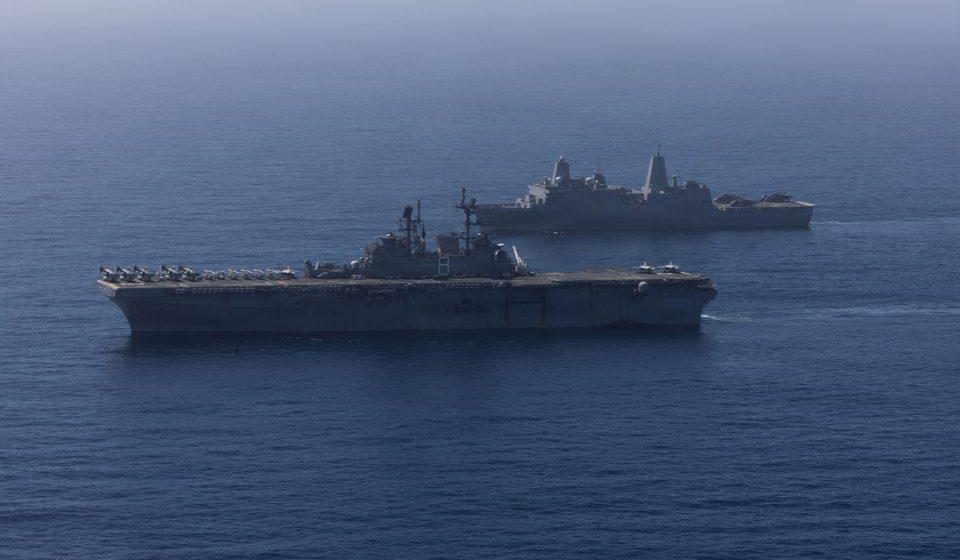
Rather than returning to diplomacy, Trump hopes to resume bombing Iran after the US midterm elections, sources told the newspaper. The Wall Street Journal. During this time he also deployed the USS Theodore Roosevelt aircraft carrier and USS Makin Island Amphibious ready group, consisting of three amphibious ships and the 13th Marine Expeditionary Unit, in the Middle East.
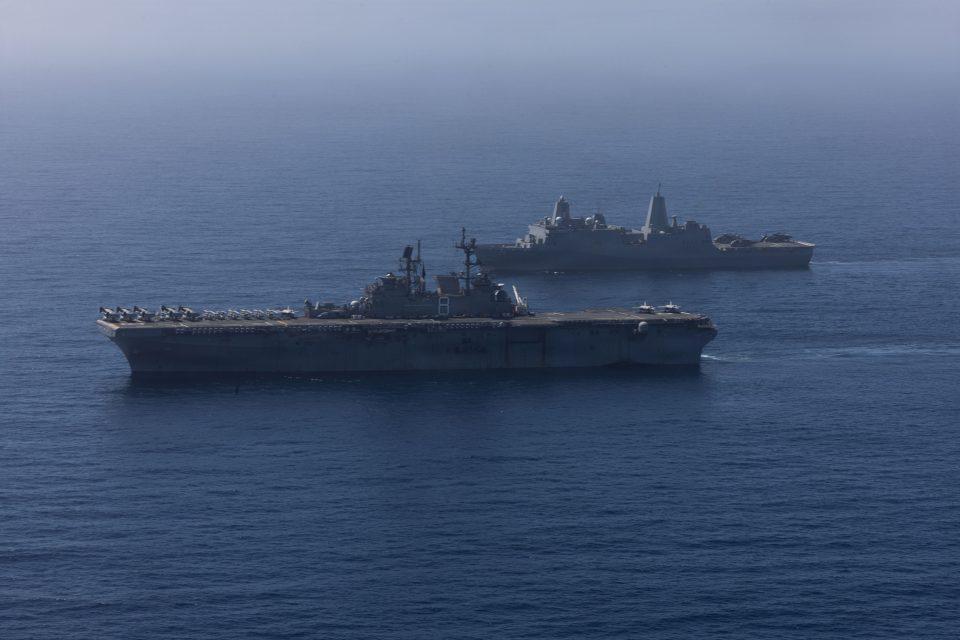
U.S. Marine Corps photo by Lance Cpl. Fernando Cruz Martinez
“So while the risk premium around oil flows may seem tolerable for Trump, the threats to energy production infrastructure in the Gulf remain significant, which is exactly why countries in the region are still trying to negotiate a return to a lasting ceasefire and diplomatic agreement,” Batmanghelidj said on X on Monday. “Trump, too, is inconsistent and could incite Iran to such an escalation through his own obsession with ‘winning’ the war.”
He added that Iranian attacks on U.S. bases in the Middle East as well as cities and infrastructure in the Gulf had far greater consequences because they exposed the United States’ inability to mitigate or degrade the threat.
So even if the U.S. military can maintain oil supplies, it is no longer able to guarantee security in the Gulf region, giving Iran leverage in any negotiations, Batmanghelidj said.
“Iran has not carried out a scorched earth campaign, but it could do so if the current situation persists for too long,” he warned. “This is what worries everyone who really follows this region and its dynamics.”
Of course, Iran’s oil infrastructure would also risk being destroyed by retaliation from the United States and its Gulf allies.
For now, Trump has indicated he will let his economic war against Iran play out, and the United States further tightened sanctions last month, making it harder for Tehran to move money through front companies and other obscure intermediaries.
As Iran’s ability to generate oil revenue fades, the currency has plunged to new lows and Iranian President Masoud Pezeshkian has complained about the regime’s money being blocked in China.
“We can’t even take our own money out of a country that we’ve supplied goods to, let alone use those funds to pay someone else in another part of the world,” he told Fox News last week.
Gn bussni