
Why you can trust Creative Bloq
Our expert reviewers spend hours testing and comparing products and services so you can choose the one that’s best for you. Learn more about how we test.
Details
Editor: Game S
Promoter: Game S
Release date: October 29, 2026
Platform: PS5 (PS5 Pro tested), PC
Engine: Unreal Engine 5
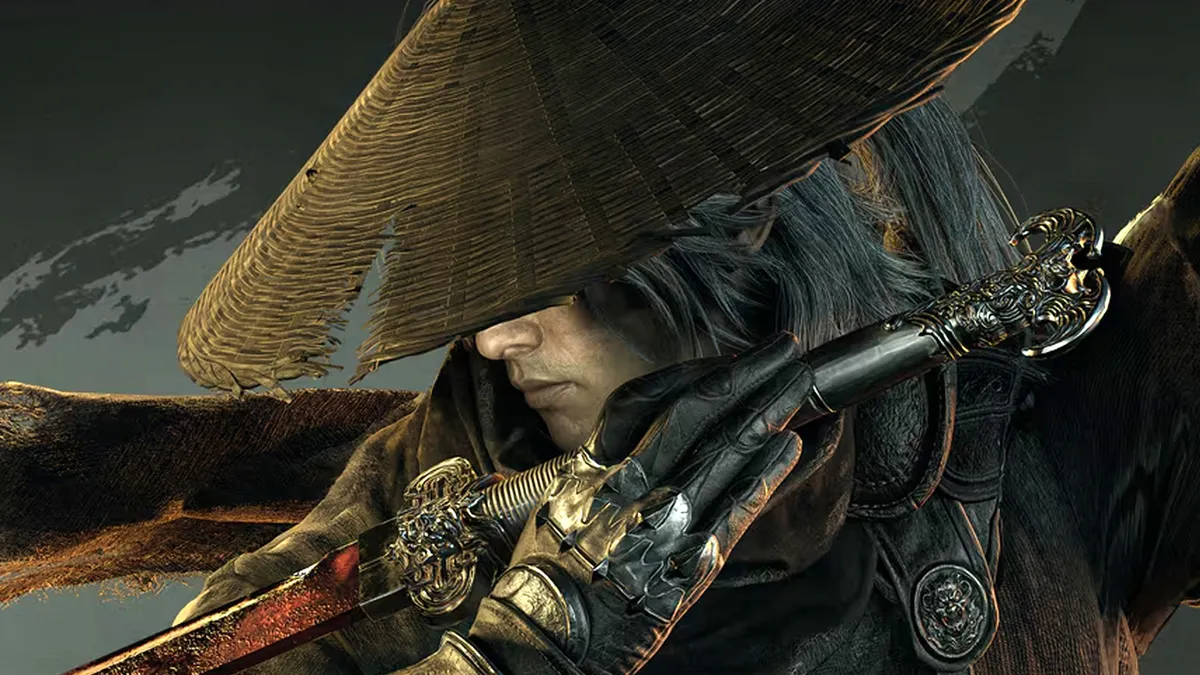
Phantom Blade Zero wants you to feel like a kung fu master from the first moments, and you should, since you play as Soul, an elite assassin for the Order. Even after a fateful duel leaves him with 66 days to live, there’s no cheap Metroid-style reset, and his martial arts prowess continues to grow.
Whether facing another fearsome warrior one-on-one or a group of enemies, there’s a fluid confidence to his moveset that captures the spirit of the classic martial arts films that inspired studio S-Game’s ambitious debut, itself based on the indie RPG Rainblood: Town of Death that director Soulframe Liang made over 15 years ago.
While early Chinese AAA hits like Black Myth: Wukong and Wuchang: Fallen Feathers exploited both Unreal Engine 5 and the overwhelming influence of Soulslikes, S-Game is attempting to forge its own identity, which it has dubbed “kungfupunk.” Aesthetically, this signifies a curious blend of traditional Chinese culture and modernity: the architecture of a steel mill collides with the bamboo forests and temples of a more classic wuxia setting, and music where elegant pipa strings give way to electric guitar rock riffs. More literally, it’s about how Sha-Chi, the energy that powers your kung fu (in the game it’s basically your stamina gauge used for heavy combos and guard attacks), also powers other tech.
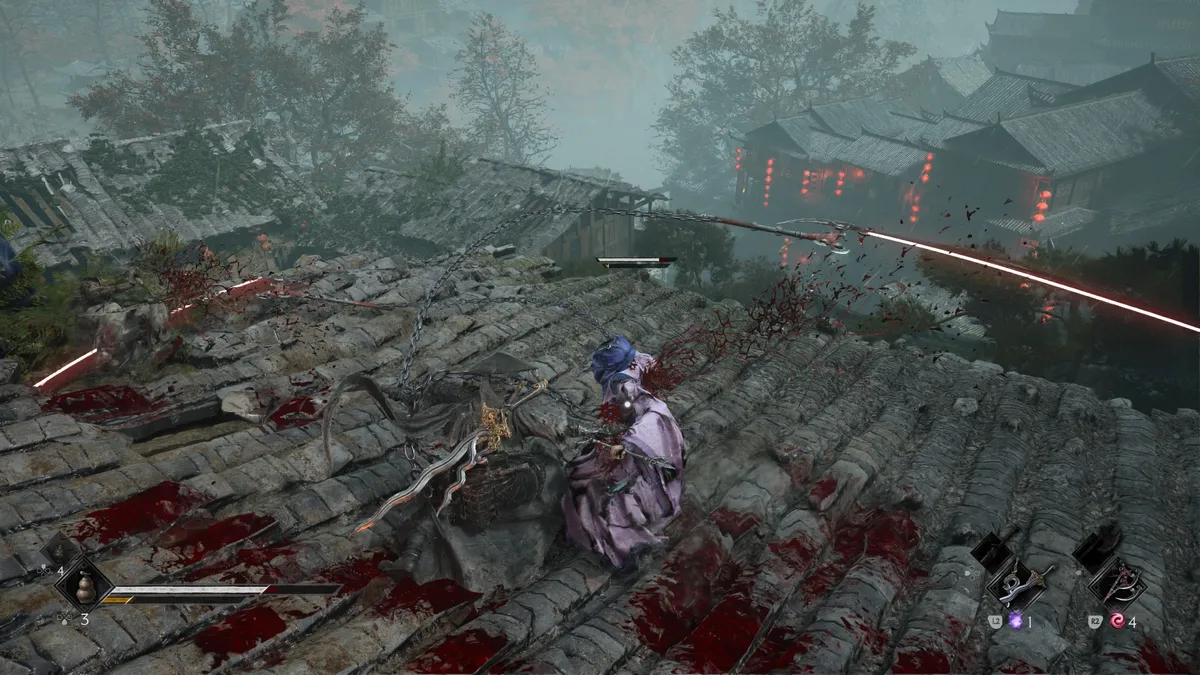
Combat Phantom Blade Zero: martial arts mocap and over 50 weapons
But it’s definitely kung fu that takes center stage here, with all of the game’s fighting styles and moves captured by real martial artists, including the involvement of Hong Kong martial arts legend Donnie Yen (he also plays a character, although you don’t strictly meet him in the main story, while spending most of it behind a mask) and his stunt team.
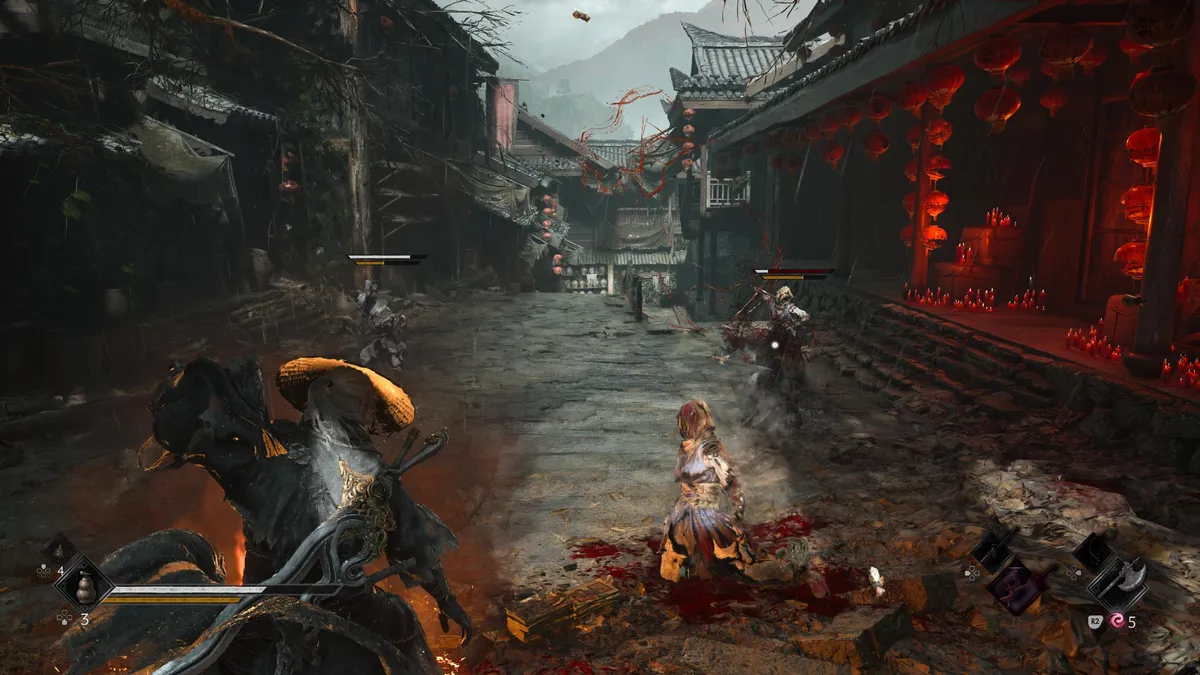
Even though your combos mostly consist of light or heavy attacks, your fighting style changes depending on which weapon you use, such as the one-handed Jagged Steel, which deals bleed damage, or the heavy two-handed Scarlet Wraithblade, which leaves energy-draining red spider lilies on the ground. The action can often feel too fast for its own good, so you’re usually focused on your flurry of attacks before waiting to react to an enemy’s blue or red attacks to parry or dodge, but pressing the prompt to unleash a finishing blow is pretty satisfying.
Since most bosses drop new weapons, there’s fun in playing with a new toy, and the game offers over 50 to find and master. This can seem a bit overwhelming, and some can seem more gimmicky than useful, like a sword that gives you unpredictable drunken martial arts moves, so I naturally stuck to a few favorites, especially since I had to prioritize upgrading them with my limited resources.
Still, there is an incentive to master more than one weapon, as switching automatically gives you a full Sha-Chi gauge. I would often use one gauge with one weapon, then quickly switch to another to maintain my offensive momentum (a cooldown prevents you from just exploiting this).
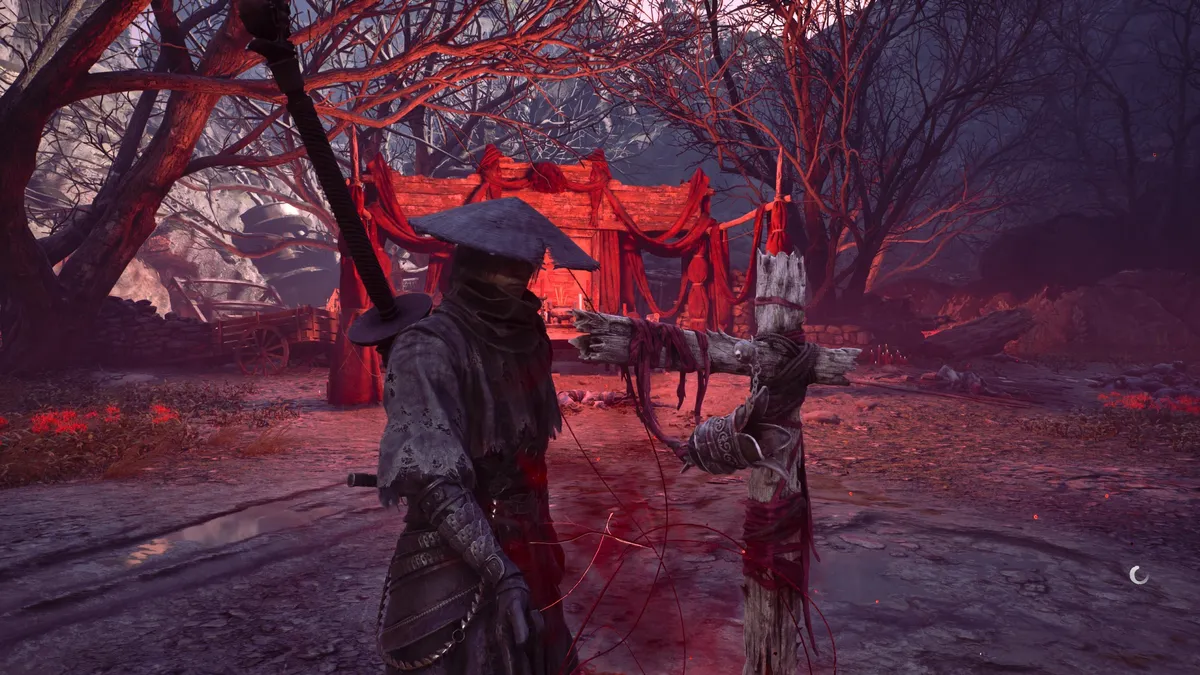
Exploration and level design
Special weapons called Phantom Edges have limited uses but, used at the right time, can turn the tide in encounters, such as a great ax that shatters enemy shields or a chain sickle that tears through several surrounding enemies. Some even feature Metroidvania-style exploration, allowing you to access areas you couldn’t reach before.
But despite some interesting designs, it’s hard not to see them as glorified keycards, with most leading to nothing more than a small room and a chest for your troubles. Although the chain also doubles as a grappling hook, it’s a bit disappointing once you realize that, like other traversal options such as climbing cliffs or wall running, it’s limited to a button prompt at prescribed points in the environment.
This is one of the frustrating aspects of Phantom Blade Zero’s rich and dense Wulin, even though it takes you from valley floors to mountain peaks, as well as a huge lake that you can explore by boat. This may all look pleasing to the eye, but it suffers from environments where you regularly run into invisible barriers as you try to analyze the artistically rendered map (albeit elegantly mimicking a Chinese ink painting that fills in the checkpoints you encounter).
This is especially annoying when a quest marker is supposed to be nearby, but you still have to wander around aimlessly until you spot an interaction prompt, or discover that there’s actually a long detour you’re supposed to take instead. Doors that require specific keys are one thing, but I find myself sighing when I approach a ledge that one would expect to see in a similar game, only for Soul’s kung fu skills to be arbitrarily evaded.
Boss fights and difficulty
Another question you might have about Phantom Blade Zero is whether it is a Soulslike. In many ways, this is not the case. For example, its checkpoints don’t revive defeated enemies when you rest there, nor do you permanently lose resources if you don’t recover them. It does have some similarities though, like a labyrinthine level design where you’ll encounter your share of poorly locked doors on your side, but it almost seems to turn into a Soulslike challenge the moment you encounter bosses with hard-hitting attacks and have very limited healing (which you won’t even be able to significantly improve until the middle of the game).
On the one hand, some difficulty spikes are mitigated by bosses with a second phase, which also have a checkpoint so as not to be forced to go through the first phase with fewer resources, and there are also difficulty options. The accessories you find and equip can also make a difference, especially those that expand parry and dodge windows, but my main complaint remains the squishy feel of these boss fights, even for those who return with a second phase.
This isn’t unique to Phantom Blade Zero (see also Control Resonant, until Remedy fixed it at launch), but it does make you question the point of stunning your opponent when, in this state, all of your heaviest attacks only chip away at their health. In many fights, your aggressive momentum also pushes the enemy back until you inevitably get stuck on geometry. When he reaches the camera, some cool finishing moves are framed awkwardly, with parts of the environment obscuring the shot.
Phantom Blade Zero performance on PS5 Pro
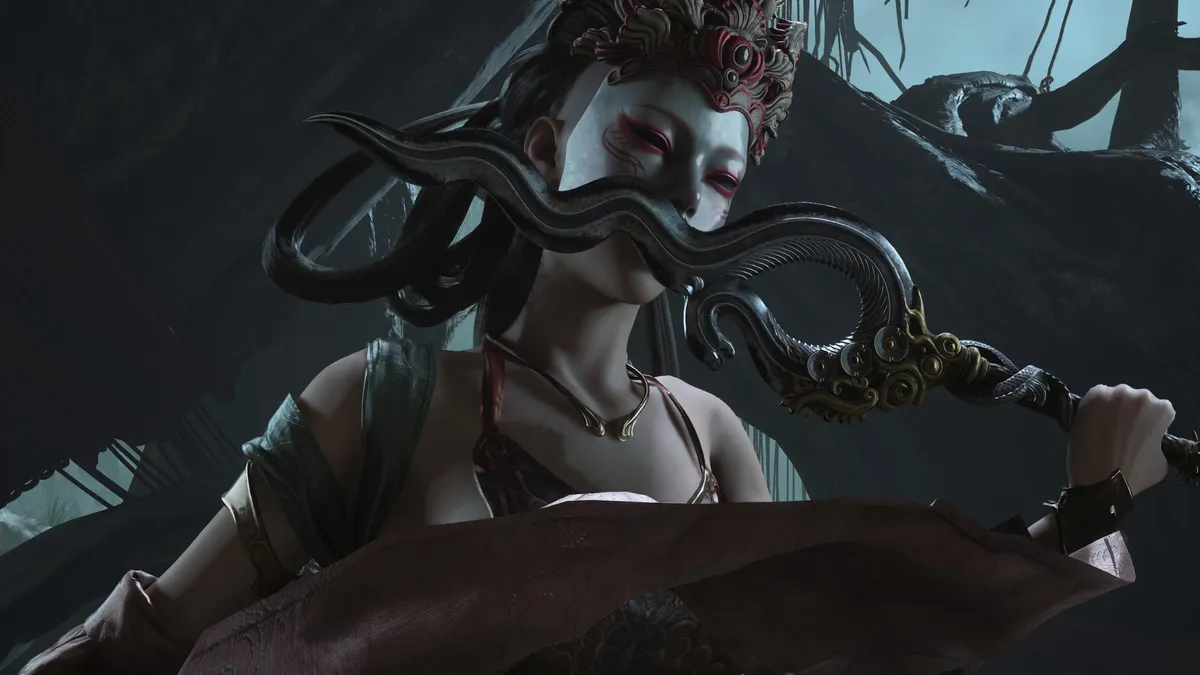
Even though I tested on PS5 Pro, I still encountered some pretty glaring technical issues during my playthrough, mostly in the second half of the game, which I believe were due to optimization and bugs, as they persisted even after turning off ray tracing and setting the graphics to Performance mode. Sometimes the audio was unbalanced between the voice acting and the music, and in a few cases the large puddles I encountered didn’t show so much reflection but looked more like a large mirror or a hole in the ground.
Most egregious, however, were the framerate drops during combat that turned into a slideshow, spoiling several major boss fights. I should be relieved that they didn’t kill me, since most of them happened while I was already locked into my (probably VFX-heavy) attack animations against a staggered opponent.
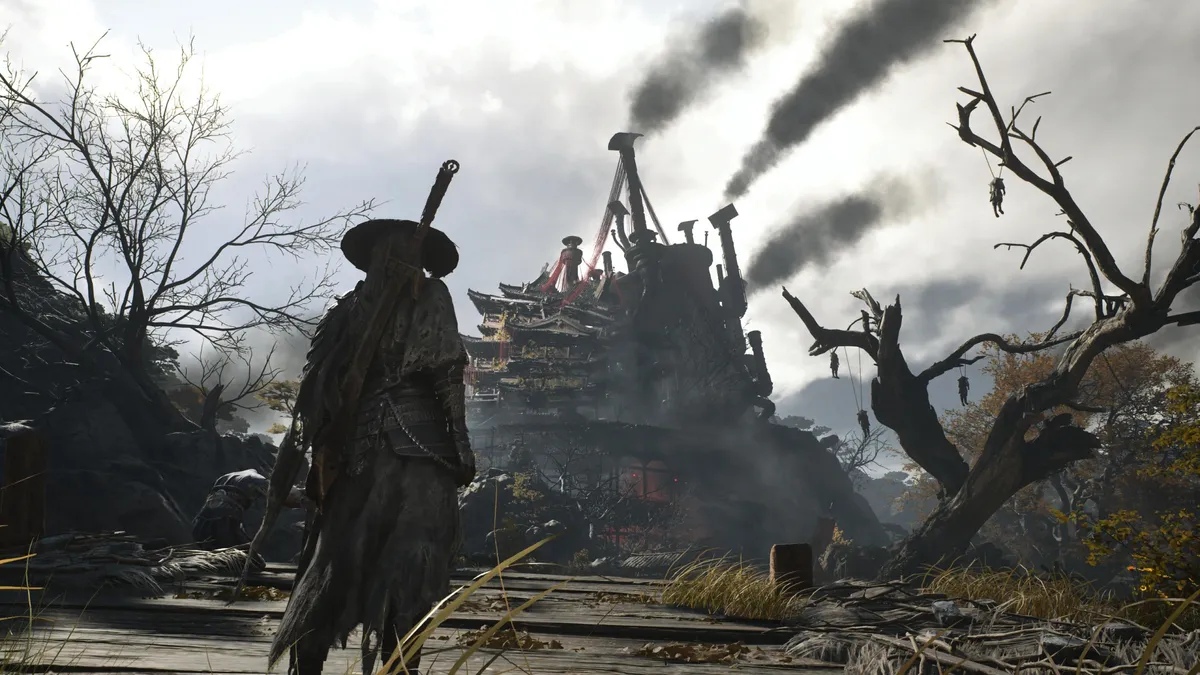
This may sound like I have a lot to complain about in Phantom Blade Zero, but there’s still a lot to admire, including cultural and artistic flourishes that I can’t share in this review. Wulin’s centerpiece, Pangzhen, is the kind of labyrinthine city that deserves to be discussed in the same breath as Bloodborne’s Yharnam, so rich and dense with secrets and lore, and home to some of the best bosses in the game, while there’s clearly been a lot of thought put into intriguing characters and deep questlines that offer meaningful rewards, including impacting which ending you’ll get. It’s just a shame that the version I got to play still needed a little more time in the oven.
One final note: S-Game released a patch that is supposed to fix most of the issues above, but it arrived after I finished my playthrough, so I didn’t have a chance to reread it to make sure every issue I encountered was fixed.
Gn tech