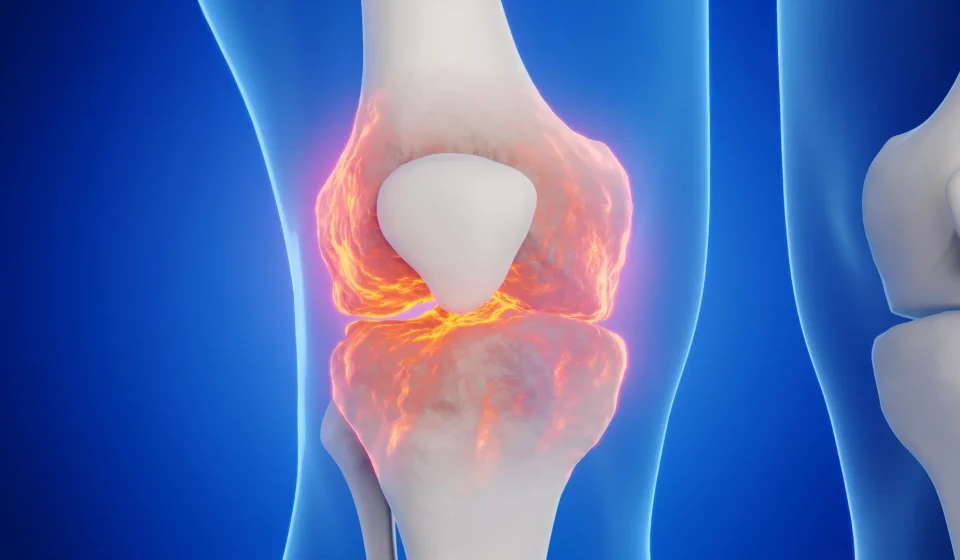
For people with painful knee osteoarthritis (OA), even simple activities like walking, climbing stairs, or getting out of a chair can become difficult. Excess weight can make these problems worse. Now, two major clinical trials suggest that a powerful experimental weight-loss drug could provide substantial relief.
The two Phase 3 trials, led by Northwestern University, included more than 1,000 participants in total. People receiving the highest dose of retatrutide, an experimental injectable weight-loss drug, lost on average about 25% of their body weight. When researchers combined the results from the two trials, they found that about two-thirds of participants treated with retatrutide reported a reduction in knee pain of at least 50%. In comparison, only 38% of people who received a placebo felt this level of relief.
The benefits go beyond weight loss and improving knee pain. Participants also showed reductions in blood pressure, blood lipid levels and inflammation throughout the body.
The results of the two studies were published on November 8 in the New England Journal of Medicine.
“The results really indicate that for overweight people with osteoarthritis, if you lose a lot of weight with this treatment, there’s a good chance you’ll get a significant reduction in your knee pain,” said corresponding author Dr. Thomas Schnitzer, professor of physical medicine and rehabilitation, anesthesiology, and medicine (rheumatology) at Northwestern University Feinberg School of Medicine.
“A major factor is that you load your knees less and therefore there is less pain and this allows you to increase your function.”
Philip Conaghan, study co-author and professor of musculoskeletal medicine at the University of Leeds in the United Kingdom, presented results from one of the trials, TRIUMPH-4, on November 8 at the American College of Rheumatology annual meeting in Orlando, Florida. Results from the second trial, TRIUMPH-1-OA, were scheduled to be presented at a separate poster session on the same day.
Potential new treatment for millions of people with knee osteoarthritis
Painful knee osteoarthritis affects approximately 5% of Americans (15 million people). Available treatments range from physiotherapy and medications applied to the skin to oral anti-inflammatories such as ibuprofen and Voltaren. Other options include opioids and corticosteroid injections, although the relief provided by steroid injections usually only lasts a short time.
Weight loss is another proven way to alleviate symptoms. Previous studies have shown that losing 5 to 10 percent of body weight through diet changes and exercise can improve knee osteoarthritis pain. However, Schnitzer explained that losing more than 10% through these approaches alone is often difficult. For people already dealing with painful knees, getting enough exercise to achieve substantial weight loss can be especially difficult.
Retatrutide could offer another approach. Developed by Eli Lilly, the experimental drug is given as an injection once a week and works differently from existing GLP-1 drugs such as semaglutide and tirzepatide.
While these medications act on one or two hormone receptors and typically produce weight reductions of 10 to 20 percent, retatrutide activates receptors associated with three different natural hormones. In clinical trials, participants lost approximately 20 to 25 percent of their body weight, depending on the dose. Eli Lilly scientists also contributed to the research as co-authors of the study.
“The participants had remarkable responses,” Schnitzer said. “Many people in this study lost considerable weight, with a few losing as much as a hundred pounds or more.”
Why diet and exercise are still important
Despite the encouraging results, Schnitzer emphasized that lifestyle changes should remain the starting point for people who are overweight and suffer from painful knee osteoarthritis.
Improving eating habits, increasing physical activity, and other lasting lifestyle adjustments can help reduce symptoms without the need for new weight-loss medications. These strategies also avoid side effects associated with GLP-1 medications, including gastrointestinal problems and muscle loss.
Maintaining muscle strength is especially important for people with knee osteoarthritis because the muscles surrounding the joint help support and stabilize it. Losing too much muscle could therefore create additional challenges for patients who already have difficulty moving comfortably.
For people who are unable to lose enough weight through lifestyle changes and continue to experience significant knee pain, Schnitzer believes retatrutide could become an attractive option if it receives approval from the U.S. Food and Drug Administration.
Could the drug also slow the progression of knee arthritis?
Although trials have demonstrated substantial improvements in weight and pain, several important questions remain unanswered.
One of the most important questions is whether retatrutide does more than relieve symptoms. Researchers still don’t know whether the drug can slow the underlying progression of knee osteoarthritis enough to reduce the likelihood that patients will eventually need knee replacement surgery. People who already needed a knee replacement were excluded from the trials.
“The goal here would be to say you can reduce people’s pain and stop the progression of their osteoarthritis,” Schnitzer said.
Another unanswered question is whether retatrutide could benefit people with painful knee osteoarthritis who are not overweight. Because the trials did not include these patients, additional studies will be needed to determine whether they might experience similar improvements.
Researchers also want to understand how much of the pain relief comes directly from weight loss and how much of that might be related to the drug’s effects on inflammation.
“These drugs are thought to have significant anti-inflammatory activity, but the mechanism is not fully understood,” Schnitzer said. “The question of whether reducing inflammation in the joint is also important in addition to reducing the load requires more research, so this is still a first step, in my opinion. I have worked in the field of osteoarthritis for a long time, and I think this opens up the possibility of doing many more studies to better understand the disease.”
How Researchers Measured Knee Pain Relief
To assess changes in symptoms, the research teams used the Western Ontario and McMaster Universities Arthritis Index (WOMAC) pain index, a standardized tool for assessing osteoarthritis pain.
During study visits, participants rated their pain on a scale of 0 to 10. They also used a mobile app to record their pain levels each day, allowing researchers to track how symptoms changed throughout treatment.
The study is called “Retatrutide Once Weekly in Adults With Knee Osteoarthritis Pain and Obesity.”
Gn Health