Powerful weight-loss drug could bring relief to millions of people suffering from common sleep disorders

NEWYou can now listen to Fox News articles!
An experimental obesity drug significantly reduced breathing interruptions and other symptoms of obstructive sleep disorders in two clinical trials, according to new research published in the New England Journal of Medicine.
Obstructive sleep apnea (OSA) affects more than 50 million Americans, and about 80 percent of cases go undiagnosed, according to the National Sleep Foundation.
The study examined whether retatrutide, an experimental weight loss drug from Eli Lilly, could help treat OSA in adults who are overweight or obese.
Experimental obesity drug outperforms traditional weight loss treatments, early research shows
Retatrutide is being evaluated in the TRIUMPH Phase 3 trials as a potential treatment for obesity and related metabolic disorders. The drug has not been approved by the FDA.
The FDA has warned that unauthorized versions of retatrutide have been illegally marketed and sold online for weight loss.

The researchers measured changes in the apnea-hypopnea index (AHI), which counts breathing interruptions per hour of sleep. (iStock)
Study details
The two randomized phase 3 trials included 691 adults with moderate to severe sleep apnea and a BMI of at least 27. Participants received once-weekly injections of retatrutide at doses of 4, 9, or 12 milligrams, or a placebo, and were followed for 80 weeks.
The trials included 243 participants without type 2 diabetes and 448 with the disease.
WEIGHT LOSS DRUGS CAN FIGHT 7 SERIOUS HEALTH PROBLEMS BEFORE THE POUNDS EVEN LOSE
Participants who received retatrutide lost between 12% and almost 20% of their body weight and experienced significantly fewer respiratory interruptions than those who received a placebo.
About 68% of participants saw more than 50% improvement in OSA symptoms, whether or not they had type 2 diabetes.

Retatrutide improved more than 50% of OSA symptoms in 68% of participants over 80 weeks. (iStock)
The study also found that hypoxic burden – the severity and duration of episodes of low oxygen caused by breathing disturbances during sleep – decreased by about 75% in participants without type 2 diabetes and by 65% in those with the condition.
CLICK HERE FOR MORE HEALTH STORIES
The researchers concluded that retatrutide produced significantly greater reductions in AHI (respiratory interruptions) than placebo in adults with OSA who were obese or overweight, whether or not they had type 2 diabetes.

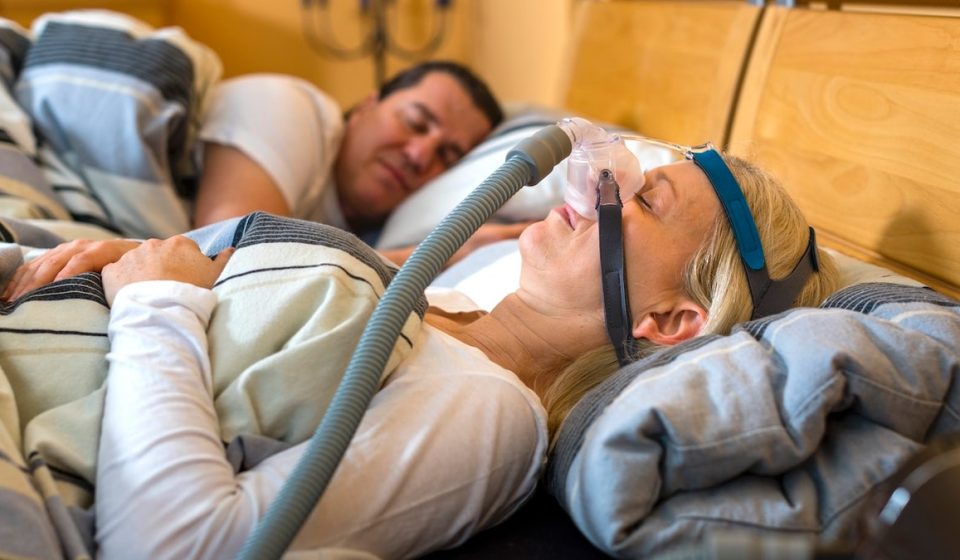
The need for CPAP machines could be reduced through drug treatment, researchers say. (iStock)
The researchers noted that the lack of FDA approval of retatrutide was a limitation and that additional studies are needed to determine how the drug may affect long-term cardiovascular outcomes.
Expert reaction
Study co-author Dr. Virend Somers, a cardiologist and professor of medicine at the Mayo Clinic in Rochester, Minnesota, told Fox News Digital that while the results were expected, he was surprised by “the magnitude of benefit in patients with type 2 diabetes,” as well as the significant reduction in sleep apnea.
“OSAS is often underdiagnosed and undertreated.”
“This is a very exciting time for the treatment of patients with sleep apnea,” Somers said.
Sleep apnea is associated with a higher risk of heart attack, stroke, high blood pressure and atrial fibrillation. In the trial, participants saw a reduction in several cardiovascular risk factors, including systolic blood pressure, LDL cholesterol, systemic inflammation and neck circumference.
TEST YOURSELF WITH OUR LATEST LIFESTYLE QUIZ
“A reduction in these measures would predict whether these patients are at increased cardiovascular risk,” Somers told Fox News Digital.
“In diabetics, blood pressure is a key determinant of future cardiovascular risk, and the fact that we were able to reduce it so significantly was both surprising and exciting.”

Patients with sleep apnea are at higher risk of heart attack, stroke, high blood pressure and atrial fibrillation. (iStock)
Somers said retatrutide also improved several diabetes-related measures.
In non-diabetic participants, insulin levels dropped by more than 50%. Among people with type 2 diabetes, 40% progressed from diabetes to prediabetes and 40% no longer met the criteria for diabetes, according to the researcher.
The improvements are largely linked to weight loss, which can lead to better sleep and a reduction in sleep-related disorders, he said.
CLICK HERE TO SUBSCRIBE TO OUR HEALTH NEWSLETTER
“(Participants) reported considerable improvement in their sleep, beyond sleep apnea: what we call sleep-related disorders were significantly reduced,” Somers said.
The study included participants who used CPAP and others who did not. Somers said CPAP use generally declined over the course of the study, suggesting that some patients may eventually require less device-based treatment.
TEST YOURSELF WITH OUR LATEST LIFESTYLE QUIZ
Dr. Wendy Troxel, a behavioral scientist at RAND in Utah who was not involved in the study, noted that OSA is often underdiagnosed and undertreated, particularly in postmenopausal women.
“While CPAP remains the first-line treatment for sleep apnea, I hope that increased awareness of treatment options can encourage more people to get screened and seek treatment,” she told Fox News Digital.
Somers noted that the condition resolved completely in about 25% of participants without diabetes and 15% of those with type 2 diabetes.
“This is a very exciting time for the treatment of patients with sleep apnea.”
The study results do not mean patients should stop using CPAP or other prescribed treatments, the researchers emphasized. More research is needed to determine the long-term safety and effectiveness of retatrutide in treating sleep apnea.
CLICK HERE TO DOWNLOAD THE FOX NEWS APP
“There is hope on the horizon,” Somers said. “We have CPAP, we have mandibular appliances, we have postural therapy, where you try to avoid sleeping on your back, and now we have drug therapies that can potentially not only reduce your apnea, but also help you sleep better…and reduce the risk of future cardiovascular events.”
Gn Health