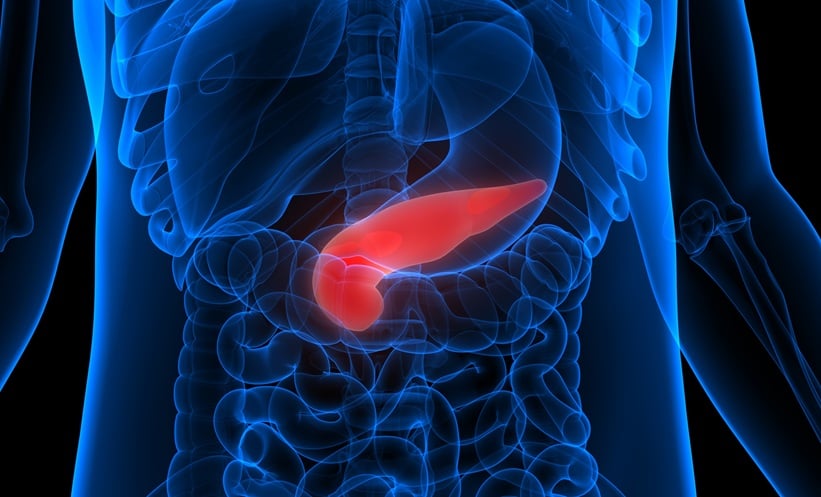
AI could improve prediction of pancreatic cancer risk in patients with cystic lesions of the pancreas, with a newly developed model demonstrating greater accuracy than existing guideline-based approaches. The results highlighted the potential of AI to support clinical decision-making and improve the identification of patients at increased risk of developing pancreatic cancer.
Improving pancreatic cancer risk prediction
Pancreatic cystic lesions are common and may represent potential precursors to pancreatic cancer. An accurate assessment of malignancy risk is therefore essential to inform patient care. However, existing risk assessment approaches have demonstrated limitations in accuracy and complexity, potentially contributing to suboptimal clinical care.
To address these challenges, researchers developed and validated an AI model integrating radiological reports and clinical data to predict future pancreatic cancer risk in patients with pancreatic cystic lesions.
The model was developed using a 13-year retrospective cohort comprising 23,398 abdominal CT and magnetic resonance imaging examination reports from 8,707 patients in a multisite health system. Of these examinations, 430 (1.8%) corresponded to patients who subsequently developed pancreatic cancer, including adenocarcinoma, invasive mucinous tumor or high-grade dysplasia.
AI model demonstrates high predictive accuracy
Among the evaluated models, XGBoost demonstrated the strongest predictive performance. The model achieved areas under the receiver operating characteristic curve of 0.960, 0.945, and 0.944 when predicting pancreatic cancer incidence at 1, 3, and 5 years after imaging, respectively.
Importantly, the AI model outperformed guideline-based risk stratification, demonstrating improvements in the area under the receiver operating characteristic curve ranging from 0.161 to 0.235 (p < 0.001). These results suggest that integrating radiological and clinical information could provide more accurate individualized risk assessments than existing approaches.
The researchers also looked at exams taken in the year before pancreatic cancer diagnosis. Radiologists identified potential cancer in 51.5% of cases, while the AI model flagged it in 82.3%. This difference highlighted the model’s potential to identify concerning findings that might otherwise be overlooked during routine assessment.
Implications for clinical practice
The results demonstrated the potential value of AI to support pancreatic cancer risk prediction and inform the management of patients with cystic lesions of the pancreas.
By combining information from radiology reports and clinical records, the model could complement existing risk stratification methods and provide clinicians with additional information to support individualized patient assessment.
Although the results support further thinking about AI-assisted risk assessment, the role of the model is to complement rather than replace existing clinical approaches. Its potential application could represent an important development in the identification of patients at increased risk and support more informed clinical management decisions.
Overall, the study highlighted how AI-based analysis could strengthen pancreatic cancer risk prediction, potentially contributing to more targeted assessment and improved patient care.
Reference
Haj Mirzaian A et al. Artificial intelligence model for pancreatic cancer risk prediction in patients with pancreatic cystic lesions. npj Figure Med. 2026;DOI:10.1038/s41746-026-03441-4.
Gn Health