Presidential 2027. From Mélenchon to Le Pen: what to expect from the debate between seven candidates organized by Medef?


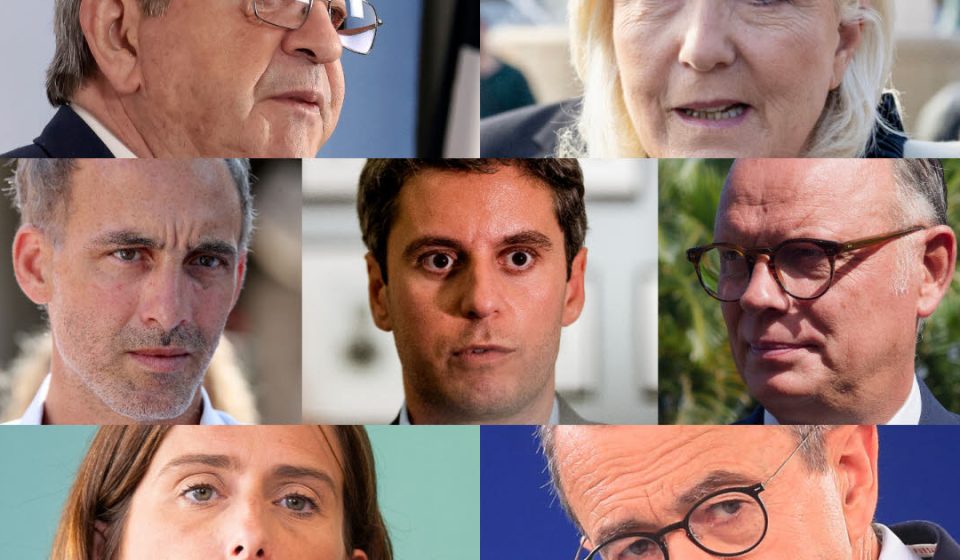
The first match of the presidential election will be held on the central court of Roland-Garros, in Paris, this Thursday, from 4:45 p.m. The Medef has in fact invited the seven main officially declared candidates to answer the bosses’ questions, as part of the REF (Meeting of French Entrepreneurs). Marine Le Pen (National Rally), Jean-Luc Mélenchon (La France insoumise), Édouard Philippe (Horizons), Gabriel Attal (Renaissance), Bruno Retailleau (Les Républicains), Marine Tondelier (Les Écologists) and Raphaël Glucksmann (Place publique) will debate on some of the country’s major issues: employment, taxation, purchasing power, debt, pensions, etc.
This highly anticipated meeting, broadcast on LCI and on social networks, is taken very seriously by the participants. Firstly because he launches the campaign. Then because it addresses subjects that concern the lives of the French. Of all the candidates present, only Marine Le Pen and Jean-Luc Mélenchon are certain that ballot papers in their name will be available on April 18, during the first round of the election. The RN candidate even seems assured of appearing in the second round: with voting intentions which sometimes exceed 35%, she is almost 20 points ahead of Édouard Philippe or Jean-Luc Mélenchon, who are vying, this fall, for second place. The hypothesis of a second round between the extreme right and the radical left, envisaged for several months, is therefore not excluded.
This is why everyone’s positions will be scrutinized. Jean-Luc Mélenchon, dynamically, is far from being the bosses’ favorite. The latter are sometimes frightened by his economic program, which plans to increase wages, tax the wealthiest, and cancel or freeze part of the debt. Will he choose to reassure or provoke his audience?
Battle of promises
Marine Le Pen, silent since the announcement of her candidacy, clearly wants to seduce the small bosses to whom she promises lower costs. The one who claims to be a “purchasing power candidate” is looking for credibility, and will have to remove ambiguities about her retirement proposals.
Within the central bloc more inclined to supply-side politics, Édouard Philippe and Gabriel Attal are launched into a wild primary. They must therefore stand out from each other. For the moment, Édouard Philippe, very discreet this summer, suffered a slight decline in the first back-to-school poll (Toluna Harris Interactive for M6 and RTL). The mayor of Le Havre pretends not to care but Gabriel Attal’s team boasts: “Édouard Philippe is losing his bet to be the bulwark in the first round against Jean-Luc Mélenchon and in the second round against Marine Le Pen. » As a good communicator, he prepared for the management hearing and revised his punchlines. Among them, his expression “right to gross”, which reflects his desire to bring net salary closer to gross. Opposite, in a more sober style, Édouard Philippe promises to reduce production taxes by 50 billion.
Matches within the match
The duel between Emmanuel Macron’s former Prime Ministers will not be the only interest of this first presidential round. Bruno Retailleau, candidate for LR, a traditionally pro-business movement, has been campaigning since February but remains below the 10% mark. He must therefore hammer home his anti-tax speech, honey for entrepreneurs. His proposal to annualize working hours did not pass the sound barrier. He must therefore clarify it in front of an audience which should not be hostile to him. Like his mentor François Fillon during the 2016 primary, he intends to stand out thanks to his image of rigor and seriousness. It’s time. Because its political space remains narrow, stuck between that of the RN and the central bloc. He must therefore reassure, even in his own camp where he is not unanimous.
On the left, uncertainty also remains. Will the ecologist Marine Tondelier maintain her candidacy until the end or will she rally around LFI or the winner of the socialist primary in which Raphaël Glucksmann will participate? Will the latter manage to establish himself as a useful candidate on the left? Their responses to the business world will be the first indications because they are far from the second round. However, the business world, even if it is not electorally decisive, is very listened to. Not alienating the world of the real economy is essential.