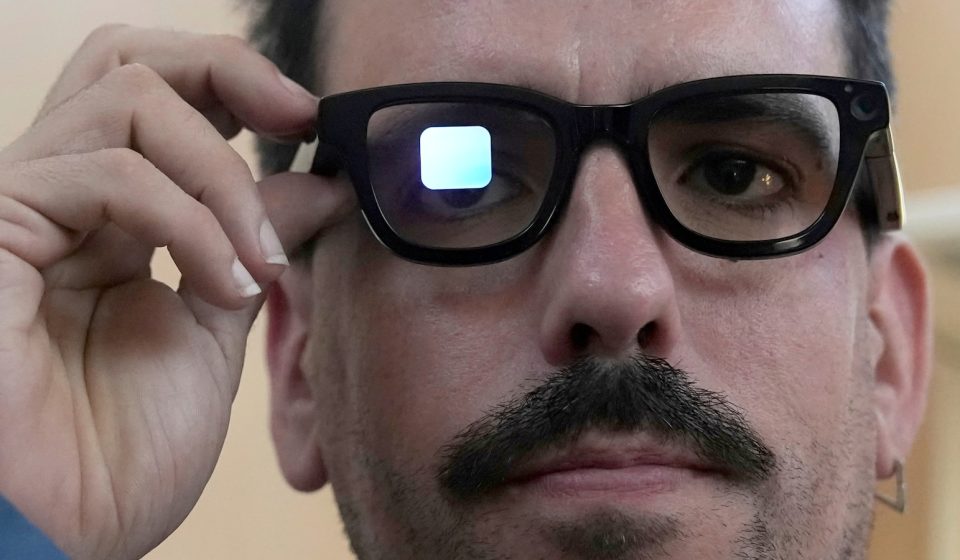

A trip to the park. A day at the beach. A workout at the gym. All in public spaces where smart glasses can take photos, record conversations or stream online videos, without people in the line of their lenses and microphones knowing.
The Norwegian government wants to rein in both the promises and dangers of AI glasses and is proposing that Parliament enact a temporary ban on them in certain locations.
It’s the latest sign of growing concern in many countries about new technologies that are fundamentally changing the way people live. Some governments have banned the use of social media by children and young adolescents.
An effort to curb the use of AI glasses has failed – in Silicon Valley.
California’s governor vetoed a law last week that would have penalized the use of smart glasses to record people without their permission in places like locker rooms, doctors’ offices and other spaces people typically consider private.
And Microsoft announced plans last month to adopt safeguards and privacy standards for its AI in schools, as negotiated with the second-largest teachers union in the United States.
The Norwegian government said the proposed temporary ban would be submitted to parliament, the Storting, “as soon as possible.”
Torgeir Micaelsen, Norway’s minister for digitalization and public governance, has expressed concerns about the emergence of new technologies that allow people to be photographed, filmed or audio recorded without their knowledge.
A key question is where to draw the line: Norwegian authorities say a ban on the use of smart glasses could apply to places where “privacy is particularly important”, such as healthcare facilities or fitness centers with changing rooms and showers. Particular attention is paid to spaces where children gather, such as schools, kindergartens, playgrounds and youth clubs.
But it could also extend to public concerts and sporting events, as well as parks, beaches, museums and shopping centers.
The temporary ban would give authorities time to examine the issue further, decide what types of devices might be affected and hold an “informed debate” that could lead to permanent regulations, Micaelsen said.
The government was quick to emphasize that it was not proposing a total ban on AI glasses or other “wearable technology”, adding that such devices should still be allowed in certain locations and for private use.
The government also said it was considering exceptions to the ban for vulnerable groups, so that “socially beneficial uses” of smart glasses could be allowed in certain circumstances.
Gn usa