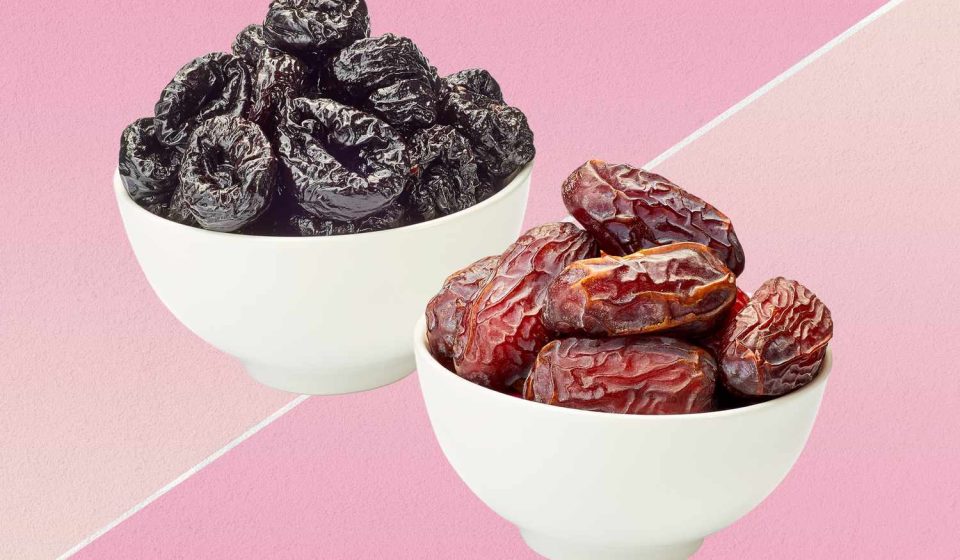
Key Points
- Prunes are known for their benefits on digestive health, thanks to fiber and sorbitol.
- Dates also contain fiber, and dried fruit makes a sweet snack with additional minerals.
- Both are great choices for a high-fiber snack, especially when paired with protein.
Fiber is having a moment. Between the fibermaxxing trend on social media and the rise of fiber-rich sodas, you’d think we’d all have plenty of it. Yet about 95% of Americans still fail to meet their daily fiber goals.
This is important because eating more fiber is linked to a lower risk of heart disease, type 2 diabetes, colorectal cancer and obesity. Although fiber at every meal is encouraged, snack time is an easy opportunity to eat a little more. Prunes and dates are two sweet and chewy dried fruit options that you can keep in your pantry and snack on for a little extra fiber. Lauren Manaker, MS, RDN, LD, shares, “Snacks high in fiber can help support digestive health, promote regularity, and make snacking more satisfying by helping you feel full longer.” »
So, which dried fruit has the most fiber? We asked dietitians how prunes and dates compare and why the highest fiber fruit may differ from the one they would choose to maintain regularity. Read on to learn when (and why) to reach for each one.
Why Prunes Are a Good High-Fiber Snack
Prunes have found their way into menu rotations across the world for decades as the go-to food that people reach for when looking to support their digestive health. And for good reason too. Just five prunes (about 50 grams) contain 3 grams of dietary fiber, or 11% of the daily value. Jennifer Pallian, BSc, RD, explains that for this reason alone, “prunes are a great fiber-rich snack.”
But their fiber content isn’t just what sets them apart. Arielle Lebovitz, MS, RDN, writes: “Prunes are sweet-tart, easy to grab on the go, and offer a little something extra for digestive health because it’s not just their fiber that does the work! Prunes also contain sorbitol, a natural sugar alcohol that helps draw water into the intestines and soften stools.” Research backs this up too, with a recent study highlighting the digestive health benefits (read: laxative effect) of sorbitol in prunes for maintaining regular gut health.
Additionally, prunes contain bioactive compounds, like antioxidants and nutrients like boron, copper, and prebiotics, which also support bone and heart health. They may be tiny, but they pack a punch when it comes to the nutritional boost they provide in every bite.
Why Dates Are a High-Fiber Snack Choice
If you’ve looked through a recipe for chocolate covered dates or no-bake brownies, you’ve seen what makes dates so popular. Their caramel-like sweetness and fudgy texture make them an easy choice for homemade treats. But they also bring fiber to the mix. “Medjool dates are also a good high-fiber snack, providing 3 grams of fiber per 50-gram serving,” says Pallian. This is slightly more fiber than you would get from the same weight of prunes.
Although prunes have the added benefit of sorbitol which promotes bowel regularity, the fiber in dates may also help with digestive health, says Lebovitz. She writes: “Dates provide their own combination of nutrients, including fiber that helps support regular bowel movements, minerals like potassium, magnesium, and copper, and polyphenols that may provide additional health benefits. » Research has explored the potential mechanisms that dates have on heart health, providing another potential avenue to help lower blood pressure and improve cardiovascular health. Although more research is needed, dates (like prunes) contain important bioactive compounds that are certainly welcome as part of a regular, balanced diet.
Prunes or dates: which has the advantage?
For the higher-fiber choice, it’s essentially a tie. They both provide about the same amount of fiber per serving (they differ by about 0.2 grams). With such a small difference, your taste and what you want from your snack can help you decide which one to choose.
And experts agree on that, too. Lebovitz writes: “Both are delicious and convenient ways to add fiber and a variety of valuable nutrients to your day! Although they offer slightly different nutritional benefits, neither is a ‘better choice’ than the other. In fact, enjoying a variety of fiber-rich foods helps support digestive health because different foods offer different types of fiber and beneficial plant compounds to your diet.
If consistency is your priority, Manaker and Pallian give prunes the edge. Pallian adds: “If you’re particularly concerned about constipation or maintaining regular bowel movements, prunes may be the best choice. Their combination of fiber and sorbitol offers additional digestive benefits, and clinical research supports their effectiveness in improving bowel movement frequency. Ultimately, including either fruit in your diet is a good way to increase your fiber intake.”
How to include both in a healthy diet
Prunes and dates have their place in a balanced diet. Consider these tips when incorporating them into your regular routine. Bonus: They also make a dynamic duo when used together, as a great addition to satisfy those with a sweet tooth without added sugar.
- Pair it with a protein and/or healthy fat. The two dried fruits alone are low in protein and essentially fat-free. To keep your hunger at bay, consider pairing them with a serving of nuts or unsweetened Greek yogurt and seeds to tide you over until your next meal.
- Mix them in both savory and sweet dishes. Prunes and dates fit perfectly into treats, providing a favorable taste without added sugar. Can you mix the two and create trendy “nature’s candy”? Consider trying it with a 50-50 split of dates and prunes in this EatingWell reader favorite, Date Caramel-Apple Chocolate Bark.
- Consider them a supplement to your post-workout fuel. Need to increase your carb intake after a workout? Consider pairing prunes or dates with a serving of cottage cheese, or mix them into your protein smoothie to add a touch of sweetness.
Our expert opinion
Prunes and dates are good sources of fiber and a welcome addition to the diet. While dates contain a little more fiber per serving, prunes contain additional compounds, like sorbitol, that have long contributed to digestive health. In dried fruit form, both contain important antioxidants and bioactive compounds that the body can use. So why choose?
Lebovitz reminds us, “Most Americans don’t get enough fiber, and choosing high-fiber snacks, like prunes or dates, is an easy way to close that gap while promoting gut health and feeling full between meals.” » Keep both on hand and incorporate them into your regular diet alongside nuts, seeds, and other proteins to boost your nutrition while providing some staying power.
Gn Health