Nick Schifrin:
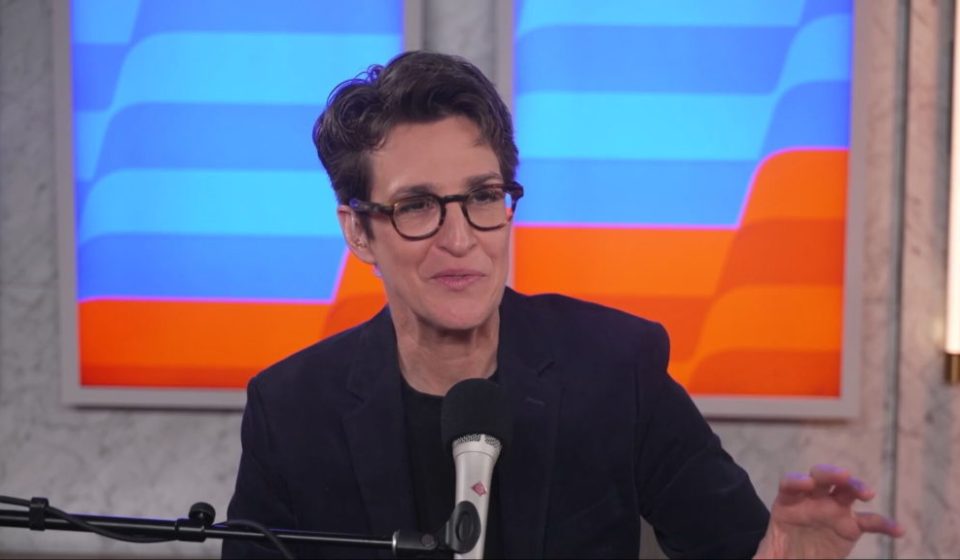
MS NOW anchor Rachel Maddow’s fifth book, “Department of Fate,” explores the history of the Department of Justice. Maddow maintains that the DOJ is America’s most important institution, but he says it has strayed significantly from its original mission.
Maddow spoke with Amna Nawaz in this recent episode of our PBS News podcast “Settle In.”
Amna Nawaz:
The very first story you tell in this book is about power. It includes a speech given in 1940 by then-Attorney General Robert Jackson, an FDR appointee. It’s a speech called “The Federal Prosecutor.”
Why is this an important starting point for the argument you make here?
Rachel Maddow:
“The Federal Prosecutor”, this speech by Robert Jackson, is a complete cliché among those who pronounce on the nature of the Department of Justice and the rule of law in the United States.
This is the context that everyone says strengthens his own argument about what he thinks about federal prosecutions, federal law enforcement and the Justice Department. And I tried not to fall into the same trap as everyone else of quoting him as if he supported me, because everyone, regardless of side, on every important issue in this area, does.
But I’m trying to explain why we all think it’s so important, why it’s become so crucial – at the time it was very little noticed. This speech did not make much noise.
But I think the key idea that Jackson shared in that speech, and this is why everyone keeps coming back to it, is that he’s basically talking about the federal prosecutor as being really powerful, as being someone who can turn your life upside down, who can drain your world of meaning and give it new meaning simply by his legal actions.
And I think that’s actually the central idea that we should be making about the Department of Justice. My basic thesis in this book is that the Department of Justice is a different breed of cat, different from all other institutions of the American government.
And it is different from every other institution in the United States, period, in that its actions, more than any other institution that we have, more than any other organization, its actions set the course for what is allowed politically, what is allowed criminally, what is allowed in terms of citizenship boundaries and who counts as a citizen.
And, more importantly, and I think this is often overlooked, it sets the boundaries of what happens in this country economically, who is allowed to compete economically and under what rules. And so, going back 100 years to what I consider the golden age of corruption at the Justice Department, going back to the days of the robber barons and using what are supposed to be the powers of the law that were supposed to restrict businesses to restrict the people who worked in those businesses, to restrict the work…
Amna Nawaz:
Yes.
Rachel Maddow:
…looking at some of the good things about what the Justice Department has done to implement the constitutional protections that make us a republic, as well as the worst things they’ve done.
I’m just trying to demonstrate historically in this book that the Department of Justice is more consequential than any other institution we have. And now that we have a real problem with this system, when we overhaul it, when we rebuild it, we’re going to have to keep that in mind as we very carefully establish a new Department of Justice that will be more resilient to the kinds of things that brought it down.
We have to be very careful about this as an institution, because, more than anything, it determines who we are as a country.
Amna Nawaz:
So, before we get into how it’s rebuilt or if it’s rebuilt or what it looks like…
Rachel Maddow:
Yes.
Amna Nawaz:
…talk about how we got to where we are today, and specifically the role of the attorney general, which you explore here.
You had a line here that said, “Since the beginning of the American republic, the Attorney General of the United States has been the red-headed stepchild of the Cabinet.” »
And it’s a role that initially had very limited power. And we went from there to — let’s move on to the most recent example. Attorney General Todd Blanche is basically saying: I work for President Trump.
If you can, how did we get from one to the other?
Rachel Maddow:
Well, we’ve had a lot of terrible attorneys general over time. And we’ve had a lot of attorneys general who have had completely inappropriate relationships with the president.
We had – I mean, John Mitchell was Nixon’s campaign manager. John Mitchell, you may remember his passport photo. He was a bad choice for attorney general.
Whether or not Robert F. Kennedy performed well as Attorney General, it was entirely inappropriate for the President to appoint his brother as Acting Attorney – as Attorney General of the United States, just as, and I would say even more inappropriate, for the President to now appoint his personal attorney, who considers himself, I think, to be the President’s personal attorney in that role.
We’ve had a lot of bad attorneys general. Attorney General Richard Olney, for example, gets a lot of attention in the book. He was a real bad guy. He was the… he was…
Amna Nawaz:
You don’t mean that the way kids mean it today.
(LAUGH)
Rachel Maddow:
No, no, no. I mean — I think of the expression I use about Richard Olney that he turned the Justice Department into a big multi-story bribe shop, where you would go to different floors of the Justice Department with different bribes to get different results depending on what you paid.
Amna Nawaz:
Wow.
Rachel Maddow:
I mean, there have been some really bad ones.
It’s — I don’t want to praise the Justice Department like it was great and now it’s bad.
Amna Nawaz:
Yes.
Rachel Maddow:
But the Department of Justice, I think it’s important to recognize, was not founded when the country was founded. The Justice Department was founded after the Civil War primarily to fulfill the promise of Reconstruction.
When the country was trying to reintegrate formerly enslaved Americans as full citizens, at least male voting citizens, into the republic, when the North was trying to ensure that paramilitary, murderous mob rule wouldn’t essentially become the ruling force of the American South, when we had to do that – I mean, as a country in civil war, we were almost burned to the ground.
And when we decided that we had to rebuild ourselves as a republic, in the wake of that hell, to create for ourselves a — to create in this country a multiracial democracy, in which the protections of the Constitution were afforded to everyone here, not only protected from their own government, but protected from each other, we formed the Department of Justice to do that.
And the first attorney general, once we had a Justice Department, was Amos Akerman. Nobody remembers him. But his heroic effort during the Reconstruction era to try to ensure that the protections of the Constitution were extended to black Americans is, I think, an archetypal example, one that more Americans should have in mind as to why we have a Department of Justice and what it is for.
Nick Schifrin:
You can watch more of “Settle In” wherever you get your podcasts.
Gn headline