
Puzzles, brain training games, and hobbies have long been said to prevent cognitive decline. But although some research has shown that intensive brain training programs carried out over several weeks can reduce cognitive impairment, such interventions are not very practical in daily life.
So my team and I decided to explore whether brief brain-stimulating activities could improve cognitive health. Our large-scale trial found that doing activities such as crosswords, reading, listening to music, brain training games or learning a new skill can have a significant effect on maintaining cognitive function. And, in some cases, these activities have even been shown to reverse cognitive impairment.
To conduct our study, we examined 11,500 people aged 60 to 85 with mild to severe cognitive impairment. Cognitive impairment was determined using the results of a short computerized cognitive test (the Baddeley Verbal Reasoning Test, which measures reading comprehension and reasoning). This test was administered at the start of the study.
Reasoning is a key area of cognitive function that is important for many aspects of daily life, such as managing finances or shopping. Not only is reasoning often used as a predictor of long-term cognitive decline, but it is also sensitive to cognitive training.
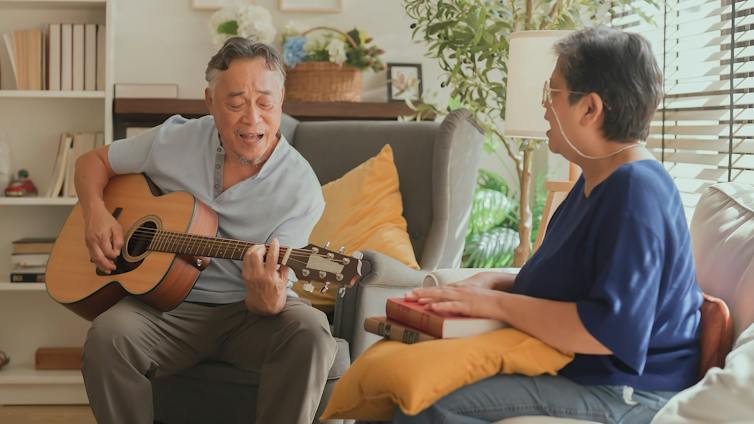
Participants were then randomly divided into three groups. The first group (the control group) was asked about brain-stimulating activities they did daily, such as brain games, puzzles, crosswords, reading, listening to music or playing a musical instrument, social activities (such as being in a choir or seeing friends), and learning a language.
The group was tested for cognitive function and given brief, evidence-based advice on how to protect their cognitive health, including the importance of physical activity, eating a healthy diet and engaging in brain-stimulating activities.
Group two was also asked about their brain health habits and given the same tips for taking care of their cognitive health. Alongside these measures, they had access to a website developed by our team. This website offered automated behavioral support for brain exercises and tips for living a healthy lifestyle.
Group three was asked the same questions about brain health and received the same advice as the other two groups. They also had access to the same website as group two. In addition to these measures, they were offered two brief appointments, phone calls or emails from a facilitator – usually a nurse – to facilitate their continued engagement with the website.
A year later, participants in each group took the Baddeley test again.
All groups saw cognitive improvements. But we were more surprised by the results of the first group – the control group. Our study showed that after 12 months, 28% of people in group 1 no longer showed signs of cognitive impairment. In group two, just under 33% reversed their cognitive decline, compared to about 32% of people in group three.
Both groups two and three showed slight additional improvements in their Baddeley scores compared to the control group. The group that received additional support (group three) had an 8% reduction in the number of people with mild cognitive impairment compared to the control group. For those who had cognitive impairment at the start of the study, the number of people with severe cognitive impairment decreased by 18% compared to the control group.
Since all study participants ate a fairly healthy diet and were physically active at the beginning and throughout the study, the effect we observed seems to be explained by the fact that participants were engaging in more brain-stimulating activities.

WHYFRAME/ Shutterstock
There are, however, some reservations regarding our results.
First, there was no real control group. Although the first group acted in some ways like a “control group,” it is not a traditional control group. Typically, control groups in studies receive no treatment or intervention. This way, researchers can effectively compare whether a treatment works or not by comparing it to a similar group of people who do not receive that treatment.
But because participants in the control group still received advice about their brain health, had their cognition tested, and were asked questions about brain-stimulating activities, this led people to change their behavior in an effort to improve their cognitive health.
A second caveat is that there has not yet been a formal analysis of the processes – meaning the data has not been analyzed thoroughly to understand which variables might have predicted the observed changes. Longer-term follow-up will also be needed to know whether brain training activities have long-term benefits, particularly if dementia develops.
Brain health
Our study is not the first to show that cognitive health can be improved through brain training and lifestyle changes.
But our study is the first large-scale trial to explore the effect that even small daily activities can have on cognitive health. Our results also show that simply giving advice and directing people to brain-stimulating activities they can do can have a real impact.
The key message of our study is crucial. This shows that the brain remains malleable and can learn new things into old age. This means that even the small things you do every day can really make a difference in fighting cognitive decline.
Gn Health