And several possible fixes.
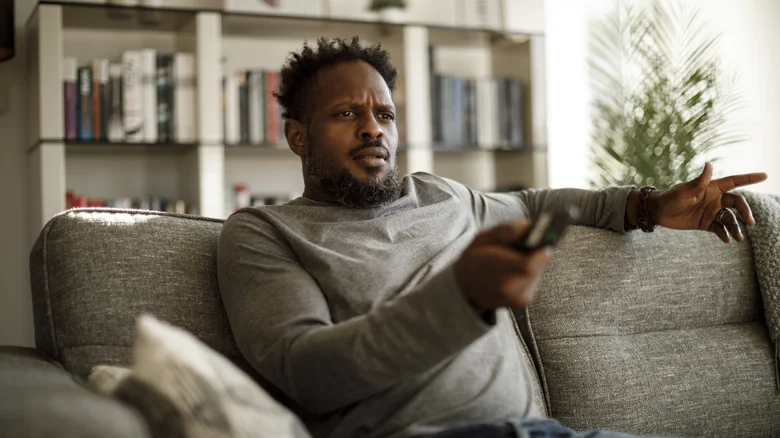
One of the most frustrating experiences you can have while watching TV is when the sound is out of sync with the video. You’ve probably noticed it while watching a show or movie where the characters’ mouth movements don’t match the dialogue. Or when you’re watching a sporting event and the play-by-play announcer calls a game-winning field goal, touchdown, or home run before you even see it.
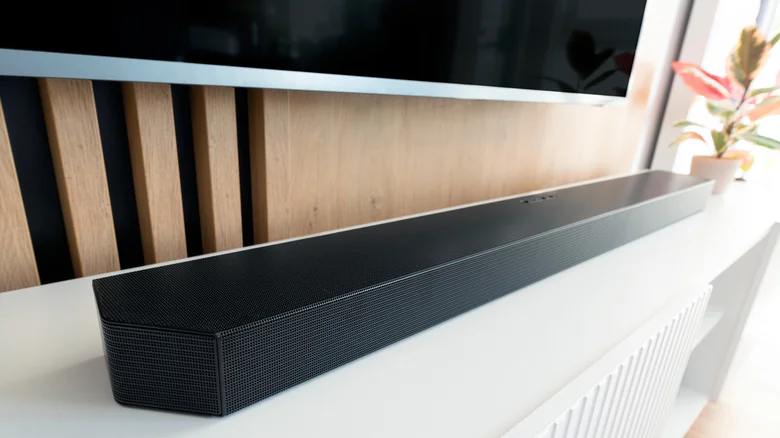
Audio delay is a fairly common occurrence with soundbars connected to TVs, and it can happen for several reasons. Fortunately, audio delays can often be fixed quite easily by simply adjusting some settings on your smart TV.
How the sound between your smart TV and soundbar is delayed
Understanding the source of the audio delay between your smart TV and soundbar can help you determine how to fix it. For example, if you notice audio delay when watching TV through your cable or streaming service, try watching something from another source, like a Blu-ray player. If the Blu-ray audio syncs correctly, the problem may be with the cable or streaming service.
But if audio delay occurs regardless of what you’re watching, the culprit is likely your TV or soundbar, or a combination of both. First, check the connection between your TV and your soundbar. If the digital optical cable or HDMI cable is loose, tighten it or connect a new one and try again. This may seem obvious, but a poor connection is often the culprit.
The problem could also be caused by delays in audio processing. Here’s why. When you only use your TV speakers for audio, the TV does all the work behind the screen because it sends video and audio only when processing of both signals is complete. This results in completely synchronized audio and video. When you introduce a soundbar or other home theater system component into the process, an additional layer of processing occurs. Your TV decodes video and your soundbar decodes audio. If these decoding processes are interrupted for even a fraction of a second, it is enough to delay the audio even though the video has already been decoded and processed. This is when you get some really annoying, out of sync dialogue and audio.
Of course, other factors can also contribute to audio delay. The TV, soundbar, streaming device, gaming console, and even poor Wi-Fi or Bluetooth wireless connections can also cause lag.
How to Fix Soundbar Audio Delay Issues
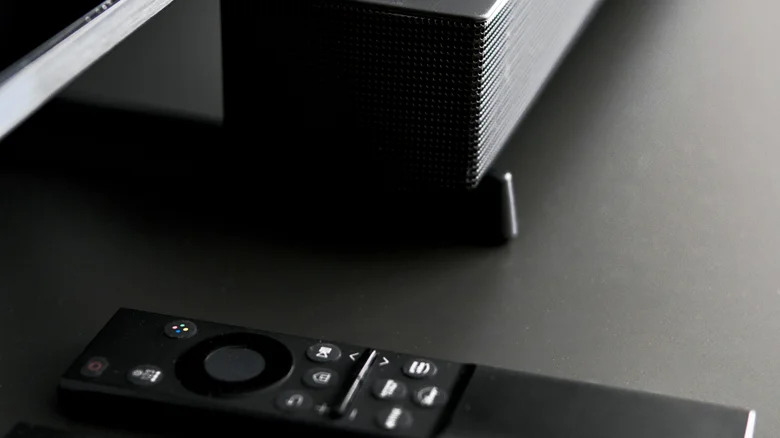
Obviously, different brands of soundbars will have slightly different settings and controls. For Samsung soundbars, you can use the sound control button on the remote to adjust the sound until it lines up correctly. The remote also has an Audio Sync button, which allows you to use the Skip Forward/Backward buttons to adjust the sound until it’s just right. Also try the Audio Sync +/- feature for timing adjustments.
Likewise, LG soundbars have an AV Sync feature that can help you resynchronize the audio to align with the video. If you have a Sonos soundbar, you can go to the Sonos app on your phone and access System > (select your soundbar) > Home Theater > TV Dialog Sync and adjust the slider until the audio syncs with the video.
There’s also a convenient way to bypass the TV altogether, called direct routing. This is accomplished by plugging your cable box, streaming device, or gaming console directly into the HDMI input on your soundbar. Then connect the other end of the HDMI cable to an HDMI output on your TV, and the audio decoding bypasses the TV and the processing delays it can cause by going directly to the soundbar.
Adjust your TV settings to resolve audio delay issues
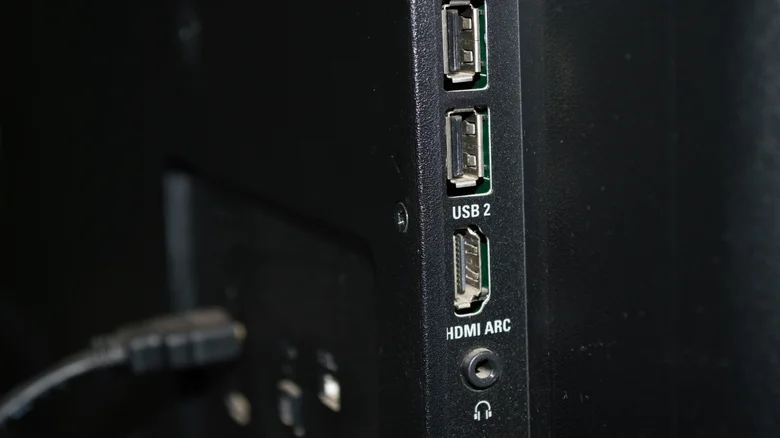
Often, a simple adjustment of your TV settings can be enough. A simple solution is to turn off the additional audio and video modes and processing that your TV manufacturer touts as premium features. You’ve probably noticed them in your settings menu: features like digital noise reduction, dynamic contrast, game mode, movie/theater mode, virtual surround sound, dialogue enhancements, and 3D audio. Yes, these features can improve audio-visual quality, but they also require additional processing time, resulting in audio lag. Turning these features off or on can reduce the delay enough to ensure your soundbar’s audio syncs with the TV’s video.
The TV’s and soundbar’s HDMI ARC (Audio Return Channel) hardware is also a common cause of audio lag, because it doesn’t have the bandwidth to transmit uncompressed high-end audio like Dolby TrueHD, DTS-HD Master Audio, or 5.1 surround sound through the HDMI cable to the soundbar without taking extra time to transform those signals into passable lower-quality audio. Upgrading to eARC resolves this issue. If your TV and soundbar both have HDMI eARC ports, all you need is an Ultra High Speed HDMI cable to connect them. If neither your TV nor your soundbar has an HDMI eARC port, direct routing is probably the best solution.
You can also change your TV’s audio format or source device to PCM or stereo to reduce processing time. But that eliminates surround sound, which is probably one of the reasons you bought a soundbar in the first place. A better solution is to look in your TV settings for features like Lip Sync, AV Sync, Audio Delay, or Audio Sync in the TV’s audio or sound menu. Any of them allows you to adjust the audio delay setting until you get the result you want. And if all else fails, try restarting or resetting all the components of your home theater by unplugging them for a minute or so, then plugging them back in one by one and seeing if there’s a difference. It’s also a good idea to update the firmware on your devices to ensure that bugs are fixed.
Gn tech