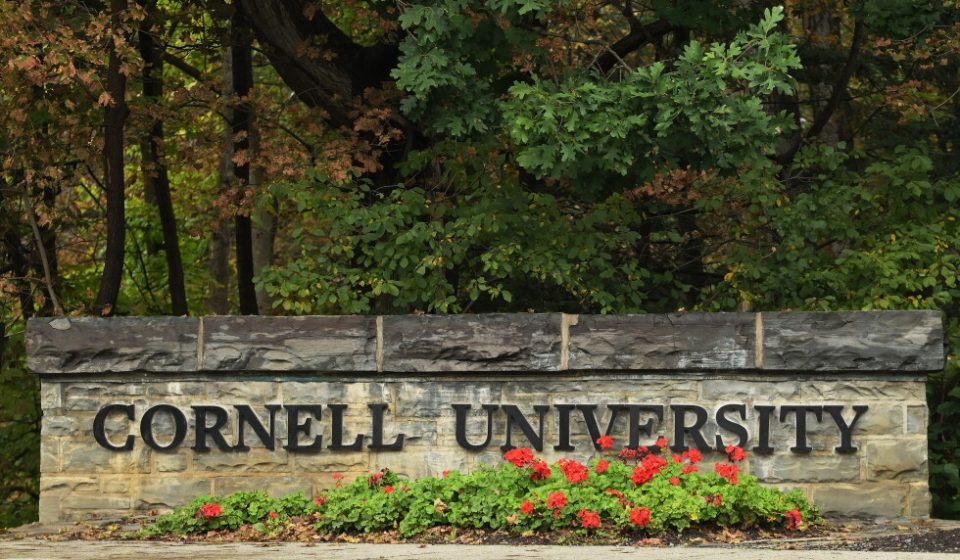

A woman who filed a lawsuit claiming she was sexually assaulted by seven men at a Cornell University fraternity house told police weeks after the incident that she could “say with 100 percent confidence that I was raped.” according to a report from CBS New York, which said it had obtained a transcript of his interview with investigators.
The transcript, which has not been made public, raises new questions about the local prosecutor’s decision not to prosecute anyone at the time.
In recent days, Tompkins County Prosecutor Matthew Van Houten has argued that the woman’s initial account to police did not contain allegations that she was drugged, incapable of consent or forced to have sex. However, he also said he had reopened the investigation based on new information in the woman’s lawsuit, filed this month.
Cornell has agreed to bring in outside lawyers to independently investigate the university’s handling of the woman’s allegations, New York State Gov. Kathy Hochul announced Wednesday.
The woman first went to Cornell campus police about three weeks after the alleged attack that began on October 19, 2024, and then returned on November 14 and 15, 2024 for questioning.
“Yes. It was coercion, yes,” she told a campus police officer, according to the transcript obtained by CBS. According to CBS News, she said she was “completely and utterly incapacitated” before some of the sexual abuse.
The woman admitted that she had been drinking alcohol and using drugs the night she visited the Chi Phi fraternity house in October 2024, and that she had gaps in her memory.
She also told police she was comfortable with first having sex with two of the men, but not with what happened later when other men began entering the room.
“And then, of course, I was hit at the same time. Physically, I was hit very, very hard,” she told police, according to the transcript. “I can say with 100 percent confidence that I was raped,” she told investigators.
The woman, identified only as Jane Doe in the lawsuit, filed a lawsuit Sept. 16, claiming she was sexually assaulted at the Chi Phi fraternity house after being pressured to snort ketamine, smoke marijuana and drink alcohol. She became completely incapacitated while fraternity members sexually assaulted her, she said.
Van Houten did not immediately respond to emails and phone messages from The Associated Press on Wednesday, but he told CBS News he never saw the transcript of the woman’s interview when his office declined to press charges and instead relied on a statement written by a campus police officer but signed by the accuser.
Van Houten published a summary of this statement, with some of his direct quotes included. He defended his office’s decision not to investigate further after the woman first came forward.
“There were no question marks. There was no additional need to find information because we had all the information that police had gathered from Jane Doe through her very detailed, very complete statement that she provided,” Van Houten told CNN earlier this week.
Cornell University first publicly revealed that it was investigating the woman’s allegations on November 8, 2024, the same day she first went to police. The school sent students an email warning them that someone had reported that they had been sexually assaulted at a fraternity house and forced to use drugs. Cornell suspended the Chi Phi fraternity the same day.
In another public statement to students in late November 2024, Cornell University President Michael Kotlikoff said campus police were investigating “deeply disturbing allegations of drug abuse and sexual violence” in the fraternity house.
Cornell later appointed a task force to combat sexual assault on campus. But with the prosecutor’s decision not to pursue charges and the university’s internal disciplinary investigation shielded from the public, attention to the issue has waned.
Cornell said in a statement this week that it supports the decision to reopen the criminal investigation, adding that its own investigation led to disciplinary action or expulsion of some students. The Chi Phi chapter remains barred from campus, but the university has refused to release further information about each student’s discipline, citing confidentiality rules.
Earlier this week, Hochul called for a new investigation into the university’s handling of the matter. In a social media post Wednesday, she said she spoke with Kotlikoff and he “agreed to retain outside counsel for an independent investigation.” Cornell confirmed he accepted but declined further comment.
“This culture has to stop. And in New York, we’re going to do everything we can to stop it,” Hochul said.
Gn headline