
(Bloomberg) — Typically called upon to act when poor countries become mired in debt, the International Monetary Fund will face growing signs of trouble among richer countries this week.
Most read on Bloomberg
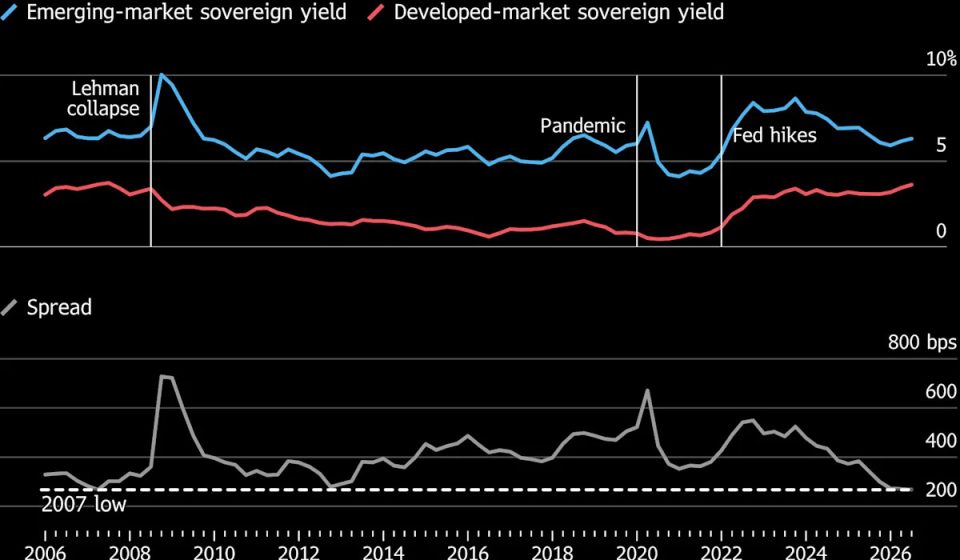
Governments in the United States, Europe and Japan have seen borrowing costs rise to multi-decade highs as the U.S. war against Iran drives up inflation. This means they have to pay more to repay historically large debts, pushing them to borrow even more. This threatens to become a vicious cycle.
It all makes for an upsetting backdrop to the annual meetings of the IMF and World Bank in Bangkok, where finance ministers and central bank chiefs will gather starting Monday.
The host country was once ground zero for a major emerging market crisis. Host institutions were until recently preoccupied with the post-Covid struggles of weaker economies. Now the focus is on problems that originate in the developed world – the “worst offenders” on the debt front, according to IMF chief Kristalina Georgieva – but may not remain confined to those countries.
When borrowing costs rise at the heart of global finance, such as in the U.S. Treasury market, it typically impacts consumers, businesses and governments around the world. When the Federal Reserve or the Bank of Japan raise interest rates, as they did in the face of $100 a barrel of oil, there is pressure on their emerging market counterparts to follow suit or risk capital flight.
Georgieva says debt and energy – as well as the AI boom that is boosting some economies but circumventing most – are at the top of this week’s agenda. Earlier in the Iran war, she emphasized the world’s resilience, but lately the combination of rising energy prices, inflation and interest rates has undermined her. “Normally this would not be a major problem,” she said last month. “But these are not normal times, as debt levels in advanced economies are at historic highs.”
“In the street”
What’s more, the IMF chief warned, governments that face higher interest bills will struggle to afford other things, like helping their citizens cope with the high cost of living. “We have to prepare for people to be even more unhappy,” she concluded. “Maybe in the street.”
Gn bussni