

The Black Sea has become the world’s deadliest shipping route in 2026, with more than 570 ships hit and at least 40 sailors killed since the start of the year, surpassing the Persian Gulf in number of attacks and maritime casualties.
We bring you stories from the field. Your support keeps our team on the ground.
DONATE NOW
According to the Financial Times On October 25, citing maritime security company Ambrey and the International Maritime Organization, attacks on commercial vessels in the Black Sea reached levels more than six times those recorded in the Persian Gulf, where 24 sailor deaths were confirmed.

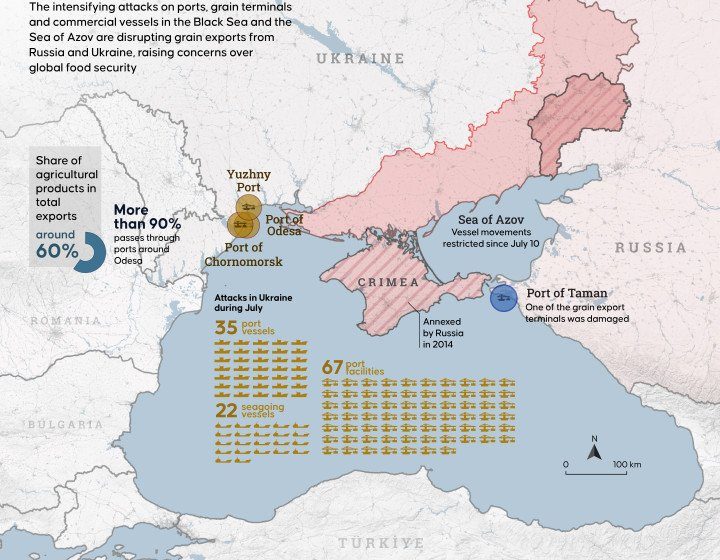
Infographic illustrating how attacks on Black Sea ports and commercial ships are disrupting grain exports from Ukraine and Russia. (Source: Anadolu via Getty Images)
The situation deteriorated sharply over the summer. Between July and September, 387 ships were struck, more than five times the number recorded in the previous quarter. Ambrey estimates that Russia is responsible for about 90% of attacks on ships over the past 45 days.
The latest incidents have extended beyond Ukrainian waters. On October 23, an oil tanker was struck near the Romanian coast, killing one sailor and leaving three others missing. Earlier, on October 15, drones struck two chemical tankers near Romania, including the Wine Trader and the Yara J.
This escalation has significantly disrupted operations at Ukrainian ports in Greater Odessa. Fewer than 10 ships passed through ports last month, compared with around 400 in July, according to port operator TIS.

Learn more
- Category
- War in Ukraine
October 24, 2026 00:06
Shipping companies are also facing rising insurance costs. The Financial Times reported that war risk insurance premiums could reach 15% of the value of a ship’s hull, almost twice the rate for ships operating in the Persian Gulf.
As a result, some operators have withdrawn from Black Sea routes, while others are deploying older vessels, some up to 50 years old, to reduce their insurance costs.
The disruptions also affected Ukraine’s agricultural exports. Sea shipments fell to 1.4 million tonnes in August, about 75% less than pre-war, while continued attacks on ports complicated efforts to redirect exports via the Danube.


Gn world


