Saudi Arabia strikes oil depots in Yemen as conflict with Houthis intensifies | Saudi Arabia

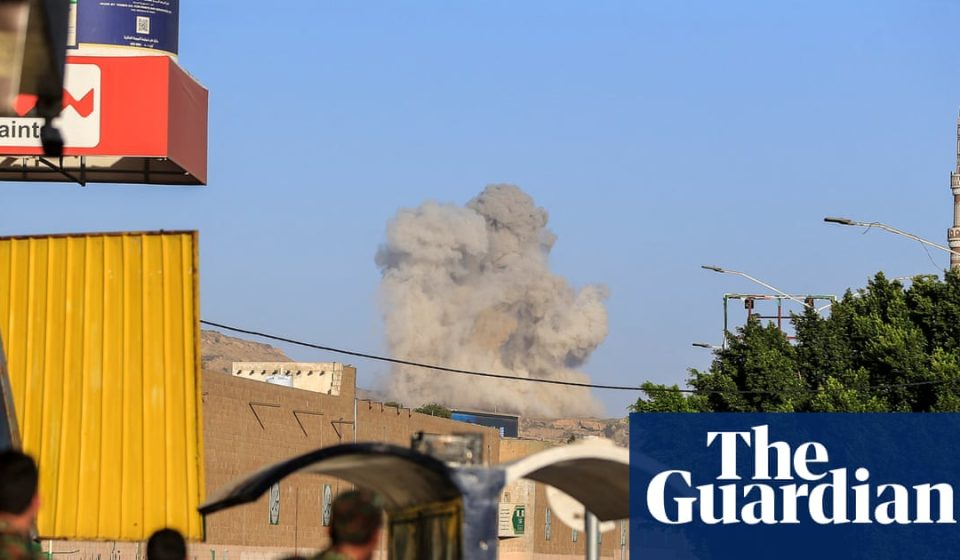
Saudi Arabia has launched a series of strikes on a strategic oil depot on the outskirts of Yemen’s capital Sanaa, in a further escalation of the conflict between Riyadh and Iran-backed Houthi forces.
Ahead of Tuesday’s attack, a Saudi spokesperson warned civilians to leave the target area, in an apparent attempt to sow fear among the local population ahead of the biggest attack yet on the Houthis’ energy infrastructure.
The Central Sabaha Station oil depot, west of the city, contains large tanks that often contain significant quantities of fuel derivatives, although the Yemeni Oil Company said its storage facilities were empty at the time of the attack.
Houthi oil depots at the Ras Isa port in Hodeidah, the subject of Israeli attacks in 2024, were also hit in 10 waves of attacks apparently aimed at immobilizing the Houthi army as it continues its advance south, notably towards the city of Taiz.
Earlier, the Saudis also struck what they believe to be a hideout of Houthi leaders in the Bani Mu’in area in the border district of Razih in the west of Saada governorate in northern Yemen.
The strike on the oil depot appears to be the Saudi response to a Houthi attack on Riyadh’s King Khalid International Airport on Saturday, which killed 13 people and injured 300. The airport is closed until Saturday at the earliest, a blow to an economy trying to show that its security makes the country a safe place to invest.
A Houthi spokesperson responded to the attack on its oil storage by warning “all employees and citizens present near any Aramco Petroleum-affiliated facility in Riyadh to evacuate and stay away from it, as it is a legitimate target for our forces.”
The difference between the threats is that Saudi Arabia has complete air dominance over Yemen while the Houthis must respond using drones and missiles that can be intercepted.
Baraa Shiban, a Yemen specialist at the defense think tank Royal United Services Institute (Rusi), warned that “Saudi Arabia is struggling to respond to the Houthis’ improving weapons technology. Until relatively recently, the Houthis’ missiles and drones fell into desert areas or were intercepted if they passed. They have learned to deploy drones that fly lower, are smaller and are less easy to detect. They are cheap and it It doesn’t take much to be effective.”
But both sides’ dramatic threats to burn down enemy energy infrastructure symbolize the escalation of the conflict rather than its extinction.
Donald Trump complained that the Houthis were “behaving very badly” and said he would “never forget” their attacks, which he said were an attempt to influence the US midterm elections next month. But he did not announce any new military action.
The latest phase of the conflict between the Saudis and Houthis began last month after rebels seized key areas along the Bab el-Mandeb Strait, a key waterway for transporting Gulf oil and other goods to the southern end of the Red Sea off Yemen.
This week, the Houthis moved closer to the southern city of Taiz, getting close enough to the city limits to fire rockets into residential areas. City leaders have made repeated appeals to the Yemeni government for military equipment, while public health professionals have warned of a shortage of medicines for intensive care patients.
Government-aligned forces sent reinforcements to the southwestern Al-Mudarabba district of Lahij governorate, as well as the mountainous Al-Waz’iyya district.
But anti-Houthi forces in Yemen are not themselves united: a group known as the Southern Transitional Council is playing a larger role in the fight against the Houthis – although its main goal is to secede from the country’s north.
On Tuesday, Aidarous al Zubaidi, the exiled leader of the STC, delivered a rare speech declaring “a popular mobilization for the defense of the south and its national liberation project” – including repelling the invading Houthi militias.
Al Zubaidi, now based in Abu Dhabi, has made clear that he remains supportive of a plan to hold a referendum on South Yemen’s independence.
Zubaidi’s organization remains banned in Yemen and he has been accused of treason, but behind-the-scenes talks are underway to ascertain whether Saudi Crown Prince Mohammed bin Salman is willing to legitimize the STC and even allow Zubaidi to return. Reestablishing the STC would be seen as a betrayal by Yemen’s current president, Rashad al-Alimi, but its usefulness to Saudi Arabia is diminished if he does not have the same military forces as Zubaidi.
Gn headline