
Scientists exploring the South Atlantic Ocean have discovered 57 new marine species and five new genera. The discoveries were made during a two-week workshop that brought together 20 taxonomists and early-career researchers to study deep-sea biological samples.
TAKEAWAYS
- A group of Argentine scientists have discovered 57 new marine species and five new genera.
- The workshop brought together 20 taxonomists and early career researchers from across Latin America and Europe.
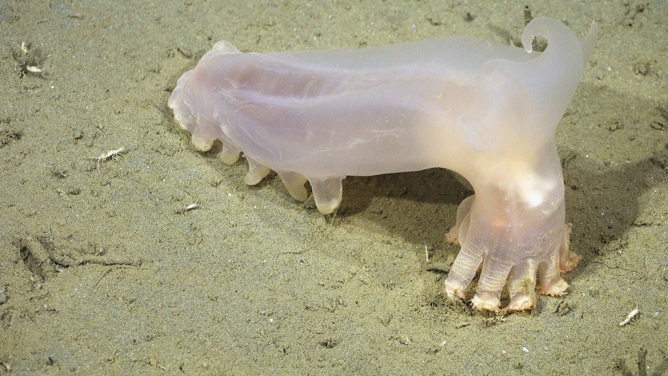
- Among the key discoveries was Loki, the sea cucumber, a deep-sea echinoderm named for its horned appendages.
A group of Argentine scientists have discovered dozens of new species in the South Atlantic Ocean, shedding new light on one of the most biologically dynamic regions in the world.
NEW SPECIES OF WILD CAT DISCOVERED AFTER BEING HIDDEN IN SIGHT FOR MORE THAN A CENTURY
During a two-week international species discovery workshop led by the Nippon Foundation-Nekton Ocean Census in partnership with the Schmidt Ocean Institute, scientists identified 57 new marine species and five new genera.
“The discovery of 57 new species and five new genera in just two weeks demonstrates the speed and power of collaborative taxonomy,” said Ocean Census Chief Scientist Dr Michelle Taylor.

The team discovered that this amazing deep-sea sea cucumber (sea cucumber) was named “Loki” because of its prominent horned appendages.
(ROV SuBastian / Schmidt Ocean Institute)
The workshop, which took place in July, brought together 20 taxonomists and early-career researchers from across Latin America and Europe to examine biological samples from the deep sea.
The team used remotely operated vehicles and incorporated taxonomic techniques to identify specimens. They also recorded their findings directly on Ocean Census NOVA, the world’s first open-access data platform for newly discovered marine species.
MEET THE “GHOST” LOBSTER 1 IN 100 MILLION HELPS SCIENTISTS UNLOCK COLORFUL MYSTERY
“International cooperation in taxonomy is essential, especially in groups with few active specialists,” said Dr. Daniel Lauretta, senior researcher at CONICET and the Museo Argentino de Ciencias Naturales.
“The Species Discovery Workshop accelerated species identification, recognition of species new to science, and capacity building for local early-career taxonomists working on deep-sea fauna,” Lauretta continued.
Key discoveries included Loki the sea cucumber, a deep-sea echinoderm named for its horned appendages, as well as a collection of newly identified copepods, deep-sea corals and sea feathers.
MYSTERIOUS ANIMAL LAUNCHES ATTACK, INJURING 3 PEOPLE IN NEW HAMPSHIRE CITY
In total, the team identified 20 new species of copepods, 22 echinoderms, including sea cucumbers and crinoids, 14 cnidarians, including octocorals, sea pens and stony corals, and a scaphopod mollusk.
The team also discovered five new scientific genera including corals, sea cucumbers and crustaceans.
“These results show the power of bringing together world-class technology and expertise with international scientific collaboration,” said Dr. Jyotika Virmani, executive director of the Schmidt Ocean Institute. “By identifying new species, these scientists have advanced our understanding of South Atlantic marine life and, through the ocean census, ensured that this data is accessible on a global scale.”

Lead researcher Dr Daniel Lauretta examines deep-sea marine specimens at the International Species Discovery Workshop.
(The Nippon Foundation-Nekton Ocean Census / Schmidt Ocean Institute / FOX Weather)
The success of the discovery effort led the team to plan a follow-up expedition in February and March 2027 to another underwater canyon.
HOW TO WATCH FOX WEATHER
New samples of marine invertebrates collected during the next expedition could potentially discover even more new species and genera, leading to new collaborative species discovery efforts.
“By bringing together scientific expertise from Latin America and international experts, as well as connecting them to the open access Ocean Census NOVA platform, we are significantly accelerating our understanding of marine biodiversity,” said Dr Taylor.
Gn world