
Scientists have identified a potential biological mechanism that could explain how seemingly unrelated environmental factors contribute to the increasing prevalence of allergies.
Allergies may begin with an energy crisis inside the cells that protect the body from the outside world, rather than a malfunction of the immune system. A comprehensive analysis by Griffith University researchers challenges decades of conventional thinking about allergic disease and proposes a potential biological origin for conditions ranging from eczema to food allergies.
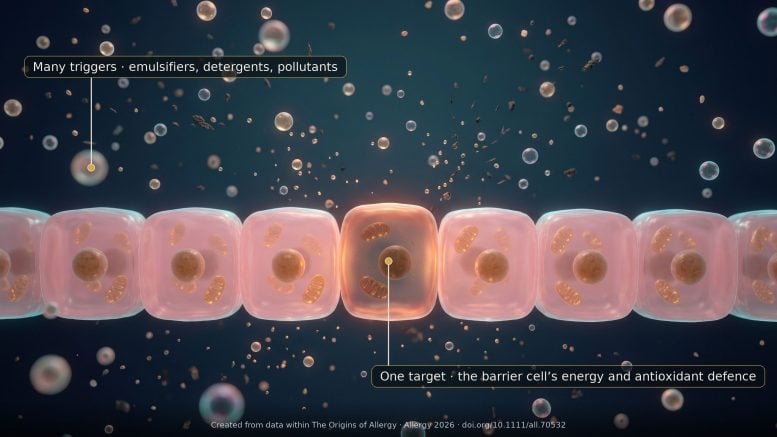
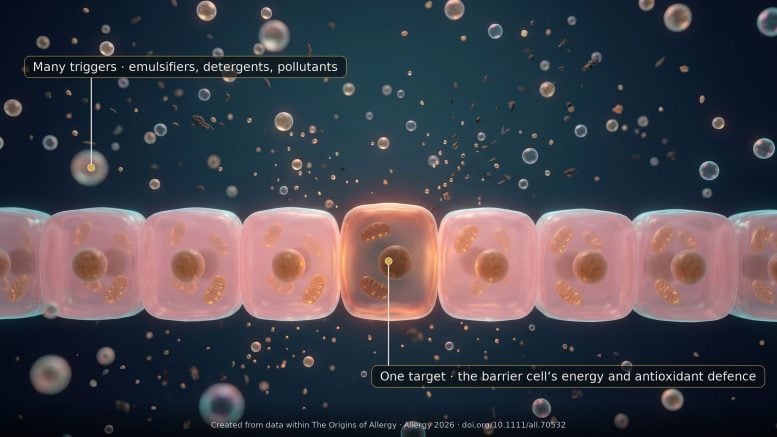
Researchers identified abnormalities involving mitochondria, the structures responsible for producing much of the energy cells need to function. Their findings suggest that epithelial cells, which form protective barriers along the skin, gut, nose, lungs and esophagus, may struggle to respond to environmental and metabolic demands, triggering an excessive immune response.
“For 60 years we have taught that allergies start with the immune system and the barrier breaks down as a result, but our work suggests it could be the other way around,” said Professor Peter Smith, clinical immunologist and lead immunologist on the study, at Griffith School of Medicine and Dentistry.
A potential energy crisis behind allergies
The team examined what it describes as the largest collection of multi-omic allergy data known to researchers, drawing on 116 case-control cohorts and data from 3,776 patients. Multiomics analysis combines different types of molecular information to identify biological patterns that might otherwise go unnoticed.
Scientists may have discovered the hidden cause of allergies. Credit: Professor Peter Smith, Griffith University
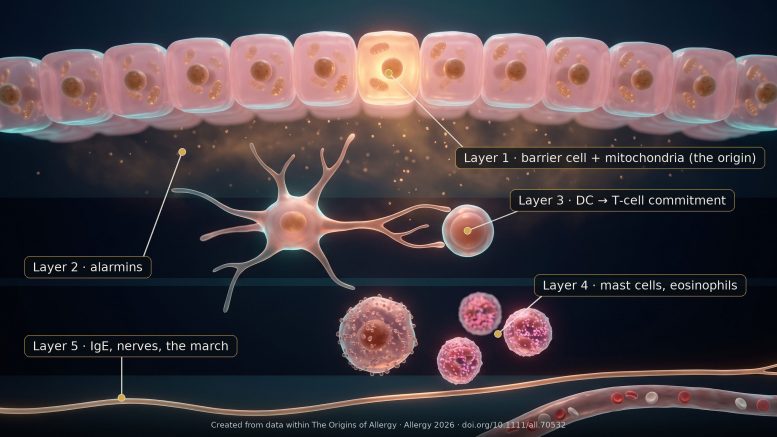
“Allergic diseases, which now affect up to one in three children, may start a little earlier with a power outage in the mitochondria of the epithelial cells that form the body’s barrier,” Professor Smith said.
“The barrier cell cannot meet the energy and stress demands of the modern environment, so it sounds the alarm too easily, and the immune events that we recognize as an allergy ensue.
“This could help explain why some children suffer from eczema, food allergies, hay fever, asthma and related illnesses.”
Evidence hidden in apparently healthy tissue
The strongest evidence has emerged in eosinophilic esophagitis, an allergic inflammatory disease affecting the esophagus. Across all 13 independent patient cohorts, researchers found reduced activity in the cellular process responsible for eliminating damaged mitochondria.
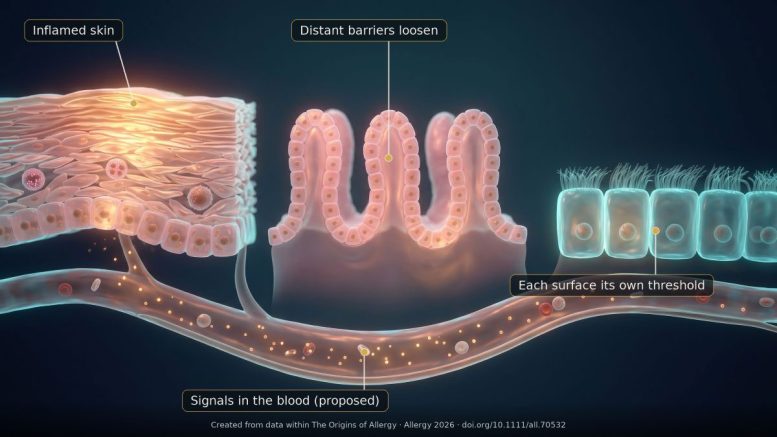
In eczema patients, abnormalities affecting the skin’s protective barrier and antioxidant defenses appeared even in areas without inflammation. This finding is consistent with the possibility that cellular dysfunction precedes visible symptoms.
However, the mitochondrial signature was not universal. Researchers found only partial evidence of this in hay fever, while the pattern was absent in established asthma and nasal polyps.
How modern environmental exposures can help
The researchers propose that several environmental factors associated with allergies could converge on the same biological vulnerability: the ability of epithelial cells to generate sufficient energy and resist stress.
Potential contributors include highly processed diets, air pollution, microplastics, detergents, decreased dietary fiber consumption, and exposure to antibiotics early in life.
Associate Professor Nic West, a molecular immunologist from Griffith’s School of Pharmacy and Medical Sciences and co-author of the study, said the wide range of factors associated with allergies made it difficult to develop a unified explanation for their rapid increase within a single generation.
Why allergies may return after treatment
The proposed mechanism could also explain why allergic diseases frequently recur after treatment. Inflammation itself can damage epithelial cells, potentially creating a self-perpetuating cycle of barrier dysfunction and immune activation.
“The research also explains why allergies can relapse,” Associate Professor West said.
“Once inflammation is established, it further damages the barrier.
“Today’s medications work downstream, so the disease often returns when treatment stops, because they don’t get to the root cause. »
Testing the origins of allergic diseases
The researchers emphasize that their results support a hypothesis rather than establishing a definitive cause of allergies. Direct measurements of epithelial cell function before symptom onset will be needed to determine whether mitochondrial dysfunction triggers allergic disease.
“We’ve spent our careers dealing with smoke and for the first time we think we can see fire, and that’s not where everyone was looking,” Professor Smith said.
“It’s not a cure, but it’s something we’ve never had before – a logical place to start.”
“The next step is to measure these cells directly in infants before the allergy develops.”
Reference: “The Origins of Allergy: An Outside-In, Bioenergetic Hypothesis” by Peter K. Smith, Nicholas P. West, Stanley Du Preez, Hugh A. Sampson, Peter W. Hellings, David Price, Liam O’Mahony, Carina Venter, Cezmi A. Akdis and Gil Yosipovitch, October 29, 2026, Allergy.
DOI: 10.1111/all.70532
Never miss a major breakthrough: join the SciTechDaily newsletter.
Follow us on Google and Google News.
Gn Health