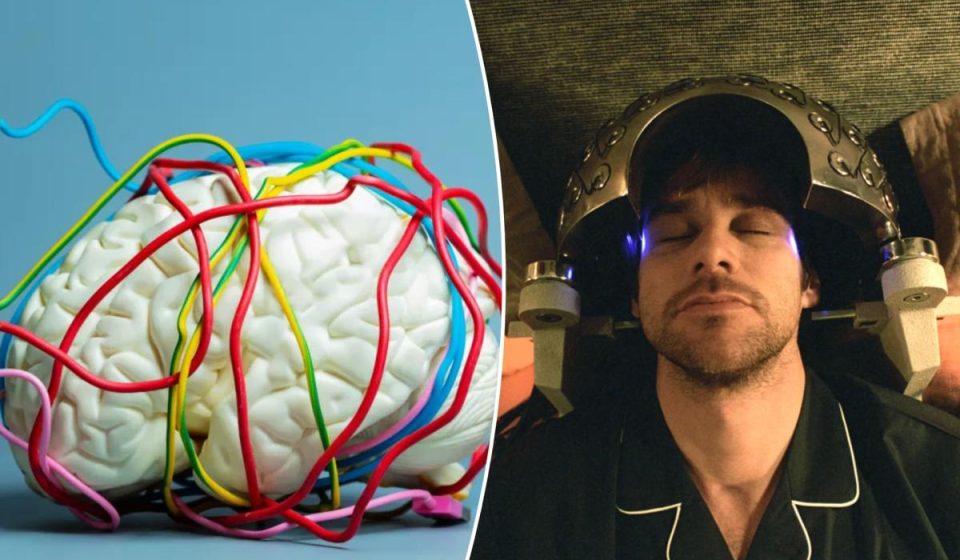
Last spring, South Korean scientists wanted to find out what would happen if they persuaded the brain to cut off some of its own wiring. Could removing connections between brain cells change the learning and memory ability of mice?
The researchers put part of the brain-cleaning team to work, getting cells called astrocytes to remove connections between nerve cells. They injected modified viruses carrying instructions that allowed selected nerve cells to develop a molecular tag and neighboring astrocytes to develop a protein that could grasp it. The technique encouraged astrocytes to remove material from nerve cell connections.
They tested it in the memory center of the mouse brain and published their results in Nature Communications in April 2026.
Then came a frightening lesson. The researchers gave the mice a mild electric shock inside a chamber and brought them back the next day. The animals froze in place, a defensive reaction that suggested they remembered where they had been injured.
Three weeks later, mice with fewer brain connections spent even more time frozen when the researchers returned them to the chamber. They seemed to remember the shock better than the other mice. The surprise was how they got there, with about 30% of the connections removed from the brain circuit targeted by the researchers.
South Korean researchers are part of a growing effort among scientists around the world to rewire living brains with cutting-edge technology and ingenuity. This year’s Nobel Prize in Medicine was awarded to Karl Deisseroth of Stanford and two researchers based in Germany, Georg Nagel and Peter Hegemann. Their work helped establish optogenetics, which allows scientists to use light to activate or deactivate certain nerve cells.
Researchers hope that physically altering connections within the brain could eventually help treat depression, PTSD and other mental health issues. But the prospect of altering the way people respond to their own memories with science fiction-like techniques also raises questions about the scope of the treatment, particularly if unwanted change can’t be undone.
“We are beginning to develop tools to change the way certain neurons communicate, rather than just increasing or decreasing the activity of large regions of the brain,” Daniel Colón-Ramos, professor of neuroscience and cell biology at the Yale School of Medicine, told the Post.
At Duke University, psychiatrist Dr. Kafui Dzirasa and colleagues are developing a technique called LinCx. This involves injecting modified viruses into selected areas of the brain to deliver genetic instructions. The cells then make modified proteins tailored to a matching partner, creating an additional route for signals to travel. It’s like installing a new communication line between two computers.
The hope is that doctors will one day be able to use new connections to bypass a faulty brain circuit, much like heart surgeons do with a blocked artery.
“We are considering it to be implemented as is (coronary artery bypass graft),” Dzirasa told the Post. “Our goal is to permanently restore circuit function so that repeat administration is not necessary. »
But there is a catch. The proteins could combine with those already present in the brain, creating connections that scientists had not anticipated. To avoid this, the team designed two proteins that were more likely to attach to each other.
So far, Dzirasa’s team has used these new connections to change how mice handle stress and behave around other mice. In one experiment, they treated young mice prone to excessive grooming, and this behavior never developed.
His team is now trying it on mice that have already started excessive grooming. They want to see if the new connections can be helpful once the behavior has taken hold.
Dzirasa hopes doctors can one day help people resist stress before it leads to depression, but that’s still a long way off.
“There is a huge amount of work between demonstrating a technology in mice and using it safely in humans,” he said.
Colón-Ramos’ lab successfully rewired the brain circuits of worms, whose brains are simple, centered on a ring of nerve connections near the head.
For a study published in 2018, its researchers trained the worms to prefer cooler temperatures. When allowed to choose where to go, the worms looked for a cooler place, but the addition of an electrical connection between two types of nerve cells changed their direction. The worms were now crawling toward the heat, despite what they had learned. This single change in their wiring had negated their previous preference.
“We have not created a new memory of a warmer environment,” Colón-Ramos said. “Instead, we changed the way the nervous system used its previous experience to make a decision.”
Others use young zebrafish to experiment on the brain. Their nearly transparent bodies give researchers a window into the nervous system and let light reach the cells they want to control.
Scientists can also disconnect brain cells, and the results can be just as surprising. Sangkyu Lee, a neuroscientist at South Korea’s Institute of Basic Sciences, helped develop SynTrogo, the tool used in mice that remembered the shock chamber more strongly.
The researchers injected modified viruses into the part of the brain involved in memory, delivering instructions for two proteins. The selected nerve cells produced one protein on their surface, and nearby supporting cells, called astrocytes, produced the other, which could latch onto it. In cells grown in the lab, the team watched the astrocytes nibble away at pieces of the labeled nerve cells, also taking some of the material at their connections.
In mice, the intervention reduced connections in the targeted circuit. Those that remained grew larger and became more capable of releasing chemical signals. They could also strengthen more easily, suggesting that the circuit was better prepared to learn.
The mice showed no significant changes in their working memory under the conditions tested. Their stronger recall from the shock chamber was a specific result, and Lee warns that removing too many connections could damage brain function. No one should take this as permission to improve their memory by losing brain wiring.
For Don Arnold, a professor of biological sciences at the University of Southern California, disconnecting cells opens up an interesting possibility for treating PTSD. He wonders if cutting certain ties might allow someone to remember a traumatic event without reliving the fear. The memory would remain, but less the anxiety and terror. Think “Eternal Sunshine of the Spotless Mind”, only you’ll still remember your ex.
Arnold thinks this is possible “in principle”, although his team has not yet tested whether it is practical.
The ethical debate predates these tools. In a 2011 interview with PBS’s NOVA, bioethicist Arthur Caplan discussed the prospect of treatments that alter disturbing memories. “Our personal identity is deeply tied to our memory,” he said.
Caplan also argued that relieving disabling memories could justify changing them. The difficult question, he suggested, is where to draw the line between treating serious suffering and suppressing experiences simply because they are unpleasant.
Arnold’s tools are laboratory-designed proteins that researchers have selected brain cells make. They break down other proteins that keep certain connections functional, preventing messages from passing through those connections. Researchers can choose which brain cells will receive the treatment, but they must sever one type of connection on those cells. They are not yet able to identify only the links linked to a traumatic memory.
Fear helps us recognize danger, so doctors need to be careful about which memories they have falsified, Arnold said. There is also the problem of recovering a memory if something goes wrong. He doesn’t know of any way to do it once it’s cleared.
Other researchers have their own control issues to resolve. Lee’s team has yet to demonstrate a cancellation function, and Dzirasa says reversibility remains a work in progress. Before human testing, scientists would also need to establish long-term safety and determine which connections need to be changed in each patient.
“In psychiatry, two people with the same diagnosis may have very different underlying circuit dysfunction,” Dzirasa said. Effective treatment would require understanding what is wrong in that particular brain.
So far, scientists have modified brain connections in laboratory animals and observed their behavior change. For this to work safely in humans, much more research will be needed. Dzirasa hopes the reward will be treatment that will correct what is wrong.
“Our long-term goal is to develop approaches to restore healthier circuit function, rather than simply suppressing individual symptoms,” he said.
Gn Health