Scientists Made Mice Eat Olive Oil Before Carbohydrates, Changing Their Blood Sugar Response: ScienceAlert

One of the main challenges of diabetes is controlling your blood sugar after eating, especially when it comes to carbohydrates.
But new findings provide further evidence that it’s not just what you eat that matters when it comes to controlling blood sugar: when you eat is also an important factor.
In a study published in DiabetesResearchers found that mice fed olive oil before consuming glucose experienced a reduced increase in their blood sugar levels afterward.
“Our results suggest that the order in which nutrients reach the intestine may trigger a coordinated hormonal-nervous response that changes how quickly the stomach delivers glucose to the intestine,” says endocrinologist Daisuke Yabe of Kyoto University.
Although the new findings have only been demonstrated in mice so far, this is not the first time we have seen that the order in which food is eaten can affect how blood sugar levels respond after a meal.
Meal sequencing is an emerging dietary approach to help treat and manage diabetes and obesity, with evidence showing that eating vegetables or foods high in protein or fat before eating carbohydrates helps maintain lower blood sugar levels.
It is thought that this may be because certain nutrients slow the gastric emptying process, meaning that food moves more slowly through the small intestine, delaying the absorption of glucose into the bloodstream.
Another possibility is that eating certain foods before carbohydrates may induce the secretion of glucagon-like peptide-1 (GLP-1) – the appetite-suppressing and insulin-stimulating hormone mimicked by drugs like Ozempic.
To further explore these mechanisms, Yabe’s team conducted an experiment with mice, evaluating three distinct conditions after an overnight fast.
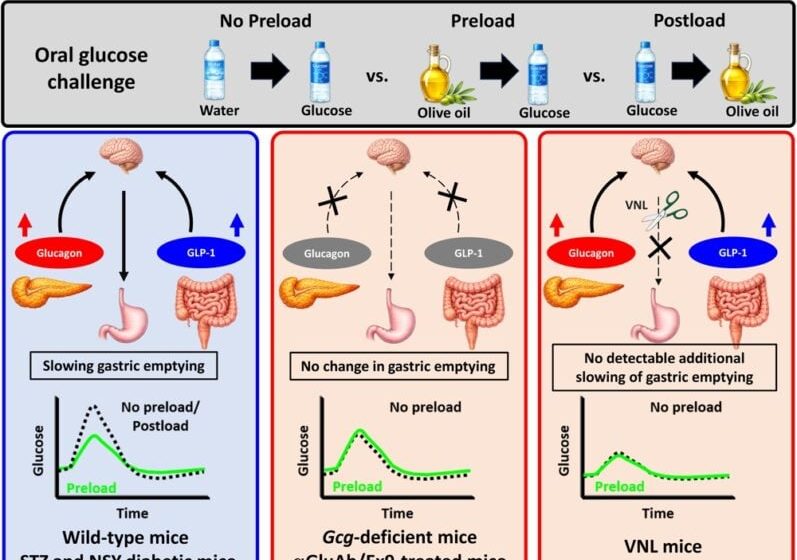
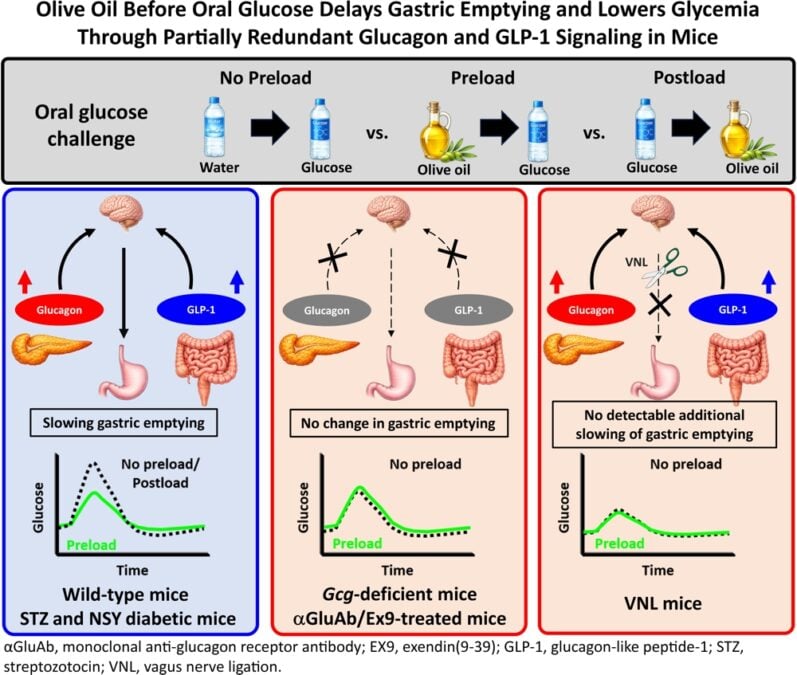
In one test, mice were given olive oil 15 minutes before receiving glucose. Another group received glucose first, then olive oil. A third group of mice served as controls, consuming water and then glucose.
Blood tests after the feeding experiment showed that mice fed olive oil before glucose had significantly lower blood sugar levels immediately after the meal, with marked reductions at the 15 and 30 minutes compared to the other mice, although the effects appeared to diminish by 60 minutes.
Mice fed olive oil first also showed slower gastric emptying and had higher levels of the hormones glucagon, glucose-dependent insulinotropic polypeptide (GIP) and GLP-1 in their blood – suggesting a range of hormonal responses that may help slow gastric emptying and limit blood sugar spikes.
Researchers tested other fats besides olive oil, including flaxseed oil, lard, coconut oil, and fish oil. Olive oil generally performed best in terms of blood sugar control, although flaxseed oil and lard produced similar results in some measures.
In separate experiments using mouse models of diabetes, preloaded olive oil provided similar benefits to blood sugar and gastric emptying, suggesting that the mechanism works even when the body’s ability to produce insulin is significantly reduced.
In other tests using drugs and genetically modified mice, researchers blocked the animals’ glucagon and GLP-1 signaling. They found that if one of these pathways was disrupted, olive oil still had beneficial effects, but if both pathways were blocked, blood sugar reduction was weakened or lost, and the effects to slow gastric emptying disappeared.
Similarly, in a final experiment, the researchers found that if they surgically disrupted vagus nerve signaling in mice, olive oil’s ability to blunt increases in blood sugar and slow gastric emptying was weakened or no longer detectable, even though the animals’ hormonal responses remained intact.
Overall, it appears that the benefits of olive oil for controlling blood sugar involve both hormones and neural pathways, the team believes.
“The effect appears to involve an integrated endocrine-neural response rather than a single hormone,” the researchers write.
“These observations suggest that early nutrient sensing activates coordinated endocrine responses that contribute to slowing gastric emptying and limiting glucose excursions.”
Since olive oil does not provide the same benefits if consumed after glucose, the order of the nutrients is a determining factor, the study authors say.
It is possible that if glucose is consumed first, its rapid absorption into the bloodstream suppresses the responsiveness of pancreatic alpha cells, thereby impairing their ability to release glucagon in response to fatty acids. In contrast, consuming olive oil first can activate fatty acid-sensing mechanisms before blood sugar levels rise significantly.
There is still much we don’t fully know about this mechanism, and it’s worth remembering that these effects of olive oil have so far only been demonstrated in mice, with no guarantee that we would see the same benefits in human patients.
But the findings highlight a common ingredient that researchers could easily test in people in future studies and give us new clues for a better understanding of how meal sequencing may work.
“Our group has long been interested in practical dietary approaches that people can pursue in everyday life,” says Yabe.
“Meal sequencing is attractive because it simply changes the way a meal is consumed rather than forcing people to avoid entire food groups.”
The results are reported in Diabetes.
This article was fact-checked by Rebecca Dyer and edited by Rebecca Dyer. Although we are proud of our process, we are only human. If you spot an error, please let us know.
Gn Health