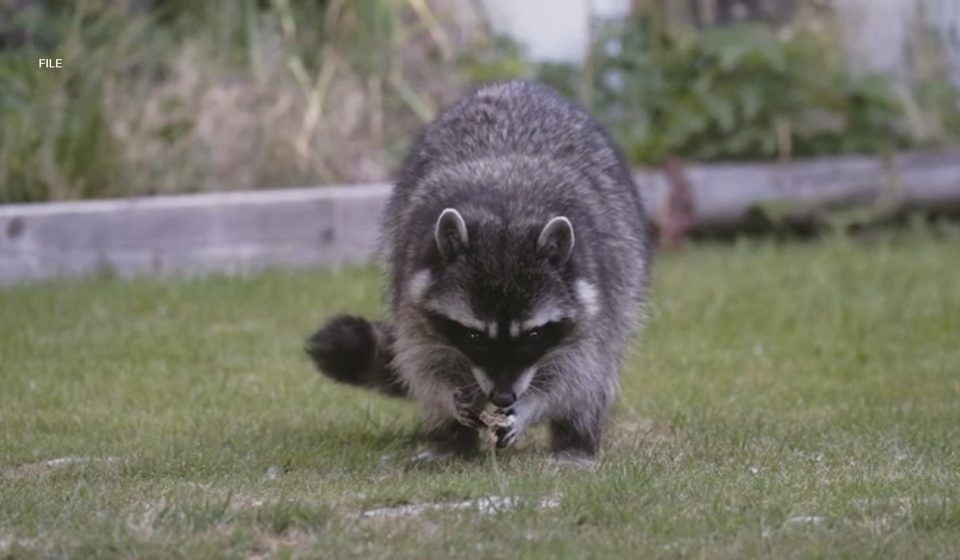

WESTLAKE VILLAGE, Calif. (CNS) — A second rabies-positive raccoon was found in the Westlake Village area, Los Angeles County health officials confirmed Friday, prompting residents to reiterate warnings to avoid contact with the animals.
NOTE: The video in the player above is from a previous report.
In early October, the county Department of Public Health announced the discovery of the first rabid raccoon in the county since 1973, located in the backyard of a Westlake Village home.
Health officials said Friday that the second rabid raccoon was also found in a yard in Westlake Village, in the same area where the first was located. The most recently discovered raccoon appeared sick and aggressive, but two people at a construction site in the area may have been exposed and are receiving follow-up care, according to the county.
“Detecting rabies in another raccoon is an important reminder to never touch, handle or feed wild animals, even if they appear healthy,” Dr. Muntu Davis, county health officer, said in a statement. “Always keep a safe distance from wildlife and contact your local animal control department if you encounter an animal that appears sick, injured, or acting unusual.” It’s also essential to make sure your pets are up to date on rabies vaccinations so they are protected before any potential exposure. Keeping your pets vaccinated is one of the most important steps you can take to protect your entire family.
The rabid raccoon announced earlier this month tested positive for a variant of rabies typically found in bats, according to the Department of Public Health. Tests are underway on the second raccoon to determine its strain of rabies.
When the last known confirmed rabid raccoon in Los Angeles County was detected in 1973, the skunk variant (strain) of rabies was still present in the county, but that strain has not been detected here since 1979. The last non-bat animal confirmed to have rabies in Los Angeles County was a skunk infected with the bat variant of rabies in Long Beach in 2014.
Rabies causes tens of thousands of human deaths worldwide each year, with most human cases linked to exposure to dogs in countries where the canine strain of rabies is still present, health officials said.
Historically, rabies exposures in Los Angeles County have been associated with contact with bats. Rabid bat detections can vary from year to year, but Los Angeles County has seen a consistent upward trend for more than a decade. Peak season usually occurs in late summer. So far this year, a record 77 rabid bats have been confirmed in Los Angeles County, officials said.
Once clinical symptoms appear, rabies is almost always fatal. However, timely administration of rabies post-exposure prophylaxis (PEP) after potential exposure is very effective in preventing the disease.
Rabies is 100% fatal in animals once symptoms appear, but is completely preventable through vaccination. Officials recommend vaccinating indoor cats only and older pets, and making sure all pets stay up to date on their rabies vaccine.
People bitten by a wild mammal (raccoon, skunk, opossum, coyote, etc.) are encouraged to immediately consult a doctor and report it to Public Health. Those who have pets bitten by a wild mammal should immediately seek veterinary care and report it to your local animal control and public health.
Those who notice a sick wild animal should not approach the animal, but should call their local animal control department.
Other tips include not leaving pet food outside or feeding free-roaming animals, storing waste in containers with tight-fitting lids, closing crawl spaces, and sealing openings where animals can enter.
Copyright 2026, City News Service, Inc.
Copyright © 2026 by City News Service, Inc. All rights reserved.
Gn Health