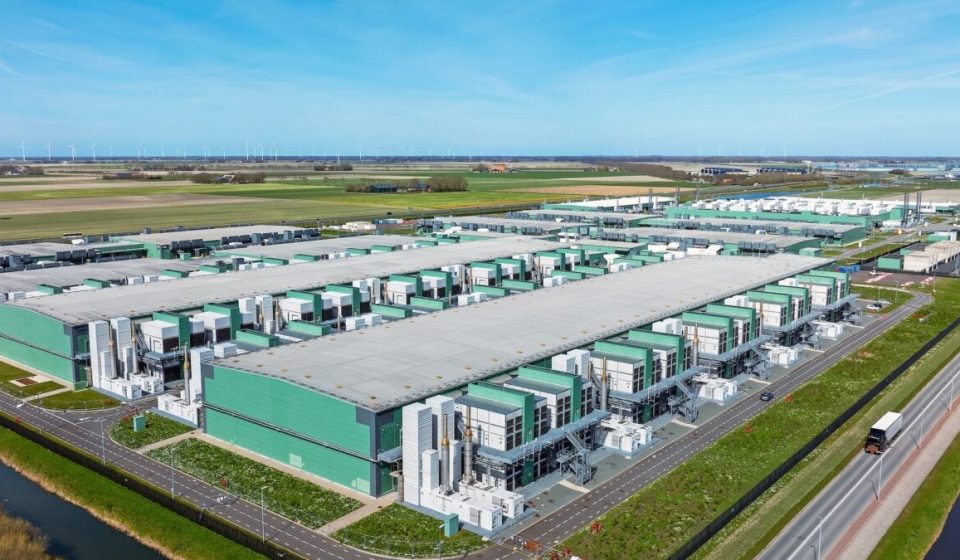
Shocker: Last Night’s ‘viral’ pro-data center party is linked to Thiel, the Koch Institute and other AI boosters

In town halls and city councils across the country, hatred of data centers continues to be one of the few topics on which Americans of all stripes can find common ground. Even previously pro-data center politicians have had to do an about-face on the subject as the midterm elections draw closer, and it’s become increasingly difficult to deny that voters hate these things.
Of course, there is no universal position. Wherever you find a plurality of people saying “Wow, that movie was great”, there will always be some sad creature lurking in the shadows, ready to explain why it sucks and how everyone who enjoyed it is just another stupid slug. Even as Americans turn out in record numbers to demand that their elected representatives stop green-lighting perpetually humming, polluting, power-grid-straining data centers in their communities, a group of contrarian nerds has emerged to argue that data centers are revolutionary.
That was the theme of last night’s Data After Dark party: a Pro-Data Center party held at what Axios calls the “crypto-bro clubhouse” Pubkey in Washington DC.
“In light of the bipartisan psychosis around AI data centers, it’s time for those who haven’t lost their minds to come together and celebrate the glory of American innovation,” reads the Partiful page for the event. The condescending invitation to fellow “techno-optimists” sits beneath a remixed “come and take it” flag – a pillar of the modern libertarian movement – which has replaced the original canon with a row of servers that resemble a shipping container.
Many journalists were on hand, documenting guests using a photo booth that printed photos with AI filters already applied and grabbing cocktails named after Loudon County, Virginia, which local officials call the “data center capital of the world.”
Less important than the expected crushing of protesters (only to be greeted with chants of “USA! USA!”) or arguments over “necessary infrastructure,” is who is actually behind this sordid evening. The answer probably won’t shock you.
Since its announcement a month ago until last night, the party was reported to be the brainchild of its “technology journalist” host, Jonas Du. Somehow lost in the Du-centered party coverage are the many conservative media outlets, think tanks, and AI companies working behind the scenes to support Du’s rapid rise and fund the pro-data center party itself.
Although he is still in his twenties, Du has already made a name for himself in the reactionary press ecosystem. His journalism career took off in 2024, while he was still a student at Columbia, when he began pitching articles critical of pro-Palestinian protesters on the campus of The national review and Bari Weiss The free press. He has also written a few blogs in Sons of Piratesa technology-focused newsletter created by Mike Solana, chief marketing officer of Peter Thiel’s Founders Fund. Despite only a few stories under his belt, the powers that be clearly see Du’s potential usefulness, awarding him such honors as the National Security Fellowship from the Foundation for Defense of Democracies and the Media Accelerator Fellowship from the Fund for American Studies.
Those doors were opened to Du through her ties to the 501(c)(3) nonprofit Young Voices, which featured the Pubkey case on its own events page and is listed on the party’s flyer alongside Sons of Pirates as one of three organizations presenting the event. The third presenter was The Compute Optimist, a pro-Big Tech substack launched two weeks ago by Ed Tarnowski, director of technology policy and advocacy for the free market think tank R Street. Like Du, Tarnowski is also listed as one of several young conservative voices available for booking through Young Voices.
Young Voices positions itself as a “nonprofit arts agency for classically liberal writers, creators, and commentators ages 18 to 35,” a much-needed reminder that historically and elsewhere in the world, “liberal” means “conservative.” In practice, it sources, incubates and creates media placements for talent through its relationships with the right-wing media landscape, in a way that benefits its capitalist backers.
Its CEO, Casey Given – seen here warning Fox News of an impending “scary time for the city” if Zohran Mamdani were to win the mayoral race – previously worked for the conservative think tanks Students for Liberty and Americans for Prosperity Foundation. Young Voices created Students For Liberty as its own nonprofit with Given at the helm in 2016. Young Voices also partners with and has received funding from the Koch Institute and the Ayn Rand-inspired Atlas Network, a dark money “tank” also funded by the Kochs and behind many of Trump’s policies.
Young Voices’ board of directors is made up of an executive from the Fund for American Studies, the CEO of an AI-based fintech company, an AI-focused venture capitalist, and Jared Meyer, a senior advisor at Trump ally Joe Lonsdale’s Cicero Institute who worked as an economic adviser at the Department of Labor during the first Trump administration. There’s also a guy from a large automated metal fabrication plant there.
A few days before the party, Du said Axios that the Internet users who made fun of his event were not “intellectually serious”. Those are big words coming from a prominent position, right before an event, for a wildly unpopular opinion that wouldn’t exist without the help of billionaires. But as Du and his cohorts in and around the Young Voices echo chamber would eventually learn, the vulgar masses are not turning around on this issue.
Gn bussni