
Jakub Porzycki | Nuphoto | Getty Images
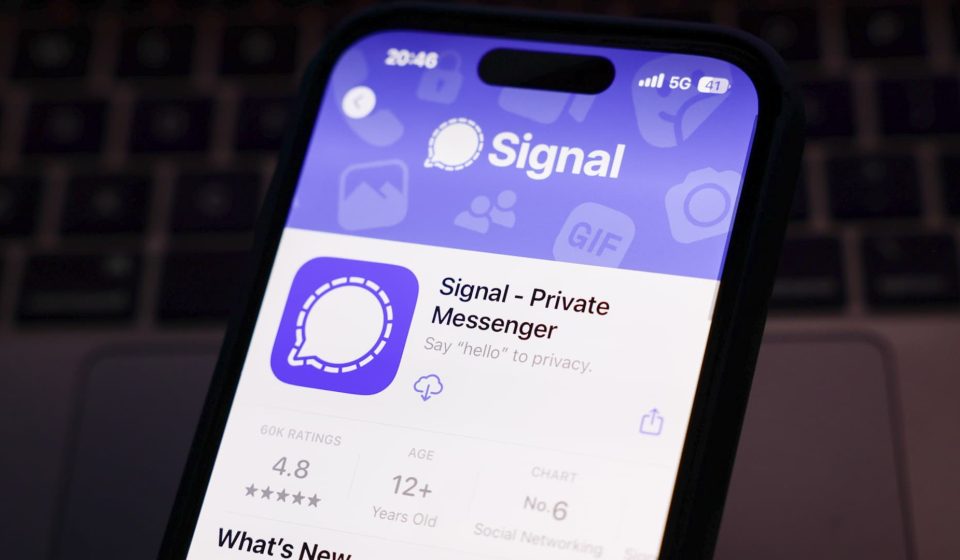
Privacy-focused messaging app Signal is strengthening protections against artificial intelligence agents that can access information displayed on users’ screens, citing concerns about privacy and security.
Signal said AI agents built into mobile operating systems, such as Google Gemini and Apple Siri, with on-screen recognition, can “scan” information on users’ screens, potentially capturing and storing Signal data outside of its control.
People treat agent risk as a one-size-fits-all solution rather than tailoring the necessary security to the actual task.
Yat Siu
Co-Founder, Animoca Brands
The company said it would block screenshots in its iOS app and, on Android, enable screen security when it detects an AI assistant attempting to read the screen.
“We want to be very clear: It is a serious problem that Signal – and app developers beyond – lack robust tools to prevent AI agents from violating privacy at the application level,” said Meredith Whittaker, president of the Signal Foundation, the app’s nonprofit parent, in a blog post published Friday.
Signal introduced similar restrictions last year against from Microsoft Remember AI on Windows 11. Its latest initiative adds to a broader push from businesses including United Airlines, JPMorgan Chase And Charles Schwab to limit or block AI agents for security reasons and for customer protection reasons.
Whittaker said the new protections don’t cover all the ways an agent could access data, including retrieving content already stored on a user’s device.
Signal also warned that third-party agents such as The meta Muse could access private app content through permissions granted during setup.
“Application-level protections will always have gaps, so the data an agent can reach must be classified, authorized and recoverable before the agent arrives,” said Tianyi Jiang, CEO of data management and protection software company AvePoint.
AvePoint’s State of AI 2026 report reveals that 88.4% of surveyed organizations experienced at least one AI agent-related security breach in the past year. The survey covered 750 IT managers worldwide.
“We continue to call on leading consumer operating system companies – Apple, Google and Microsoft – to provide simple technical tools and accurate documentation that give developers like Signal ways to prevent AI agents from accessing sensitive app data,” Whittaker said.
Restricted entry
Banks also prevent third-party AI agents from accessing customer accounts.
JPMorgan Chase CEO Jamie Dimon said in October that outside agents were too risky for the bank and its customers. Morgan Stanley has blocked third-party agents on its platforms, Reuters reported.
Meanwhile, Charles Schwab CEO Richard Wurster said the brokerage was blocking unauthorized agents to protect clients and the company.
that of Singapore OCBC Bank said it would not allow third-party agents to interact with the bank to transfer money autonomously and warned that “customers should exercise caution” when using such agents for banking purposes.
United Airlines said Nov. 11 it would block unauthorized agents from booking or handling tickets, citing risks they could expose customer information, make unintended purchases or violate aviation rules.
“To book flights or shop for groceries, an agent needs your email, accounts and payment information,” said Mick Maleishko, an AI advocate at identity verification and compliance platform Sumsub.
He said this level of access creates a risk of account takeovers because actions taken by an agent may appear to a retailer or bank to have been authorized by the user.
Singapore Airlineson the other hand, is one of the first partners of Meta’s Muse. Meta said users can ask the agent to explore travel, ticketing and booking options through the airline.
“People treat agent risk as a one-size-fits-all solution rather than tailoring the necessary security to the actual task,” said Yat Siu, executive chairman and co-founder of Animoca Brands. He said agents could help consumers follow through on their intentions and help businesses reach customers directly, but the risks vary depending on the task.
“There is a much higher risk for an agent who can move large sums of money or access sensitive personal data than for the one who makes your restaurant reservations,” Siu said. “The reality is that, just like Internet applications up until now, agents require protections at multiple levels.”
Gn tech