
Not sleeping makes it harder to concentrate and learn new information. And for people who work nights or face an occasional period of serious sleep loss, it’s not always possible to get enough rest in the moment.
Is there anything else that can help us concentrate, other than sleeping? A recent study published in the scientific journal Proceedings of the National Academy of Sciences compared two strategies for protecting memory after a lack of sleep: aerobic exercise and napping. The researchers wanted to know if a short bout of exercise actually provides the same cognitive benefits as a nap. It turns out the answer may be yes.
So what is this discovery does it mean for daily sleep and exercise habits?
To help understand how people can apply these findings, I spoke with CNN wellness expert Dr. Leana Wen. Wen is an emergency physician and clinical associate professor at George Washington University. She previously served as Baltimore’s health commissioner.
CNN: How did the researchers go about identifying the effect of exercise versus napping?
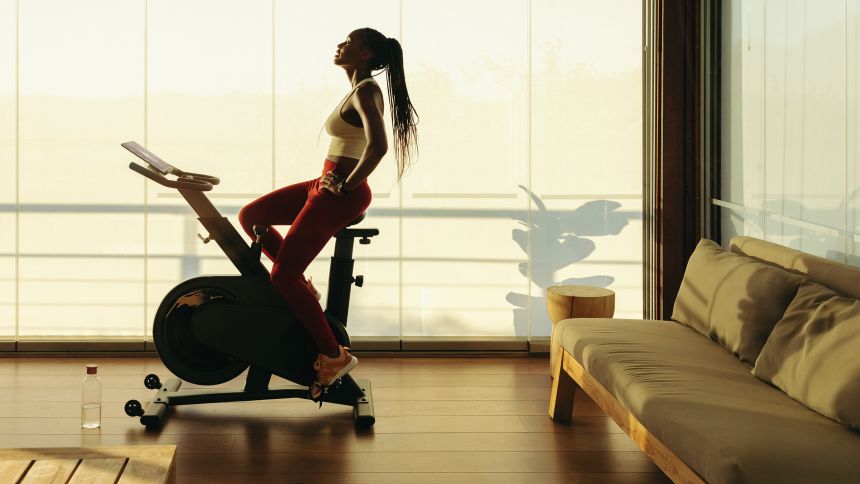
Dr. Leana Wen: The study recruited a small number of healthy adults aged 18 to 35 and kept them awake for 30 hours. The 54 participants were then randomly assigned to one of three groups. One of them completed 20 minutes of moderate to vigorous cycling, at 80% of his maximum heart rate. Another got to take a 90-minute nap. The control group sat on a stationary bike for 20 minutes without exercising.
Then, participants viewed 150 images while researchers recorded their brain activity using electroencephalography, or EEG. Little did they know there would be a memory test next. Three days later, after they had time to recover from sleep deprivation, they were shown the original images mixed with new ones and asked what they remembered.

Participants who exercised properly recognized 56% of the images, compared to 57% among those who took a nap and 46% in the control group. The exercise and nap groups performed significantly better than the control group, with memory performance approximately 21% higher after exercise and 23% higher after a nap. There was no significant difference in benefit between exercise and napping.
Interestingly, participants who took a nap reported feeling significantly less tired afterward, while those who exercised reported similar levels of fatigue to the control group. Even though they felt just as tired, the exercise group performed significantly better on the memory test than the control group.
CNN: How could 20 minutes of exercise help memory after someone has been awake for so long?
Magnifying glass: Lack of sleep interferes with the brain’s ability to encode new information. After prolonged wakefulness, sleep pressure increases and the neural processes needed to form memories become less efficient.
The EEG recordings suggest that exercise helped counteract some of these effects. It reduced a marker of neuronal fatigue in brain regions involved in the memory task. One possible hypothesis is that exercise helps the sleep-deprived brain use its available cognitive resources more efficiently.
The 20-minute workout also fits into a broader concept known as an exercise “snack,” although it was longer than most exercise snacks. These are short bursts of physical activity that typically last between 30 seconds and five or ten minutes. Activities may include stair climbing, brisk walking, squats, or other activities that increase the heart rate. Studies have suggested that these small doses of movement have health benefits, such as improving cardiorespiratory fitness and even reducing the risk of cancer and dementia.
CNN: Did exercise and naps help the brain in the same way?
Magnifying glass: Not exactly, and in my opinion it was one of the most interesting discoveries. Exercise and napping produced similar benefits in memory performance, but via different neural processes.
Napping changed the underlying state of the sleep-deprived brain. People in the nap group had less fatigue and lower EEG markers of sleep pressure, which is the biological drive for sleep that builds up the longer someone stays awake. Measures related to this enhanced brain state were strongly associated with how well participants formed new memories.
Exercise did not relieve sleep pressure in the same way. Instead, it appears that memory processing is more efficient. We can think of the distinction this way: napping gives the brain some of the sleep it needs, while exercise helps the brain function more efficiently despite lack of sleep.
CNN: Can someone who is sleep deprived exercise instead of taking a nap?
Magnifying glass: No. Exercise cannot replace sleep. Sleep serves essential functions throughout the body, including regulating immune and metabolic processes and supporting many aspects of brain function. A 20-minute workout cannot provide these functions, although regular exercise helps with sleep and vice versa.
The study asked a much more specific question: If a person has already experienced severe sleep loss, can an intervention protect a particular cognitive ability, the formation of new memories? For this result, under the specific circumstances of this study, 20 minutes of exercise and a 90-minute nap produced comparable results.
There are situations where this could have practical applications. Healthcare workers, transportation workers, and others in safety-sensitive occupations may experience unavoidable sleep loss, and there isn’t always time or a suitable place for a 90-minute nap. A short exercise session might offer another strategy for preserving memory. But no one should interpret these findings to mean that exercise makes it safe to drive or perform other dangerous tasks when severely sleep deprived.
CNN: Can we apply these findings to people who are tired from a poor night’s sleep or who aren’t getting enough sleep?
Magnifying glass: We should be specific in clarifying what was tested. This was a small laboratory study of healthy young adults who were continuously awake under laboratory conditions for 30 hours. The researchers tested a particular exercise program and one aspect of cognition.
We don’t know if the same benefit occurs after chronic sleep restriction, in older adults with health problems, or with other types or intensities of exercise. The study also did not show that exercise restores attention, reaction time, judgment or the many other functions impaired by lack of sleep. These are questions that will be the subject of larger studies in real-world settings, particularly among shift workers and others who regularly experience sleep loss.
CNN: What should people do if they’re sleep-deprived but need to function well that day?
Magnifying glass: The first priority is to try to sleep. Adults should aim to get at least seven hours of sleep on a regular basis. A nap can be helpful when adequate nighttime sleep has not been possible. If a nap is not possible, a short session of aerobic exercise might be helpful before a period that requires learning and memory. Someone might take a brisk walk, climb stairs, or use a stationary bike.
Caffeine may temporarily increase alertness and concentration and perhaps even reduce the risk of dementia in the long term, although it does not reverse the effects of sleep deprivation. People should also eat regular, balanced meals and stay hydrated. Large, heavy meals may increase sleepiness, and alcohol should be avoided as it may further impair alertness and judgment.
People also need to recognize the limitations of these strategies and recognize that they do not allow for safe driving or performing other potentially dangerous tasks when severely sleep deprived.
Be inspired by a weekly summary on living well, made simple. Sign up for CNN’s Life, But Better newsletter for news and tools designed to improve your well-being.
Gn Health