Elon Musk’s sidekick, Tesla driver and serial entrepreneur, Teague Egan was dreaming up ways to get into renewable energy in 2018 while vacationing in Bolivia. He learned about the country’s salt pans, their potential lithium reserves, and eventually the antiquated lithium extraction techniques used by the industry.
“As an entrepreneur, I knew there had to be a better way. It was my ‘aha’ moment,” said Egan, now 38. He really started thinking about how Tesla’s electric vehicle lithium-ion batteries are made and their enormous potential for global growth.
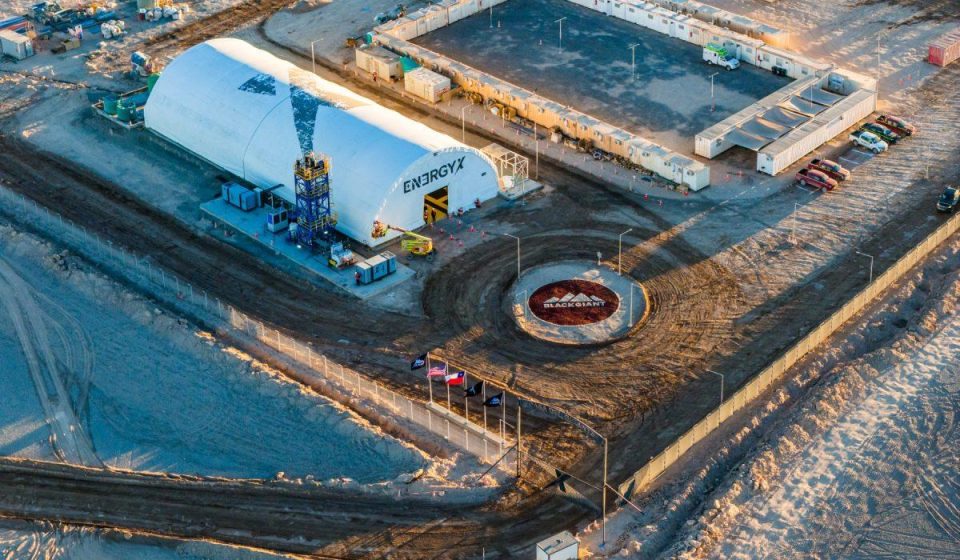
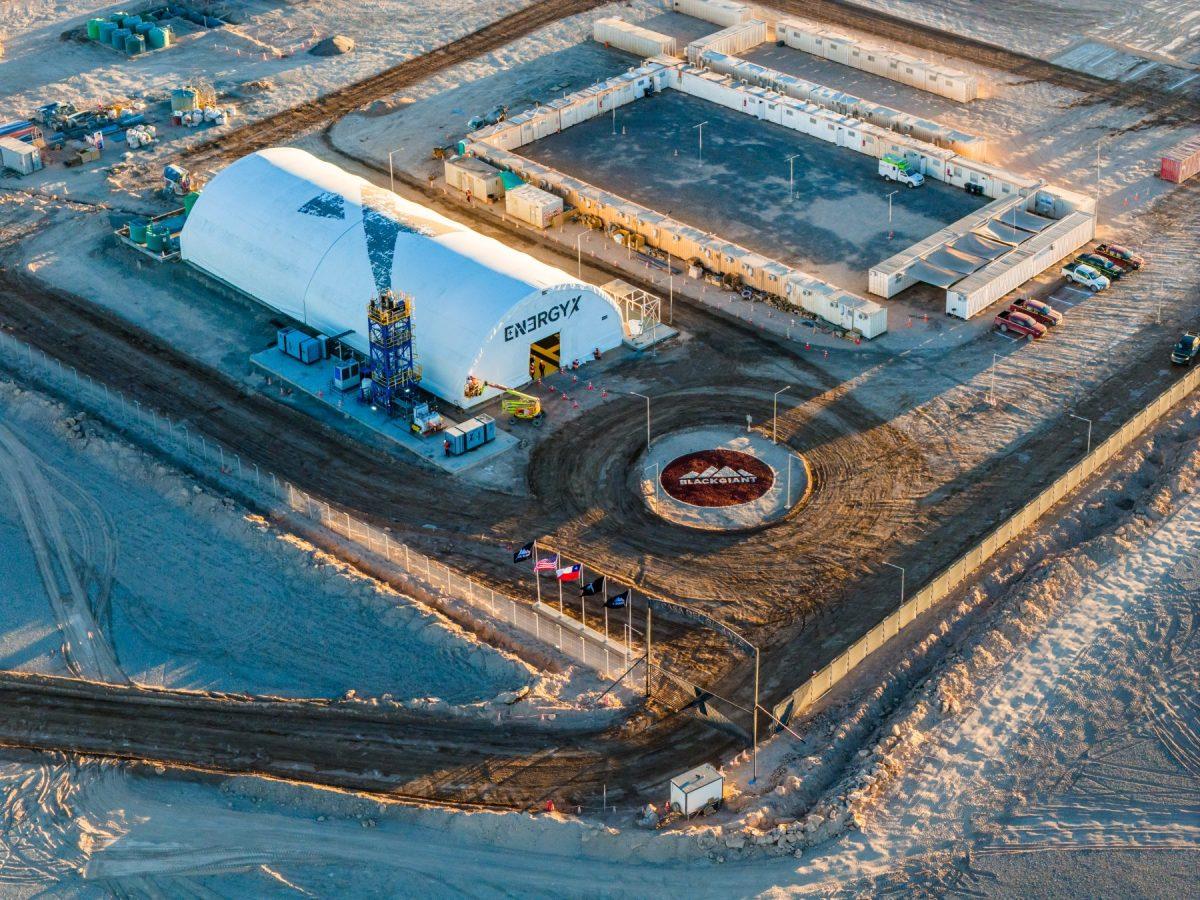
He quickly founded EnergyX – short for Energy Exploration Technologies – and this year became the only commercial lithium mining company in the United States with modern direct lithium extraction (DLE) technology at its new Project Lonestar site in East Texas. This summer, EnergyX also opened a project in Chile extracting 170 tonnes of lithium per year.
But these are still only demonstration plants. The real growth is about to begin, he boasted.
“EnergyX is just going to keep its head down and move toward commercialization,” Egan said. Fortune.
It is planned to begin construction next year. EnergyX aims to commission its Black Giant lithium project in Chile by the end of 2028 with the first phase producing 7,500 tonnes per year and expanding to 52,500 tonnes per year by 2030. The Lonestar project in Texas would quickly follow with a 15,000 tonne facility in 2029 and reach 50,000 tonnes by 2031.
These are certainly tight deadlines, but Egan is confident that progress will accelerate quickly after reaching a watershed moment in October with the commitment of its largest client.
But first, let’s take a step back. Two years ago, the Wall Street Journal headlined about Egan: “He wants to be the lithium king. Run for president. And live to be 150.” The wording is brash but not inaccurate – yes, he says he still wants to occupy the White House and live well past 100 – and he comes across as an over-the-top tech bro. Many didn’t take it seriously.
Egan set to work to prove the skeptics wrong. Since then, EnergyX has opened its new headquarters in Austin, Texas, nearly quadrupled its acreage in the lithium-rich Smackover Formation in East Texas and southwest Arkansas, completed its demonstration projects in Texas and Chile, and received an influx of $225 million from Italian energy giant Eni.
Most importantly, in October, major energy trading company Trafigura signed a 10-year, $2 billion deal with EnergyX for 100,000 tons of lithium from its Black Giant and Project Lonestar businesses.
“Having this type of customer is not only very encouraging for us, but also very rewarding for the rest of the market,” Egan said. “This is actually the largest DLE drawdown in history. It’s a nice little feather in the cap. The main thing that investors or project lenders need to see is this type of contract.”
He expects more buyers to follow suit quickly, bringing EnergyX closer to the start of construction. The deal with Trafigura also strengthens EnergyX’s pending $690 million loan from the U.S. Export-Import Bank.
Although EnergyX’s success is far from assured, Egan has proven that his company should be taken seriously.
Drilling forward
Egan’s mentor and idol is his father, Michael Egan, who became majority owner of Alamo Rent a Car, grew the company nationally and sold it in 1996, continuing to chair the company until 2003. Now retired, Michael Egan serves on the board of directors of EnergyX.
“I’m a serial entrepreneur. My dad was a serial entrepreneur. I learned from him,” Teague Egan said. “I don’t have an engineering or chemistry degree. I’m an entrepreneur. I’m a problem solver. I feel like I have a doctorate in engineering after working at EnergyX for eight years.”
After growing up near Fort Lauderdale, Florida, Egan moved to Los Angeles to attend the University of Southern California. While a student, he created a sports label and agency. He quickly found success in music after signing with Boston rapper Sammy Adams, who reached number one on the iTunes hip-hop chart in 2010.
Egan said his biggest regret might be refusing to sign a deal with his label and Interscope Records because Egan did not find much continued success in music. Then again, if he had, EnergyX probably wouldn’t exist, he said.
His musical profits, however, led him to invest a large part of his earnings. He was an early investor in Tesla in 2013, when the company still had a market capitalization of less than $10 billion. Today, Tesla sits above $1.5 trillion. Egan said he used some of those profits to help start EnergyX.
Since then, Egan has become a noted follower of all things Elon Musk and his approach to business. And they’re both based in Austin, Texas now. “He became arguably the greatest entrepreneur and innovator in human history,” Egan said. “People can say what they want about his political views and such, but, in terms of his contribution to humanity, he is second to none. He is basically my idol, other than my father. He has the same sense of curiosity and problem solving.”
EnergyX
Turn to lithium
Driven by electric vehicles and now also battery energy storage, global demand for lithium has jumped more than 400% this decade, to more than 1.5 million tonnes per year. By 2035, this demand could approach 4 million tonnes.
With the lithium industry focused on traditional hard rock mining or evaporation ponds, Egan looked for another path. Evaporation ponds can take two years to extract the lithium, literally waiting for the sun to evaporate the water and help filter the lithium. Egan is not so patient.
It embarked on direct lithium extraction technology. He didn’t invent it, but he wants to perfect it and commercialize it. Using advanced filtration technology, DLE operates much like oil and gas by drilling wells, pumping brine water, processing and refining lithium, and returning more than 90% of the brine underground. DLE can take two days instead of two years, although the initial costs are high.
But the traditional lithium industry was not ready to adopt DLE, and especially not the necessary financial investments.
“Our initial business model was to simply license our technology to existing pond producers. We said, ‘Hey, we have a better mousetrap. It will be much better for you,” Egan said. “They followed us and ultimately we realized this, and we said we need to acquire our own resources and vertically integrate to prove it, scale it and implement the technology.”
That’s when EnergyX began acquiring its own permit in Chile and Smackover. Chile and Argentina are among the world’s top lithium producers – along with Australia and China – but the United States accounts for just over 1% of global lithium supplies. These American projects are concentrated in Nevada, notably Lithium Americas’ Thacker Pass project, currently under construction. EnergyX is also exploring a project in Utah.
“Ten years ago, the total demand volumes for lithium did not justify new innovations and investments,” acknowledged Egan. Everything changed very quickly.
But the Smackover region is believed to have the greatest growth potential in the United States. The challenge is that lithium is found in high concentrations in an underground aquifer that requires DLE. Vancouver-based Standard Lithium is expected to begin construction on the first major DLE project in Smackover early next year, at least a few months before EnergyX.
Because of their similarities to oil and gas, ExxonMobil and Chevron are fast followers, having acquired considerable acreage in recent years.
“The United States is definitely at a turning point for lithium production,” said David Park, CEO of Standard Lithium. “The area that has the greatest potential is the Smackover Basin. When you think of Smackover, you really should think of it as the Permian Lithium Basin. Through the introduction of relatively new technologies, we are able to open up a formerly uneconomic resource in a way that can result in large-scale projects with world-class economics.”
While there is room for multiple winners, Egan said he is confident EnergyX’s in-house lithium filtration technology will make it the producer of choice for customers in the future. Lithium reserves in Chile, Argentina and Bolivia in South America contain fewer impurities than in the United States, Egan said, but the Smackover remains a fantastic resource and the United States needs to build up its own national reserves.
Long term goal
Even though sales of electric vehicles are slower in the United States than in much of the rest of the world, Egan sees the way forward from his Austin hub, in a city that serves as an unofficial laboratory for autonomous vehicles and robo-taxis, almost all of which use lithium-ion batteries.
Earlier this month, Tesla announced it was dropping the pricey Cybertruck to make way for the self-driving Cybercab, while Waymo, Avride and Zoox are all betting on robotaxis. Egan sees them daily. “Living in Austin means seeing the future, and that’s only going to spread.”
That future requires exponential growth for EnergyX, he said. “I’m the type of person who has long-term goals. A lot of people call me the ‘king of lithium.’ We’ve taken steps, especially this year, to continue building on that foundation. Our goal is to produce between 500,000 and 1 million tons of lithium per year by 2040 and become the largest lithium company in the world.
And yes, after that, he still has his eyes on the White House and his run for president.
“That remains a long-term goal. I don’t think it’s unreasonable. The American mentality has changed a lot in the last ten years about who can lead the country. With (President) Trump, for better or worse, anything is now possible.”
Gn bussni