
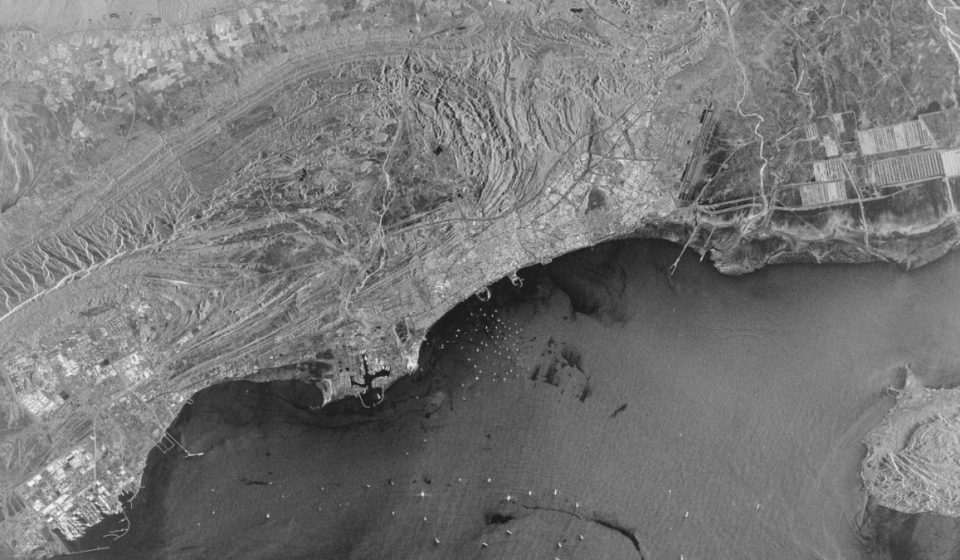

Oil flows across the Middle East have staggered an impressive reboundwith export volumes returning to near pre-war levels, although traffic through the Strait of Hormuz remains well below normal. Standard Chartered estimates that crude and condensate exports from the Gulf, excluding Iran and including bypass routes such as Fujairah and the Red Sea, reached around 16.5 million barrels per day (bpd) in September, largely returning to pre-war volumes. But only 60% of these barrels crossed the Strait of Hormuz, compared to 83% before the war. Standard Chartered says the numbers speak to resilience rather than normalization: exporters have found ways to move oil, but they are doing so with less efficiency and at considerably higher cost.
The system was forced to use more complex workarounds, particularly a chain of vessel-intensive ship-to-ship (STS) transfers. Shuttles are increasingly transporting crude through Hormuz before transferring it to larger ships in the Gulf of Oman, while exporters are also making greater use of pipelines and ports that bypass the strait. THE southern route along the Omani coast became an important route for shuttles traveling through Hormuz. Standard Chartered says STS capacity appears to be saturated, vessel utilization remains inefficient, voyage times have lengthened and freight and security costs remain high.
Related: Freeport LNG Increases Gas Consumption After Train 2 Shutdown
Saudi Arabia perhaps best illustrates both the success and the limits of this adaptation. Following the damage in early September Thanks to the East-West pipeline, exports have shifted significantly to the East Coast. Standard Chartered estimates that total Saudi exports rebounded to around 6.9 million b/d in September, from 2.45 million b/d in August, with 19 VLCCs transiting Hormuz in a single week. The restart of the East-West Pipeline and Yanbu loadings have re-established another route to market and reduced the immediate risk of production shutdowns, although pipeline throughput remains below design capacity and exposed to further attacks. Workarounds are also costly, with discounts of up to $9 per barrel on cargoes loaded off Oman to offset additional logistics costs.
The resumption of physical flows has reduced the probability of the most extreme shortage scenarios and should gradually eliminate part of the scarcity premium on oil prices. But these barrels are transported at a higher cost, with longer journey times, more intensive use of tankers and less spare capacity in the logistics system. Standard Chartered says the improvement is bearish relative to a market pricing in a prolonged loss of physical supply, but does not warrant a return to pre-war risk premia. Exporters have shown they can move far more crude than expected, but the system has less room to absorb another major disruption. Hormuz Oil Flows.pdfPDF
The tactical success of Gulf exporters has also changed regional dynamics. Seaborne exports of Iranian crude fell to near zero in September, from around 1.7 million bpd before the war, after the US naval blockade significantly reduced Tehran’s ability to move its crude through Hormuz. As a result, Iran’s ability to militarize its hold on the Strait of Hormuz is collapsing, even as it increases the risk of unpredictable military escalation.
Iran remains defiant and reiterated on Sunday that the Strait of Hormuz will remain closed until the United States fulfills seven conditions contained in the June interim agreement. Foreign Minister Abbas Araghchi separately said Tehran’s latest proposal could lead to the reopening of the strait within seven days if Washington accepts Iran’s terms.
Tehran has denied reports that it offered international nuclear inspections in exchange for sanctions relief. Araghchi said Iran hoped Washington would continue its diplomatic efforts, but warned that the country was better prepared than before to respond if the United States opted for further military action.
By Alex Kimani for Oilprice.com
More important reading on Oilprice.com
Gn bussni