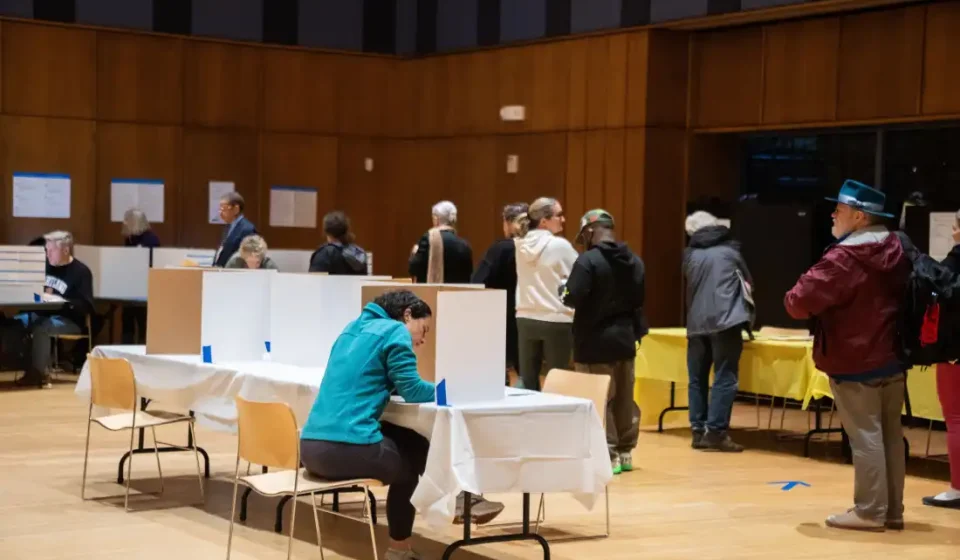
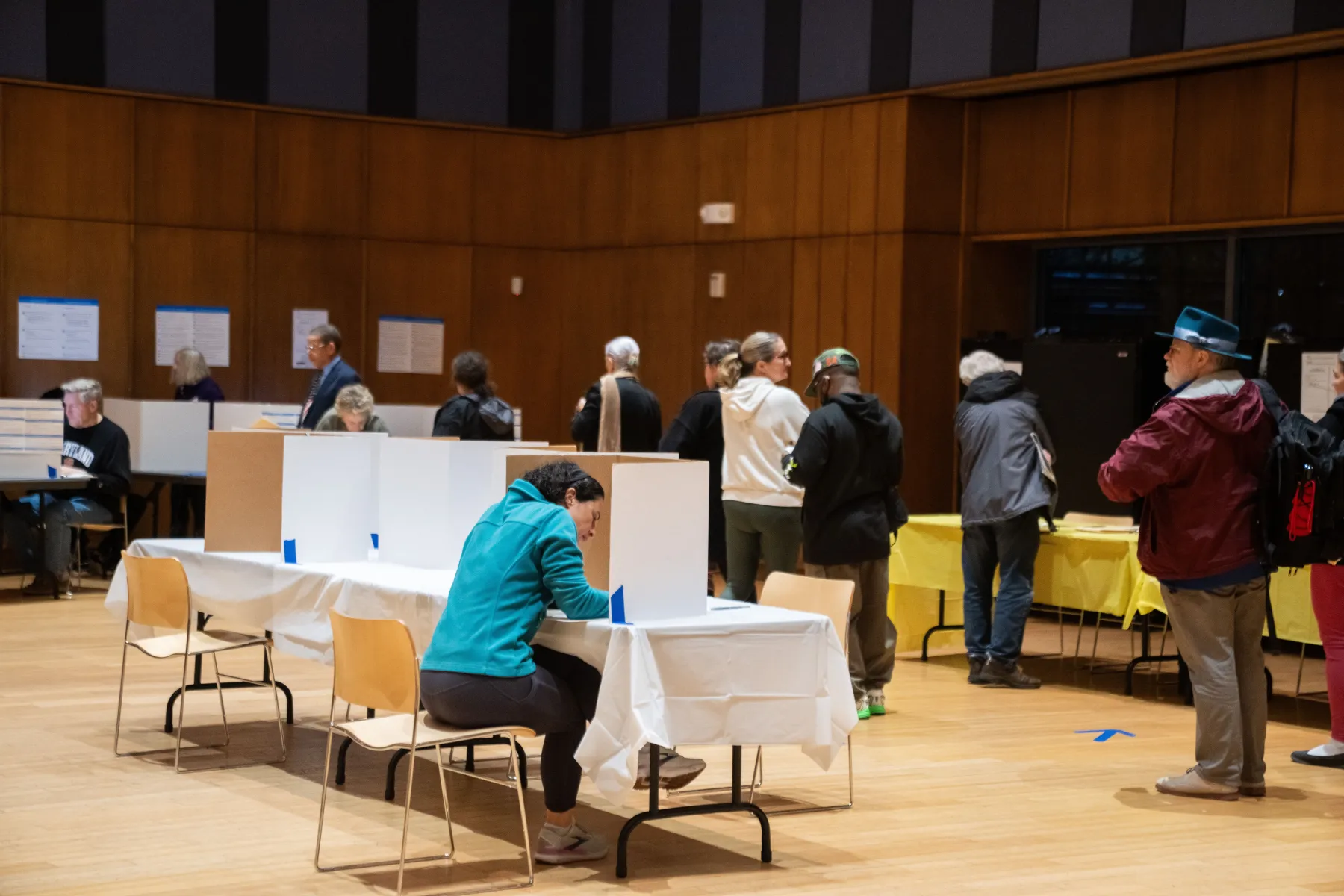
An early voting scene in Maryland, where voters can decide whether to allow congressional redistricting. It’s one of more than 140 state ballot questions across the country this election.
Allison Robbert/AP
hide caption
Allison Robbert/AP
Whether or not they live in a competitive voting district, voters in many states will decide statewide ballot measures with the ability to legislate on their own.
There are 145 statewide ballot measures on the November ballot, according to Ballotpedia, which tracks elections.
In some cases, the issues were placed on the ballot following petitions launched by citizens frustrated by the actions — or lack of action — of their state lawmakers. In many cases, legislatures present amendments to their state’s constitution to voters.
There are common themes across the country: many of the most high-profile referendums focus on abortion, LGBTQ+ rights, taxes and voting.
Four years after Dobbs, states continue to go back and forth on abortion
Four states put abortion on the ballot. This follows a wave of ballot measures on the issue since federal protections for the procedure Roe v. Wade were overturned by the Dobbs decision in 2022.

Just two years ago, Missouri voters overturned what was one of the nation’s strictest abortion bans. But the Republican-led Legislature put the question back on the ballot. And lawmakers crafted a single issue that includes both a near-total ban on abortion and a ban on gender-affirming medical treatments for minors.
Much of the publicity for the measure simply mentions the ban on gender-affirming care, which would be written into the state constitution to reinforce prohibitions already in state law.
Abortion is legal in Nevada and Virginia, but voters in both states will have the option to enshrine those rights in the state constitution. This would make it more difficult for future legislatures to ban abortion.
A vote in Idaho could overturn that state’s near-total ban on abortion.
States consider restricting transgender or guaranteeing LGBTQ+ rights
The rights of LGBTQ+ people have been hotly contested in states in recent years. Several states put them on the ballot.
In Vermont, a proposal would amend the state constitution to include an equal protection clause that would guarantee rights to gender identity and expression.
Virginia voters could strengthen laws allowing same-sex marriage. The state currently has a former ban on same-sex marriage in its constitution — although it is not in effect due to a 2015 U.S. Supreme Court ruling. Voters are deciding whether to replace that language with an amendment that would define marriage as between two adults, regardless of race, sex or gender.
Arizona and Colorado have proposed banning transgender students from girls’ school and college sports, with Arizona expanding a current ban to include restrictions on locker rooms and other areas.
A proposal in Washington state would require a student wishing to play women’s sports to have their biological sex confirmed by their health care provider based on the student’s “reproductive anatomy, genetic makeup, or normal levels of endogenously produced testosterone.”
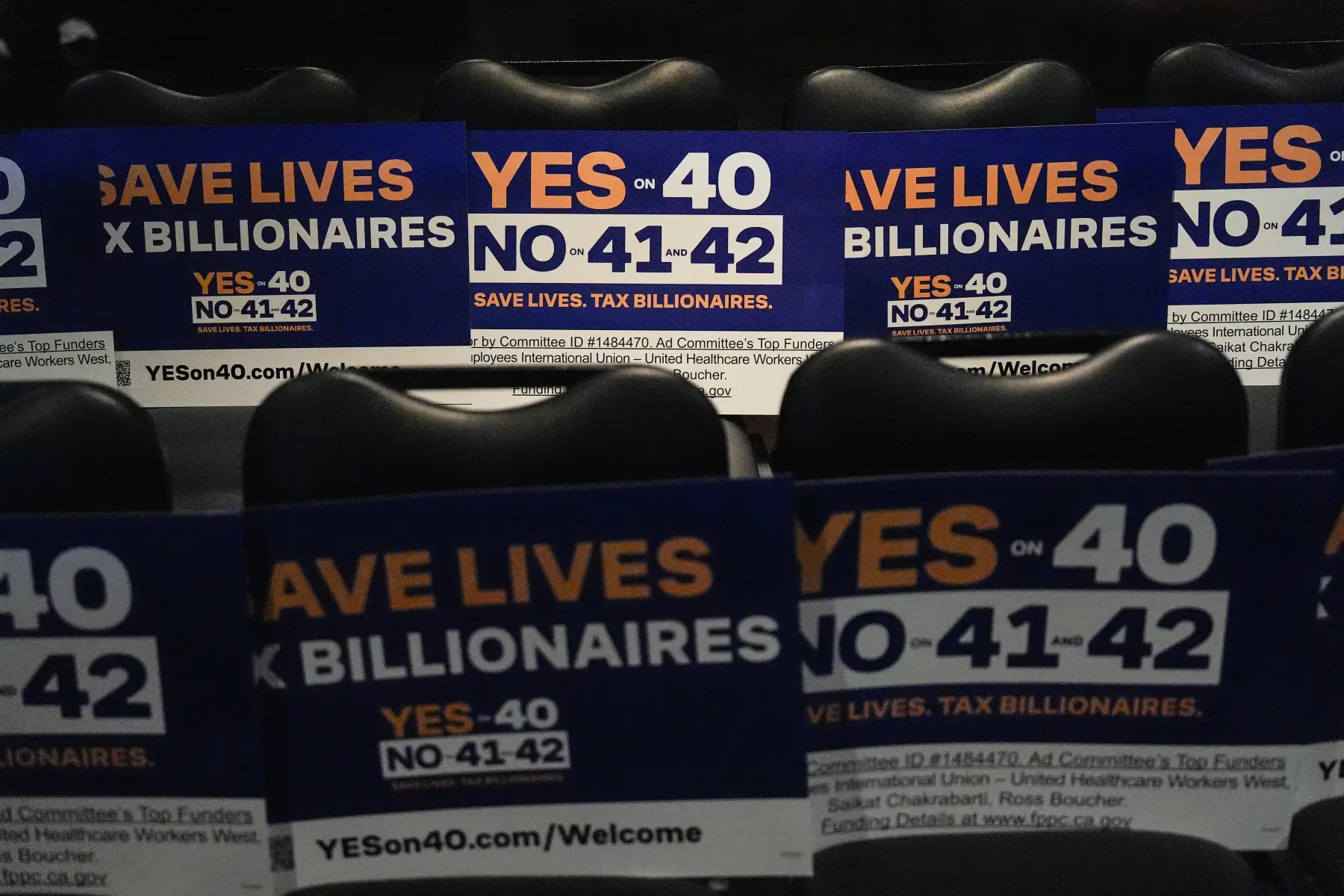
In California, Proposition 40 asks voters to impose a wealth tax on billionaires to fund health care programs and two other proposals would block the tax. Opponents say it would drive billionaires out of the state, costing the state money in the long run.
Jae C. Hong/AP
hide caption
Jae C. Hong/AP
A tax on billionaires highlights tax measures
Taxes and state finance are the largest category of ballot measures.
The most high-profile proposal concerns California, where voters could impose a new type of tax on billionaires. Proposition 40 asks voters to approve a one-time 5% tax on billionaires’ wealth, including their ownership stakes in companies.
Supporters say the Republican Congress gave tax breaks to billionaires by cutting health care programs, so it’s fair to tax them to make up for the cuts. Opponents, including some prominent Democrats, say the plan will simply drive billionaires to other states. Two competing measures on the same ballot would block the tax.
A coalition of Colorado progressives is backing a proposal that could result in higher income taxes for those earning more than $500,000 a year.
States also impose limits on taxation before voters: The Tennessee legislature sent voters a proposal to ban state-imposed property taxes. The Iowa General Assembly is asking voters to approve a constitutional amendment requiring certain tax law changes to pass by two-thirds of both houses of the legislature.
Florida lawmakers have submitted a question that would exempt the first $150,000 of a home’s value from property taxes, which would have huge implications for local governments that rely on that funding.
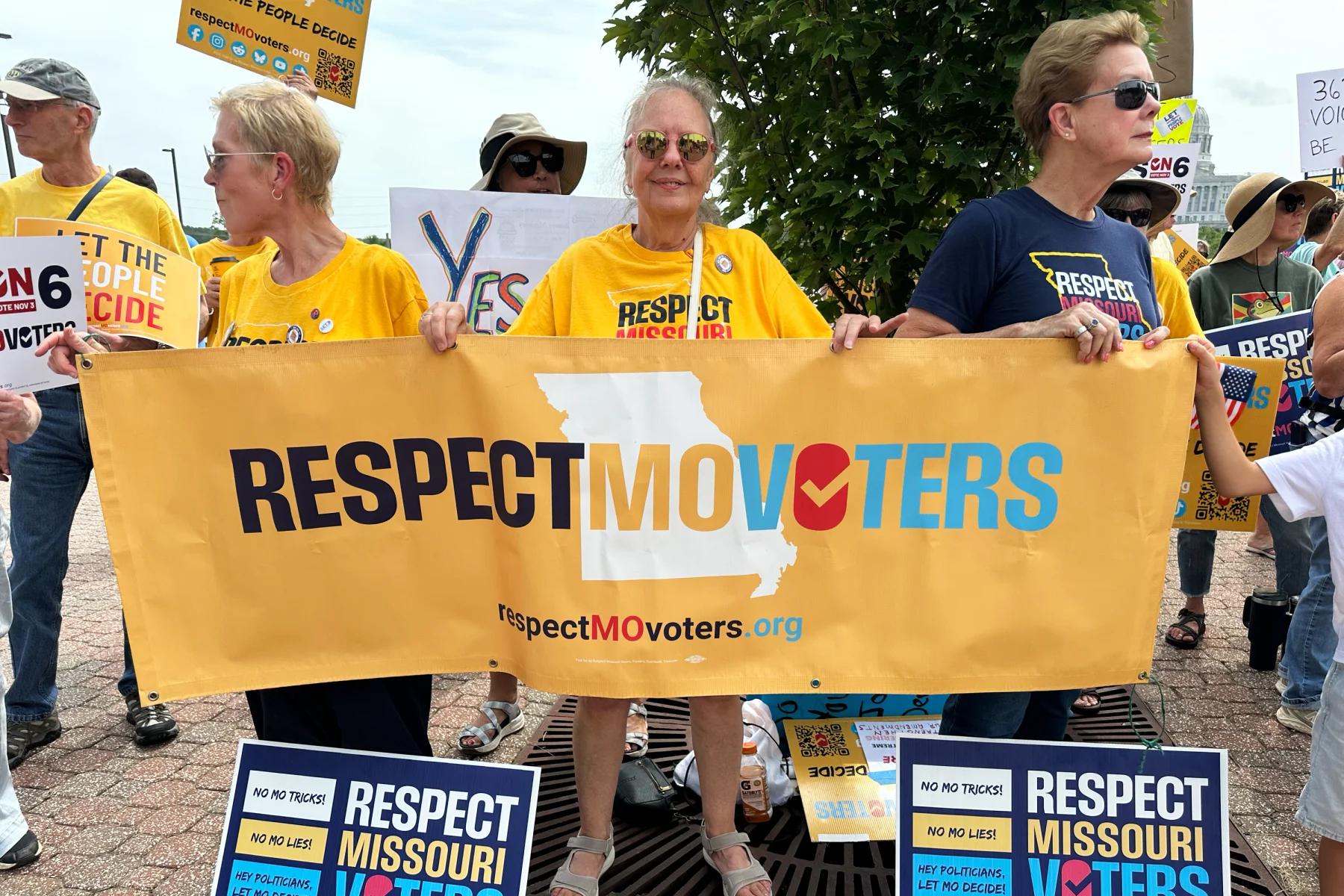
Activists gather in August to support a proposed constitutional amendment near the state capitol in Jefferson City.
David A. Lieb/AP
hide caption
David A. Lieb/AP
Many states vote on the vote
In some states, voters are facing questions that could make it more difficult for them to change the law with their vote in the future.
The North Dakota and South Dakota proposals would require future amendments to the state constitution to gain approval from 60 percent of voters instead of a simple majority. Utah has a similar question regarding tax proposals.
In Missouri, voters could go the other way, making it harder for lawmakers to overturn future ballot initiatives. And they face another question: whether to allow congressional redistricting that could help Republicans flip a Democratic-held House seat in 2028.
In Maryland, voters can approve congressional redistricting that would likely favor Democrats.
There are several other voting issues on the ballots in other states.
Coloradans are considering a proposal to require ballot questions to be written in simple 8th grade English.
Montanans could approve a state-level solution to the Citizens United Supreme Court ruling that led to a hard-to-follow explosion of money in the countryside. This measure would achieve this goal by redefining corporations so that they cannot make unlimited political donations. But this could be blocked by the courts.
Several states, including California, Nevada and North Carolina, have proposed requiring photo ID when voting.
And in Virginia, voters will decide whether certain people are entitled to the right to vote: people convicted of crimes must have their rights restored by the governor.
Jahd Khalil covers Virginia state politics for VPM.
Gn headline