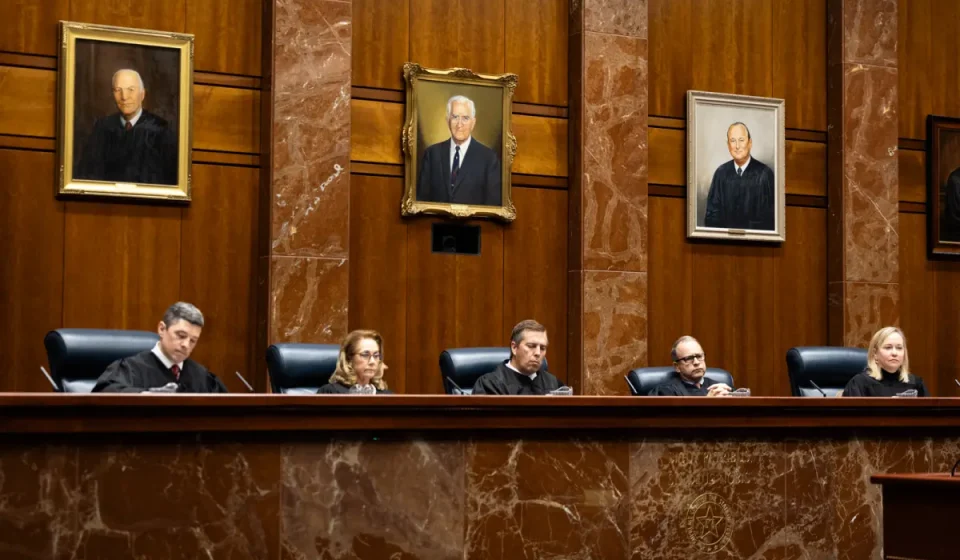

The Texas Supreme Court has dismissed a lawsuit challenging the state’s six-week abortion ban passed in 2021, known as the Texas Heartbeat Act. The court’s rejection leaves in place a controversial part of the law, which allows private citizens to sue people who “aid and abet” abortions.
The legal battle lasted five years and initially involved 14 lawsuits, which were consolidated into a multi-district proceeding. Planned Parenthood of Greater Texas and others sued Texas Right to Life and its director, John Seago, over an announcement by the group that they intended to sue organizations that supported abortion seekers under the law, according to court documents.
In 2021, the Texas Legislature passed Senate Bill 8, which was signed into law. The law allows organizations or individuals to sue anyone who helps a woman obtain a prohibited abortion. If the case is won, the plaintiff is entitled to at least $10,000 for each abortion violation and for attorney fees.
Planned Parenthood of Greater Texas and others have asked the Texas Supreme Court to dismiss the case as moot, in part because of the four-year statute of limitations for a trial, which has already passed. They had also argued that no doctors had performed banned abortions since 2022, when a Texas law banning them took effect.
Seago said the Supreme Court’s decision is a victory for Texas Right to Life and for him personally. He said the case could have impacted private prosecutions, and that’s where his group’s strategy changed.
“The biggest threat to you is not the prosecutor. It’s not even the attorney general; it’s really the private prosecutions,” Seago said. “And that’s really the tool that we’ve turned to to advance our agenda and protect (the) lives of (the) babies and their mothers here in Texas. And so, we will certainly continue these kinds of legal avenues to hold people accountable for violating pro-life laws.”
A trial court initially ruled that part of the law was unconstitutional. The decision was later appealed by Texas Right to Life. This dismissal means that the court did not rule on the merits of the case.
While the trial was underway, Roe v. Wade was overturned by the United States Supreme Court. Another Texas law, known as the Human Life Protection Act, then took effect in 2022, further banning abortions in the state.
KUT did not hear back from Planned Parenthood of Greater Texas prior to publication.
Gn headline