Stop steel? Iowa approves $1.36 billion for foreign steel mill in swing district less than 2 weeks before early voting

“Stop the Steal” — or rather steel — has a whole new meaning for some Iowa voters in 2026.
Protesters at the Iowa statehouse on Friday carried signs reading “No Steel Stealing!” » as lawmakers rushed through a one-day special session to grant Mesabi Metallics $1.36 billion over ten years in tax incentives for a new steelworks in Lee County. Mesabi Metallics is owned by the Indian conglomorate Essar Group.
The Iowa House passed it 75-17, the Senate 28-19. Gov. Kim Reynolds signed it Friday evening.
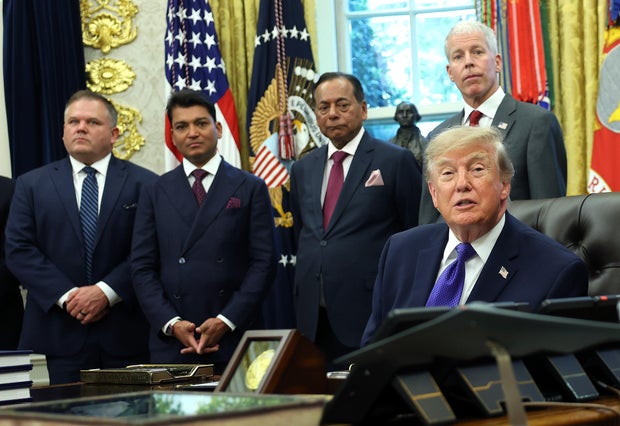
It comes after President Trump’s announcement on Monday that the largest steel mill in U.S. history will be built in Iowa. Mr. Trump promised the $15 billion steel plant would create 1,750 permanent jobs and about 6,000 construction jobs.
The announcement surprised many people in the state, including legislators who would be counted to approve tax incentives, by surprise. When Commerce Secretary Howard Lutnick told reporters at the White House on Monday that “the deal is done,” Iowa lawmakers still had not been given details to review or a timeline for the special session to be held Friday.
Opponents of the $1.36 billion in incentives are largely supportive of the project, but they want more safeguards and guarantees of public benefits. The incentives amount to about $777,000 in credits per permanent job over 10 years, a steep price by any measure. Supporters argue the math leaves out about 6,000 construction jobs — all of which opponents say are temporary.
And a time when many Iowa Farmers are in trouble, more than $1 billion in tax credit for an India-based conglomerate is a tough sell for some.
Kevin Dietsch/Getty Images 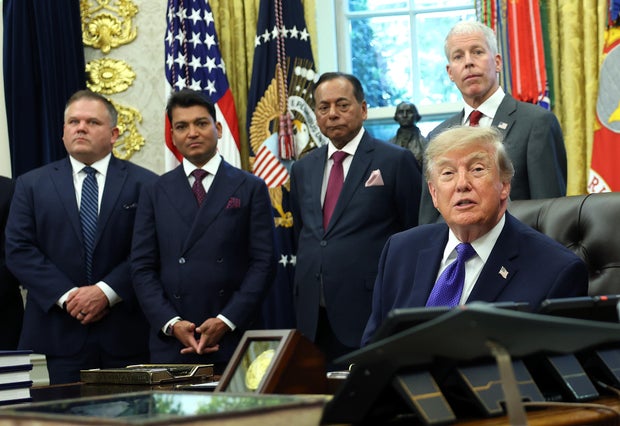
Why Iowa?
There are places in the United States synonymous with steel, but Iowa is never one of them. The state has a few scrap-fired steel mills – a small fraction of Mesabi’s promising size – and no commercial iron ore. Mesabi Metallics is based in Minnesota and its argument is that Iowa is conveniently located downstream of the Mississippi.
But Iowa has something that Minnesota doesn’t: one of the most hotly contested congressional races in the nation. The state is also seeing close Senate and gubernatorial races.
The plant is proposed for Iowa’s 1st Congressional District, where Republicans MP Mariannette Miller-Meeks is defending one of the GOP’s most at-risk seats. In 2024, the recount placed her ahead of Democrat Christina Bohannan by just 798 votes. Sabato’s crystal ball just moved the race from “launch” to “leans Democratic” before the steel announcement.
Bankruptcy and broken promises
Mesabi and Essar Group have a long history of missed deadlines and broken employment promises. In 2008, Essar announced the construction of a $1.6 billion iron ore mine and steel plant in Nashwauk, Minnesota, home to some of the richest iron ore deposits in the country. It promised more than 700 permanent jobs. But plans for the steel mill were abandoned in 2015. Essar Steel Minnesota filed for bankruptcy in 2016, was renamed Mesabi Metallics under new owners, then returned to Essar control.
Indian company Essar received billions of dollars in loans from Russian state-owned bank VTB, according to local media. CBS News has not independently verified this information.
Dhiraj Singh/Bloomberg via Getty Images 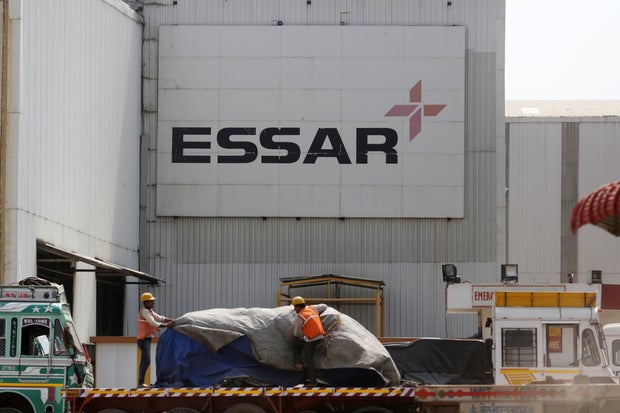
There are also echoes of other regional megaprojects gone wrong. No one in the Hawkeye State wants the steel mill to be the 2026 version of Foxconn. In 2017, President Trump and Foxconn promised a $10 billion factory and the creation of 13,000 jobs in the battleground state of Wisconsin. By 2021, the plan was reduced to $672 million and 1,454 jobs. Republican Gov. Scott Walker defended the deal — and lost his 2018 re-election bid as public support deteriorated.
A delicate policy
Republican Sen. Kevin Alons told the Des Moines Register on Friday that lawmakers needed more time before Friday’s vote.
“The political extortion is mind-boggling,” he said.
But in the end, he voted for it.
State Sen. Dave Sires, also a Republican, voted no on the plan, complaining that the process was rushed. State Sen. Dan Dawson, another Republican, called it “the greatest corporate gift in the history of the state of Iowa.” And Republican state Sen. Jeff Taylor raised concerns that the state was already facing a real budget crisis.
Taylor was removed from the Senate Ways and Means Committee at the last minute to ensure the bill would pass the committee. It passed 10-8, with 6 Republican senators voting against the bill.
It’s a careful political calculation for Iowa Senate Republicans. They are trying to thread a fine needle: follow their leaders and bring jobs back home, without appearing to spend over a billion dollars of taxpayer money on a foreign company without time for review.
Zhang Fengguo/Xinhua via Getty Images 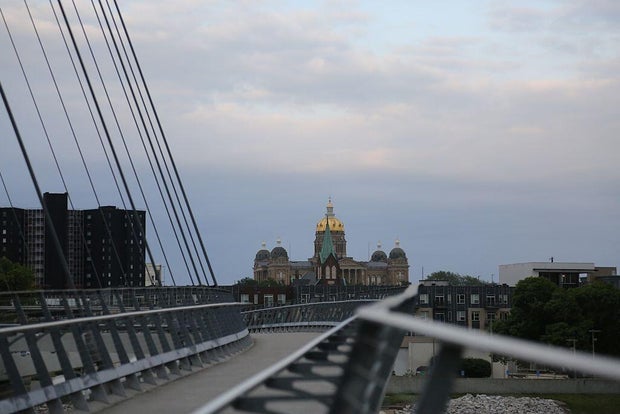
Republican gubernatorial candidate Zach Lahn, who campaigned against business aid, made the case for supporting the bill. He called the idea of a steel mill in Iowa a “once in a lifetime” exception.
Democrats have also navigated tricky political territory, trying not to oppose job creation while fending off a rush to deliver nearly $1.4 billion in tax breaks before early voting begins Oct. 14. Democratic candidate Rob Sand, currently state auditor, called the steel mill “a promising idea for Lee County” but wanted to see more details first.
“You look at these data center deals that this administration has done over the last few years and we’ve handed over the farm,” Sand said. “I want to make sure that this is a real opportunity, but that at the end of the day Iowa takes advantage of it and doesn’t get ripped off.”
Iowa Senate Democratic Leader Janice Weiner said she wants good-paying jobs and investment in the state but balked at the rapid timetable that has left taxpayers out of the conversation.
“If we did things the right way, we would wait until after the election,” she told CBS News on Saturday. “We have a responsibility to our taxpayers to ensure our hard-earned money is well spent. If it’s a good deal now, it will be a good deal in January when due diligence has been done.”
Meanwhile, state Rep. Dave Jacoby, a Democrat, voted yes, “with the hope that this plan is real,” while cautioning, “today is not a groundbreaking ceremony.”
The groundbreaking ceremony, if it happens, will be years away. The tax credits don’t take effect until the plant is operating, and Mesabi says that won’t be until 2030. Iowans will start voting in just a few days. So the question on the ballot is not whether Iowa will get a steel mill. It’s a question of whether voters believe it — and whether $1.36 billion was the right price to pay for it.
Gn usa