Ta-Nehisi Coates on the shocking case that shattered his childhood and inspired new HBO documentary | Documentary films

For most of his life, writer Ta-Nehisi Coates would sometimes think of a frightening episode from his childhood in West Baltimore: Almost exactly 43 years ago, on November 18, 1983, a 14-year-old boy named DeWitt Duckett was shot and killed in a Harlem Park High School hallway in mid-afternoon, by an older teenager who had stolen his blue satin Georgetown jacket.
Coates was only eight years old at the time, too young to know the details, but old enough to perceive the collective horror around him. This sensational event – the first time a child was killed in a Baltimore public school, according to local press – was a rupture in his child’s worldview. “It was the first time I felt like, oh, actually, I exist in a very dangerous world,” he told the Guardian. “And then you go on television and it’s clear that the rest of America doesn’t exist in this dangerous world. The dangerous world is only for you and people who look like you.” Coates always assumed that the three teenagers arrested and convicted of the murder were the right people, and the episode faded into one of those strange imprints of the past, a blurry but seminal event.
That is, until a 2021 New Yorker article by journalist Jennifer Gonnerman, which detailed the long haunting of Ron Bishop, Duckett’s friend, who was walking alongside him when he was shot. During those four decades, Bishop had recurring nightmares, not about his friend’s murder, but about the trial that followed: Under threat of violence and arrest by police, Bishop, then 14, testified that three teenagers—Alfred Chestnut, Ransom Watkins, and Andrew Stewart—had together shot Duckett, even though Bishop knew they were innocent. In 2019, Bishop officially recanted his forced testimony. The recantation, along with reams of long-buried evidence, as a Maryland state prosecutor says in the new HBO documentary When a Witness Recants, “the most egregious wrongful conviction case of my career,” led to the men’s release. They had each spent 36 years in prison, always maintaining their innocence.
Shortly after the article appeared, a stunned Coates, one of the nation’s foremost public intellectuals on racial injustice, teamed up with documentarian Dawn Porter to meet with the three men in Baltimore. Coates apologized on behalf of the community where they all grew up. “I was obviously very young, so there was nothing I could have done at the time,” he recalled, “but I just thought that as a community we had failed these brothers and someone had to tell them that. “The guys,” as Coates and Porter call them, accepted the apology and agreed to participate in a documentary exploring the consequences of wrongful incarceration and a long-sought resolution.
The “Harlem Park Three,” separated in prison for 27 years, still function as a unit, one picking up where the other left off. “We want our story to be told,” Chestnut said of the decision. Stewart added, “With this documentary, we have the opportunity to tell the world that despite what people say, despite how people feel and how they look at us, it’s not us… We don’t want the world to see us because of our pain, because that will never change. We want the world to see us overcome our pain.” As a group, “they just said: are you going to tell the truth? Porter called back. “And that weighed on us. For most people, that’s a very obvious question. But when you’ve been lied to and violated like that, that’s the only question.”
When a Witness Recants, directed by Porter with Coates as participant and executive producer, delves into truths both emotional and literal. It’s a love letter to Baltimore and a maddening tale of systemic injustice, a document of appalling failures on every level, from the devastating lack of concern on the part of the police to the stunning insensitivity of the state’s prosecutors. And above all it is a singular account of the perhaps irreparable wounds of wrongful incarceration – for the exonerated men, for the witnesses forced to send these men to prison, for the community whose sense of trust and security was shattered.
The first half of the film traces how this parody could have happened. The facts “were even more egregious” than expected, Porter said. On camera, Bishop recalled being pressured by Detective Donald Kincaid to change his initial statement to police from a shooter to Chestnut, Watkins and Stewart, with threats of violence or jail: “I know I won’t get out alive if I don’t tell him that Alfred shot Dewitt, that Alfred had the gun, that Andrew and Ransom were taking his jacket off.” » The judge, Robert M. Bell, did not question grand jury testimony riddled with inconsistencies. The prosecutor, Jonathan Shoup, brushed aside Bishop’s protests that he was not telling the truth, pressured him to take the stand and did not share any police records with the defense.
Those files, obtained by Chestnut through a public records request in 2018, showed that several people reported to police that another teen named Michael Willis wore Duckett’s jacket to an ice rink and bragged about the crime; he was never questioned. (Willis was shot and killed in 2002. Shoup died in 2016; his obituary cited the “Georgetown jacket” case as one of his notable accomplishments as a prosecutor. Kincaid declined to participate; when asked during a 2022 deposition what he would have changed about his investigation, he replied: “Nothing.”)
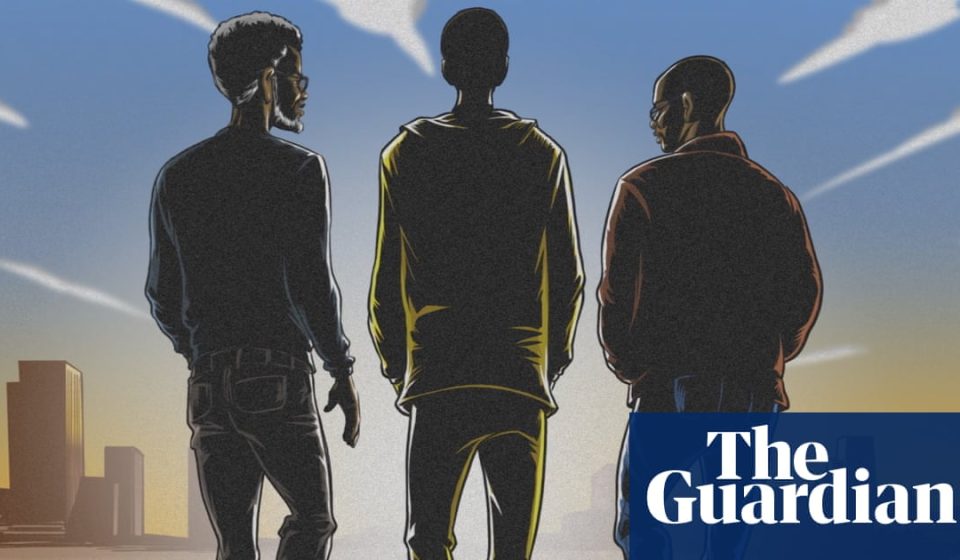
“The more we looked into it, the more clear it became that they had been trained in this horrible way,” Porter said of the evidence. “This has all become even more exasperating. » The film relies in part on graphic novel-style illustrations to convey the boys’ fear and pain, while actual courtroom sketches from the trial depict the three 16-year-olds as adults. “It’s disgusting,” Coates said of the legal proceedings. “The police department showed as much respect for DeWitt Duckett’s life as they did for the person who killed him. They didn’t even bother to seriously investigate it, seriously try to find out. They just blamed it on certain people. They just closed the case, and that was that.”
Over the next 36 years, Chestnut, Watkins and Stewart worked to overturn their beliefs and make sense of thwarted lives before they actually began. Bishop graduated from high school, went to college, got married and became a mental health counselor. After the guys were released, all four expressed a desire to meet in person. The final third of the film documents this encounter, to devastating effect. There is no mutual rapprochement between Bishop and the trio, no path to forgiveness, as the conclusion of the New Yorker article suggests or as viewers of a documentary years in the making expect. The meeting, instead, is derailed by Bishop’s rambling self-justifications, then ended by each man’s incredibly honest expressions of anger. “It was painful,” Chestnut recalled of the moment he realized no satisfactory apology would come. “It made us all angry to hear him speak,” knowing they could have been freed if someone had spoken out years or even decades earlier.
“That could have been the moment that changed our lives,” Stewart added. Instead, it became a release for all the hurts and betrayals that could never be healed. “When I got in there, I was trying to be politically correct, to say what people wanted to hear,” Watkins said. But he found himself thinking, “If I don’t tell this man how I feel, and I’ve been waiting for this for 36 years… you’ll never in your life get the chance to do it again. So I just let it slide.”
It’s a stunning scene to watch, unflinching and revealing in its refusal to yield to soothing conclusions or rob anyone of their time. Life Goes On – Watkins, Stewart and Chestnut are each in relationships and building their lives in middle age. Chestnut now has a young daughter. Everyone expresses their enthusiasm for what awaits us. But the film bears witness to damage that is also perpetuated, despite or in tandem with great perseverance. “There are a lot of victims here,” Porter said. “We cannot undo the damage caused by wrongful incarceration. We must prevent this from happening in the first place.
“To me, that’s the lesson: You can’t fix it. Money doesn’t fix it. Nothing fixes it. Just don’t do it.”
Gn entert