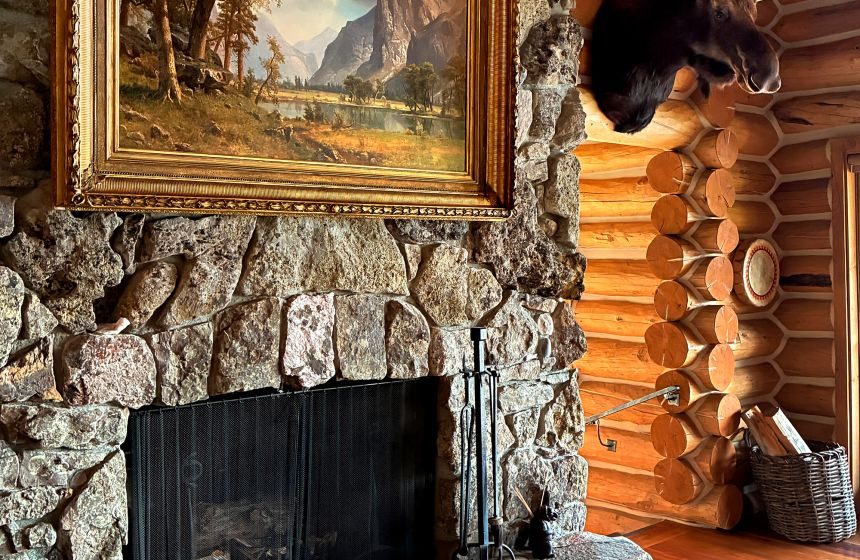

A multitude of paintings that belonged to Ted Turner will go on sale in January. The works, by Albert Bierstadt and Thomas Moran, are panoramic views of the American landscape made by immigrants who came to love the natural land even as it bloodily became a country.
The sale, which will take place on January 20 at Christie’s in New York, will benefit the Turner Foundation, which supports environmental management. The total sale estimate is approximately $20 million.
“These paintings meant a lot to our father, not only because of their beauty, but also because they reflected what he loved about nature and the outdoors. While it is difficult to part with pieces that were so dear to him, our family takes comfort in knowing that they will be appreciated and cherished by others. We also view this sale as another opportunity to continue his lifelong commitment to giving back, with proceeds going directly to the Turner Foundation to further its leadership in of conservation and environmental management,” the Turner family said in a statement. statement.
Turner founded CNN in 1980 and died this year at the age of 87.

Thomas Moran was renowned in his day for painting and publicizing views of what would become America’s most famous conservation lands. In 1871, he was part of a survey expedition to what was known as the Montana and Wyoming Territories. His paintings were influential in the creation of Yellowstone National Park the following year, and his “Grand Canyon of the Yellowstone” was purchased by Congress as propaganda for the park.
“It’s ironic that Ted Turner would be interested in these glorious depictions of the Western landscape because they were made in the context of government expeditions that would ultimately lead to the destruction of these lands,” said Nika Elder, an associate professor of art at American University who specializes in the history of U.S. art.
These surveys in the 1860s and 1870s were often funded by Congress “as part of its domestic policy of westward expansion,” as the Office of the Historian of the United States House of Representatives puts it. The resulting changes were rapid and severe. In 1887, the Dawes Act deprived Native people of ownership of much of their land, disrupting a deep ecosystem and increasing mortality rates among Native people. (“27 tribes have ties to the region and resources now found in Yellowstone National Park,” according to the National Park Service.) Montana and Wyoming became U.S. states in 1889 and 1890.


Bierstadt was also an expedition painter. But the spectacular landscapes he sketched on the road and successfully painted at home soon fell out of fashion. In 1964, a little more than 60 years after his death, the Santa Barbara Museum organized a retrospective of his work which brought it back into the spotlight. “We live in an age that seems increasingly intrigued by the common and the mundane,” famed museum director Thomas W. Leavitt wrote of the exhibition. “The very vulgarity that originally sold Bierstadt’s paintings to the robber barons of his time, and which attracted much abuse from later critics with more refined taste, may now work once again in Bierstadt’s favor.”
The Turner Foundation funds projects that support America’s “natural systems,” prioritizing seven states. By 2025, the organization’s filings indicated it had awarded more than $2.7 million in grants that year, including significant funding to the International Crane Foundation, the Rocky Mountain Bird Observatory and the Ruffed Grouse Society.
Gn headline