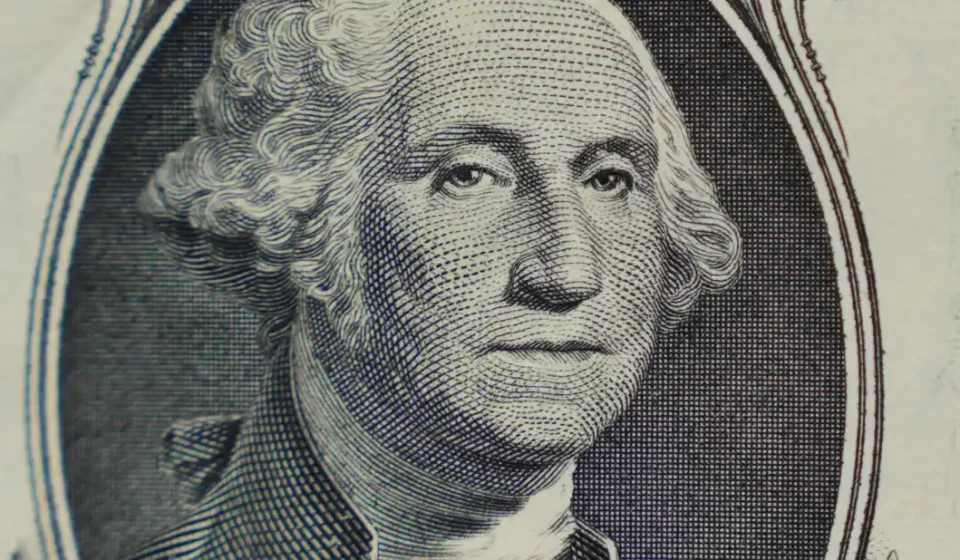

President George Washington is depicted on a US$1 bill.
LM Otero/AP
hide caption
LM Otero/AP
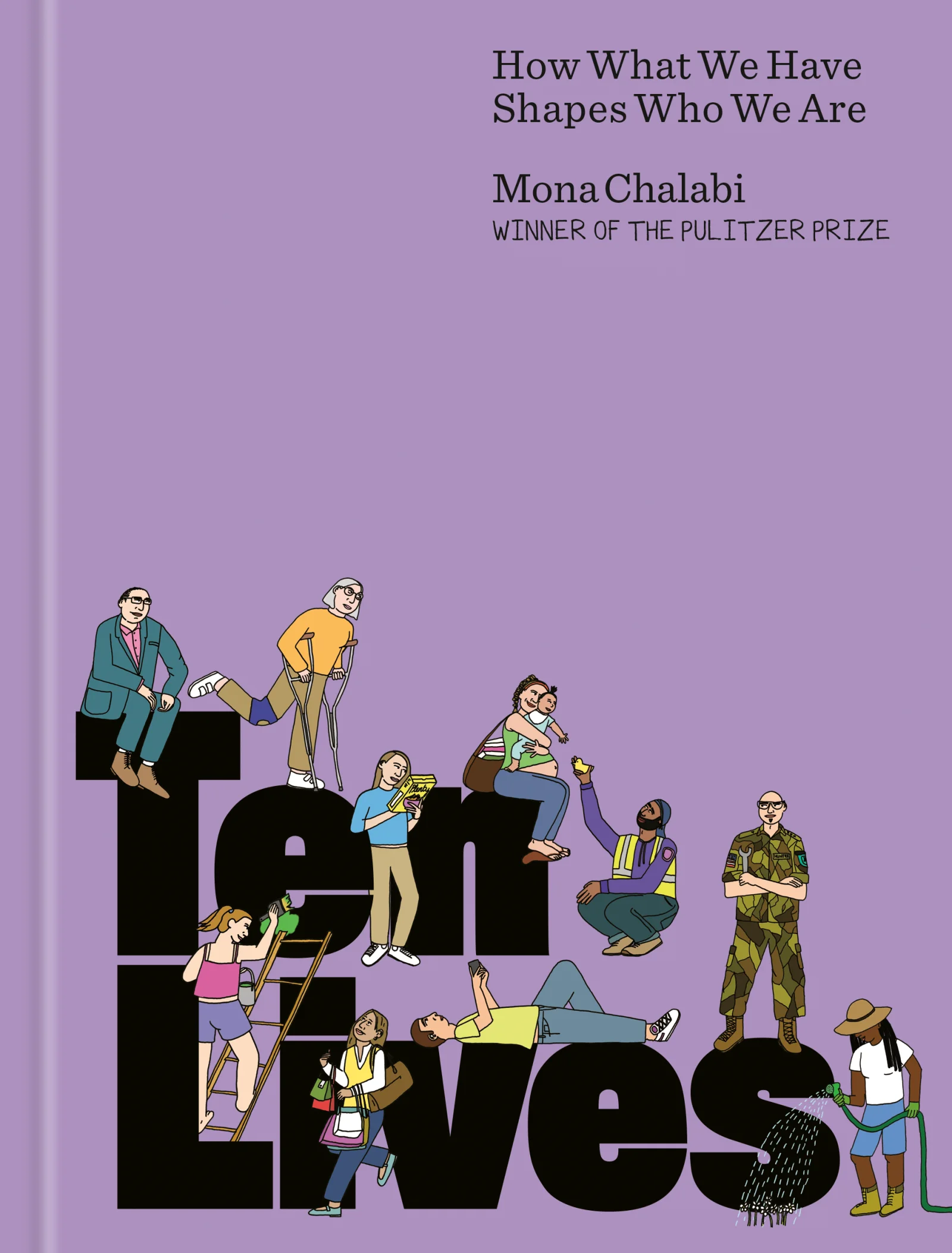
How much money would you need to feel financially secure? Pulitzer Prize-winning journalist Mona Chalabi spent five years following 10 Americans, from those who live paycheck to paycheck to those making hundreds of thousands of dollars a year, in an effort to answer that question. His new book, Ten Lives: How What We Have Shapes Who We Are, explores why financial security can seem so elusive.
“It’s called 10 lives because I didn’t specifically want to focus on the 1 percent,” Chalabi says. “Instead, I wanted to talk about how 99 percent of us aren’t all in this together and what kind of power differentials there are between us.”

Chalabi says almost everyone she talked about in the book was deeply worried about their financial future, even those who make a lot of money.
“Overall, everyone seemed to be expressing this sense of panic that I think is really very specific to American capitalism, which is an incredibly precarious and cruel system where you’re one crisis away from experiencing a real economic shock,” she says.

Chalabi also noticed that many of the people she profiled considered themselves middle class, regardless of their actual income. She says the disconnect between actual wealth and sense of class has consequences not only for how we view ourselves, but also for how we judge others.
“Being poor in this country means facing a huge number of obstacles, including assumptions about your intelligence (and) your level of education,” she says. “So it’s sometimes quite rational for people to try to present themselves as middle class, maybe even try to signal their wealth with the clothes they buy or the cars they drive. I don’t think it’s just an aspiration. I also think it’s them trying to avoid the discrimination they might face if their actual income level was disclosed.”
Interview Highlights
On the importance of parents when it comes to financial security
If you really want to understand a person’s economic security, you need to understand who they can turn to when times get tough, and obviously, a household is only an imperfect measure of that. People sometimes even live with spouses they can’t necessarily rely on. …But one of the things that comes out over and over in the book is that the amount of money your parents have is so important in shaping your economic security. …
Classes are about more than the number printed on your payslip or the number on your bank balance. Our class identities are very often tied to the homes in which we grew up. They are linked to the jobs our parents did. … Most people born into poverty in this country don’t make it.
On younger generations choosing partners for reasons of economic compatibility
There was this TikTok trend I saw a while ago where people were saying they were looking for a partner who was 6’5″, blue-eyed and worked in finance, which was never my partner. I grew up with a particular model of feminism which was about being able to support yourself, without relying on a man. But I also think for my generation, there was this… understanding of romance that it’s somehow supposed to be post-materialist, that you’re not really supposed to talk about wanting a partner from a particular set of economic circumstances.
(There is) a study published by the National Bureau of Economic Research. They compared 1960 to 2005 and found that it’s not necessarily that people are looking for partners in the same income bracket, but that people are very often looking for partners with similar education, and education has a huge impact on income. They therefore found that between 1960 and 2005, the trend was further strengthened. So we’re much more likely now to date someone with a similar background to us. And the reason it’s important to look at this is because I would argue that who we date, as well as how much money we inherit, are probably two of the biggest factors that affect the overall level of inequality in this country.
On being transparent about his own finances, including his large book advance

I felt like the people I was talking to had a right to understand my economic privilege, my perspective as I asked them these deeply personal questions. And as you know, as journalists, we generally don’t pay people for the time they spend doing interviews. …But it’s a very different type of equation when you’re asking people to share these vulnerable aspects of their lives, and especially when I’m profiting from these stories.
At the beginning of every interview with everyone I spoke to, I told them a number of things. I said, first, I’ll pay you $40 an hour for your time. If this makes you uncomfortable, let’s talk about it. I said that whatever I asked them as a journalist, they had the right to answer me. So if I asked them how much money they made, they had every right to ask me the exact same question.
On making judgments about your class based on your accent

The accent problem is huge. …When I’m back in the UK, people can honestly get a pretty good read of my course through my voice. And what’s fascinating is that as immigrants, Americans don’t really understand these nuances of the British accent. And so I just read as classy here. And I think that gave me, actually, these enormous class advantages. I think my accent in the United States has been very powerful in counteracting some of the obstacles I may have faced due to my race and gender. Because with this voice, people assume that I am educated, that I am cultured. I’m not sure how true these things are, but there’s just this assumption that I think is very beneficial in a corporate environment.
Anna Bauman and Nico Gonzalez Wisler produced and edited this interview for broadcast. Bridget Bentz, Molly Seavy-Nesper and Beth Novey adapted it for…
Gn entert