
In Adams’ book The Hitchhiker’s Guide to the Galaxythe Deep Thought supercomputer took 7.5 million years to answer the ultimate question of life, the universe and everything else, and came up with 42. It then took another 10 million years to figure out what the question was.
Adams’ joke has become an accidental satire of AI, as Tao and his colleagues are now combing through OpenAI’s responses to determine how it achieved them.
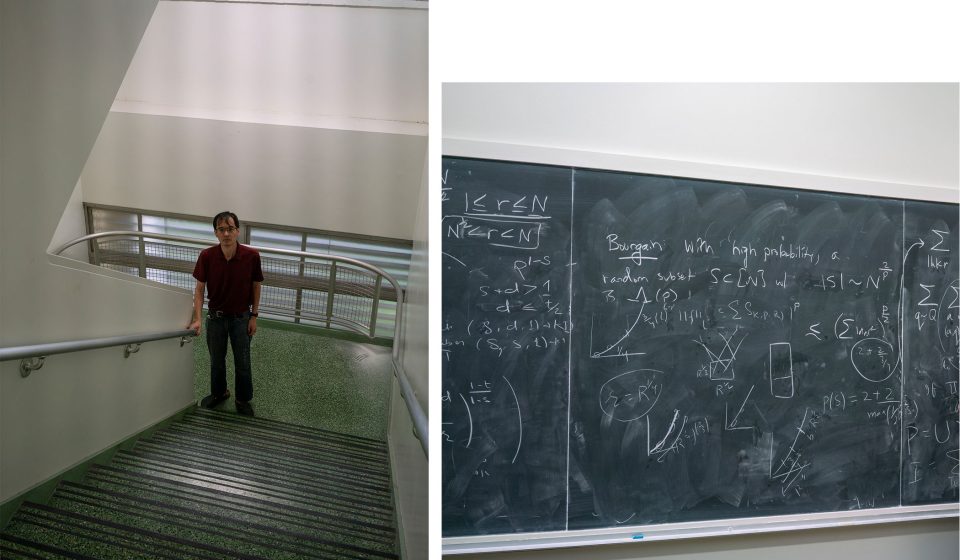
At 51, Tao could be forgiven for not wanting to clean up after Silicon Valley, even though he worked with OpenAI and still has contacts there. The Australian, speaking by video from California where he is a mathematics professor at UCLA, is one of the youngest winners of the Fields Medal (the Nobel of mathematics) and many other prizes honor his contributions. He attempts to distill the field in his book, Six Fundamentals of Mathematics: How to Model the Worldwhich is published on Tuesday.
But perhaps the worst thing for Tao is that he thinks OpenAI hasn’t even created a new model to solve these difficult problems. The puzzles that people dedicated their careers to solving were just the raw material to train his models.
AI companies are “running to the most powerful model,” Tao says, so they need to “train, benchmark, and put the AI through a lot of testing to see if what they’re doing improves their capabilities.” The practical problem is that the newest AI models outperform all tests.
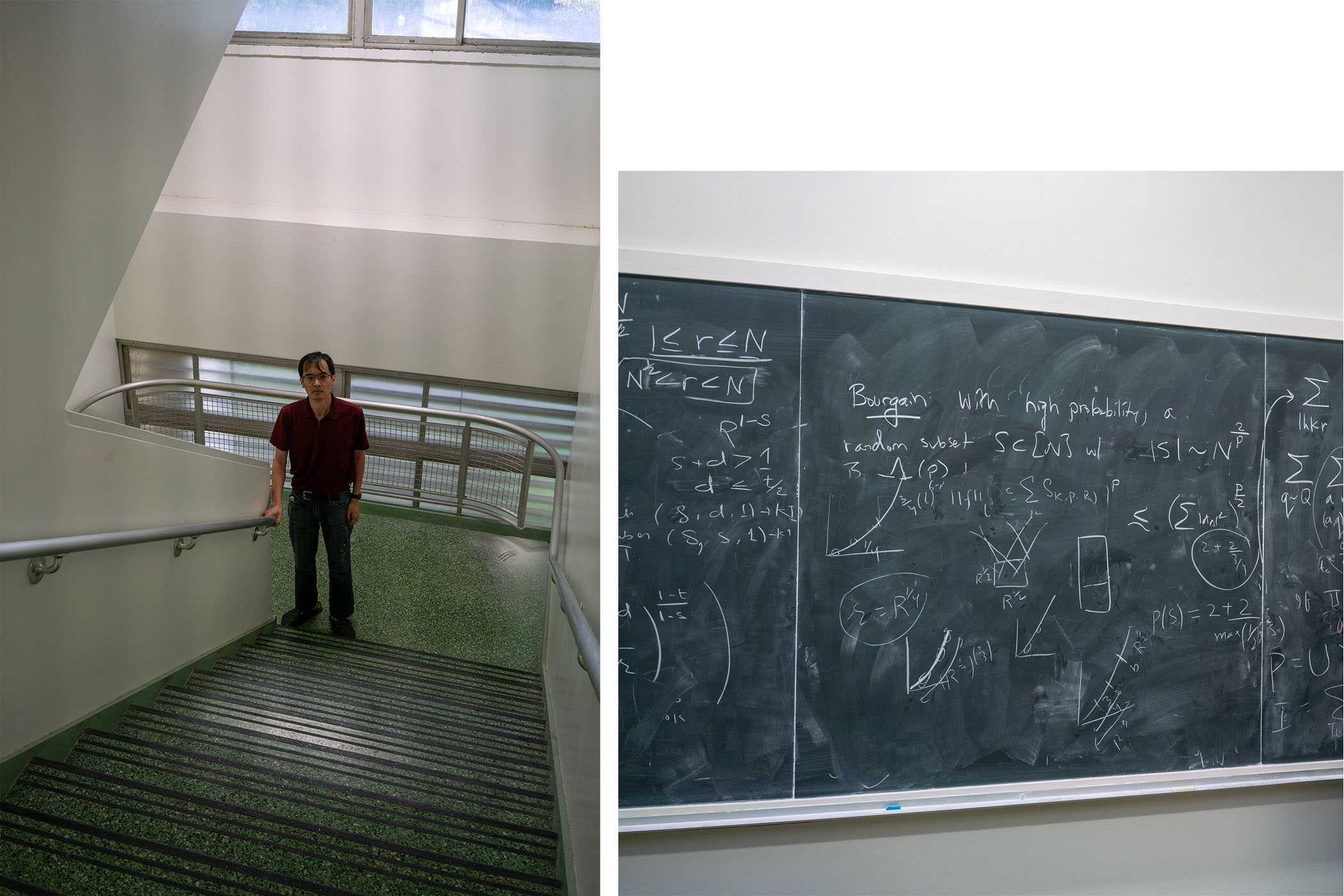
“Math problems are almost the only thing they can practice on, so suddenly all the big prizes and goals in our profession have become benchmarks for them,” says Tao. “And as a byproduct, they generate this terrible evidence. Great results, but they don’t care about the elegance of the solutions, or who understands them, or what to do next.”
An updated Deep Thought would likely involve a stock offering; Tao says that if OpenAI or its main rival Anthropic, which makes Claude, suspect the other of being on the verge of a breakthrough, “they just go crazy.”
OpenAI rejected the code red analogy and said it had not suspended registrations or spent as much as Tao suggested.
(OpenAI) really, really wanted to beat Anthropic. It’s crazy
(OpenAI) really, really wanted to beat Anthropic. It’s crazy
Terence Tao
The dumping of mathematical “toxic waste,” as Tao calls it, began when rumors surfaced online that Anthropic researchers were close to solving one of the seven million-dollar Millennium Prize problems set by the Clay Mathematics Institute.
“My contacts at OpenAI told me that this has become the number one priority of code red,” says Tao. “They spent tens of millions of dollars. They set up this swarm of 10,000 AI agents to tackle these problems.” OpenAI has focused its agents on the problem of Navier-Stokes equations, which appear to perfectly describe the motion of a fluid, but can fail under certain conditions.
“They even suspended signups, so for a few days you couldn’t sign up for their premium AI service because they were redirecting all the compute from their flagship services to this one issue,” says Tao. “They really, really wanted to beat Anthropic. It’s crazy.”
On September 8, OpenAI published proof that appeared to show that Navier-Stokes had indeed failed, although critics suggested there might be mistakes. The reaction from the math community left OpenAI with a problem, Tao says. “They had been testing their models on these problems for a while, and they had actually accumulated a bunch of very poorly constructed solutions to these problems. They didn’t know what to do with them.
“(When) you generate toxic waste, you don’t have good options. You can stay on it forever, or you can just throw it away all at once, or you can distribute it in small quantities, or you can pay people to process it.”
OpenAI said it neither concealed nor rushed the results.
Anthropic takes a different approach, paying mathematicians to write up the results of its “treasure trove of questions,” he says.
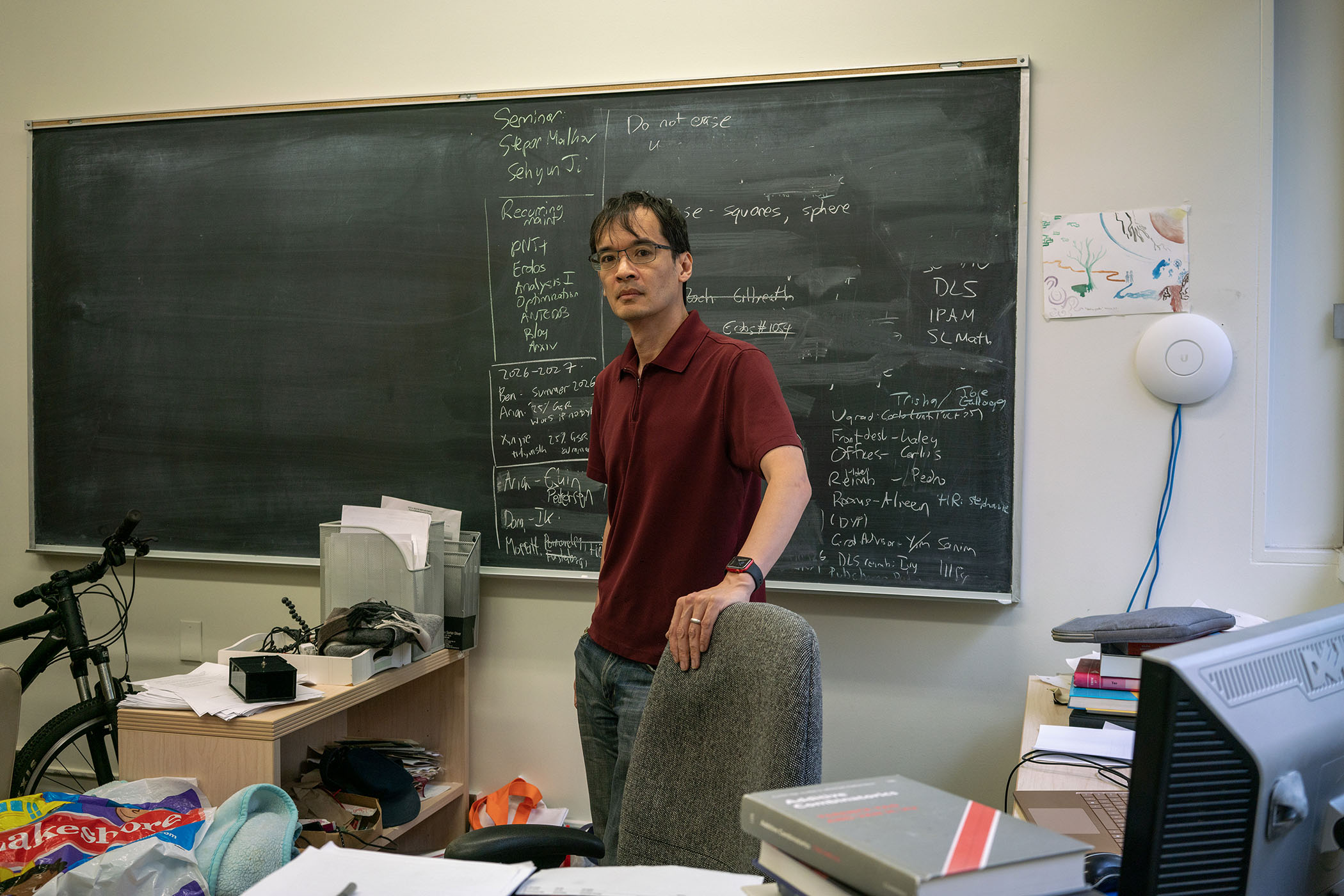
This creates a different problem. For years, mathematics was a field where the playing field was equal; practitioners only needed a bit of chalk and a blackboard, unlike their scientific counterparts – think Cern or the Hubble Space Telescope. Now, doing cutting-edge mathematical research means having access to a super-AI model. “They choose who writes the paper.”
In the aftermath of the “toxic waste” dump, Tao became a meme: “Put the fries in the bag, Terence,” an allusion to the mathematicians’ impending careers at McDonald’s. He laughs when I talk about it.
“You know, social media is going to social media,” he said. It is understandable that people “who have had a bad experience with mathematics or intellectualism in general (have) schadenfreude.»
However, members do not understand the main point. Tao agrees that math culture needs to change – he hopes it becomes more collaborative, less focused on giving credit for solving a problem and more on explaining it.
“Mathematics is half science and half human,” he says. “We care about the outcome but also the process, how we got there, what we learned along the way. » He still uses theorems discovered by Euclid and Pythagoras 2,500 years ago. The story of how a problem is solved, the story of the arguments, and the elegance of the solution are essential to the beauty of mathematics. Otherwise, “you can go to the gym and have a robot lift your weights, but what’s the point?” »
Six essential principles of mathematics is a short, fast-paced story about the evolution of numbers, algebra, geometry, probability, analysis and dynamics. The invention of the infinity symbol by John Wallis in 1657 and the decision to use the letter i to denote the impossible square root of -1 (an imaginary number) created tools that allowed mathematicians to do things that were out of reach. Is there a tool he would like someone to create?
There is. We can describe shapes well – their volume, their width, their curvature. “But one notion that still remains very elusive is that of the complexity of form. Intuitively, some shapes seem very simple and others very complicated.” Mathematics does not have the language to describe in detail the complexity of, say, a tennis ball versus a steel wool scrubbing sponge.
Large language models have highlighted this problem because they represent words as coordinates in space. The corpus of English becomes a vast cloud of dots, plotted in thousands of dimensions, an “incredibly complicated shape that is impossible to look at.”
“It turns out that this strange object has a simpler shape than we thought,” says Tao. “It’s not easy for humans, but AI machine learning algorithms can detect form and use it to predict, from part of a sentence, what the next word is, and then the next word, the next word, and suddenly they can start speaking English fluently.”
English has a form similar to French, but quite different from Finnish. “There are all these recipes in there that we don’t know, partly because mathematicians haven’t really developed a theory of shape complexity that would explain this. If we had, maybe we would understand (why) there are certain languages that AIs master better and faster than others.”
An OpenAI spokesperson said: “Our work in mathematics is part of a long-standing effort to accelerate scientific discovery. We have been working on mathematics for years because better reasoning can make AI a stronger research partner, helping scientists solve tougher problems in biology, medicine and engineering.”
“We are already working with leading mathematicians to improve how we share results, and we have committed $5 million to help the mathematics community examine, understand and benefit from discoveries made through AI. »
Gn bussni