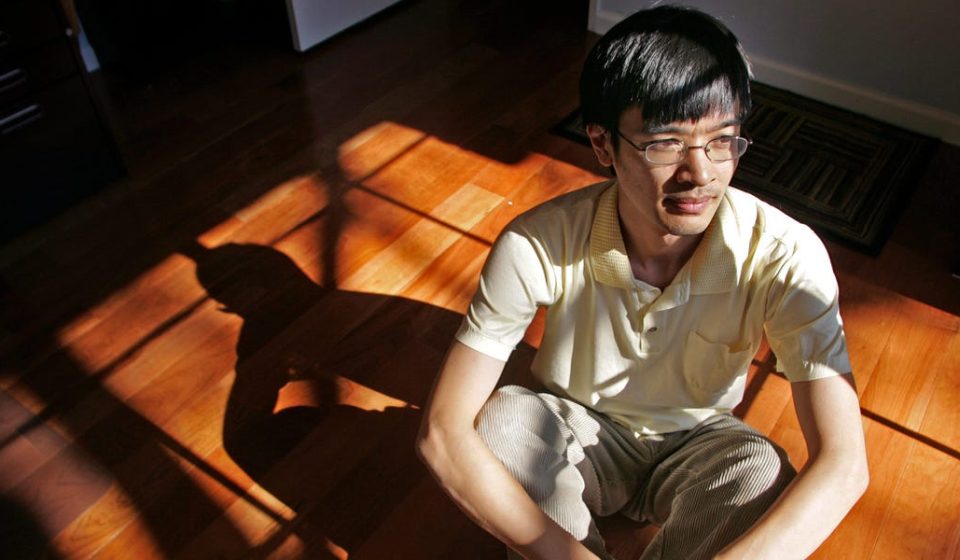
Terence Tao calls for radical change.
The UCLA math phenom, considered by many to be a thought leader in the field, recently said mathematicians are living in the past if they think they can retain their old values and remain relevant in the age of AI.
“Math 1.0 is going to have to move to what I call math 2.0,” Tao said last week at Harvard University.
For starters, Tao said problem solving should no longer be the mainstay of mathematical research. Now that AI can tackle dense guesswork more effectively than humans, dying on that hill would be insane, he said.
“Blind optimization of problem solving alone is now actively detrimental to the long-term health of mathematics,” his slideshow reads.
Instead, Tao said mathematicians should focus on topics that humans already excel at, like explaining what AI-generated solutions actually mean and extrapolating new problems from them.
And publishing work in academic journals, once a prestigious distinction for mathematicians, is rapidly losing its value, he said.
As inboxes become flooded with AI-generated research by increasingly less competent mathematicians, who in many cases don’t even understand what they are submitting, Tao said journals must rethink their values or lose their importance.
“We can no longer rely on the number of papers published in top journals,” he said, adding that mathematicians should only gain influence if they can explain their research to human inquisitors.
Tao laid out his vision in front of a room full of Harvard mathematicians shortly before the mathematics community was once again rocked by an explosive AI solution – this time for the most famous open question in all of mathematics.
On Friday, a mathematician employed by Anthropic said he had deciphered the Riemann hypothesis using Claude. Mathematicians told Business Insider that the breakthrough was a huge deal. Steven Strogatz, a professor at Cornell, called the problem the “white whale” of the field.
In an interview on the “Numberphile” podcast last month, Tao said humans working with AI models would not “advance” the Riemann hypothesis until 2050.
Yet Tao did not say that young mathematicians should abandon their doctoral studies. programs and join AI startups.
He pointed to Caltech’s mathathon, a student-run event in which participants use AI to find new ways to solve old problems, as a possible path forward in the field.
“Despite all the tumult we experience today, the future of mathematics is actually quite bright,” he said.
Gn bussni