
Two California Highway Patrol officers are recovering from serious injuries after a Tesla slammed into their patrol car at the scene of a crash on Interstate 80 in Fairfield. The 22-year-old driver told investigators he was sleeping with Tesla’s “Full Self-Driving” mode activated.
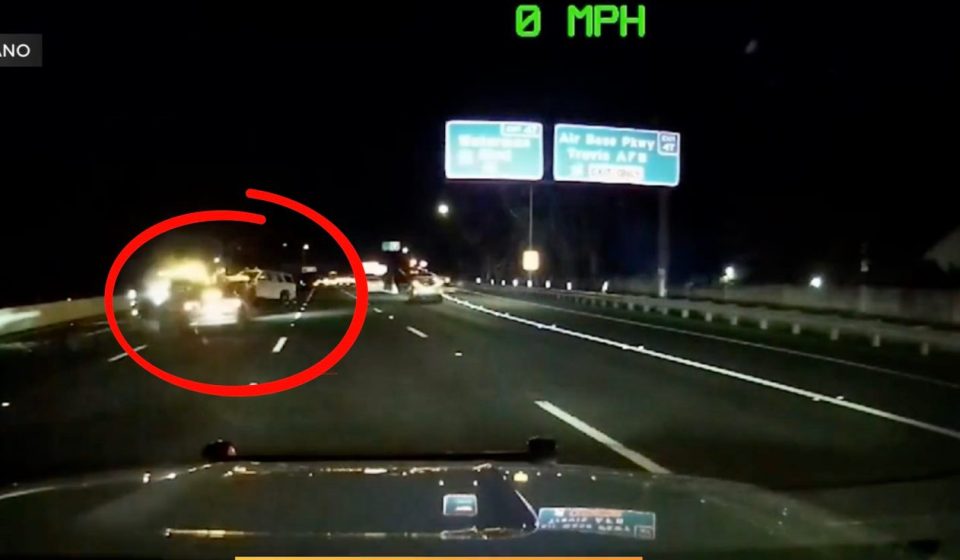
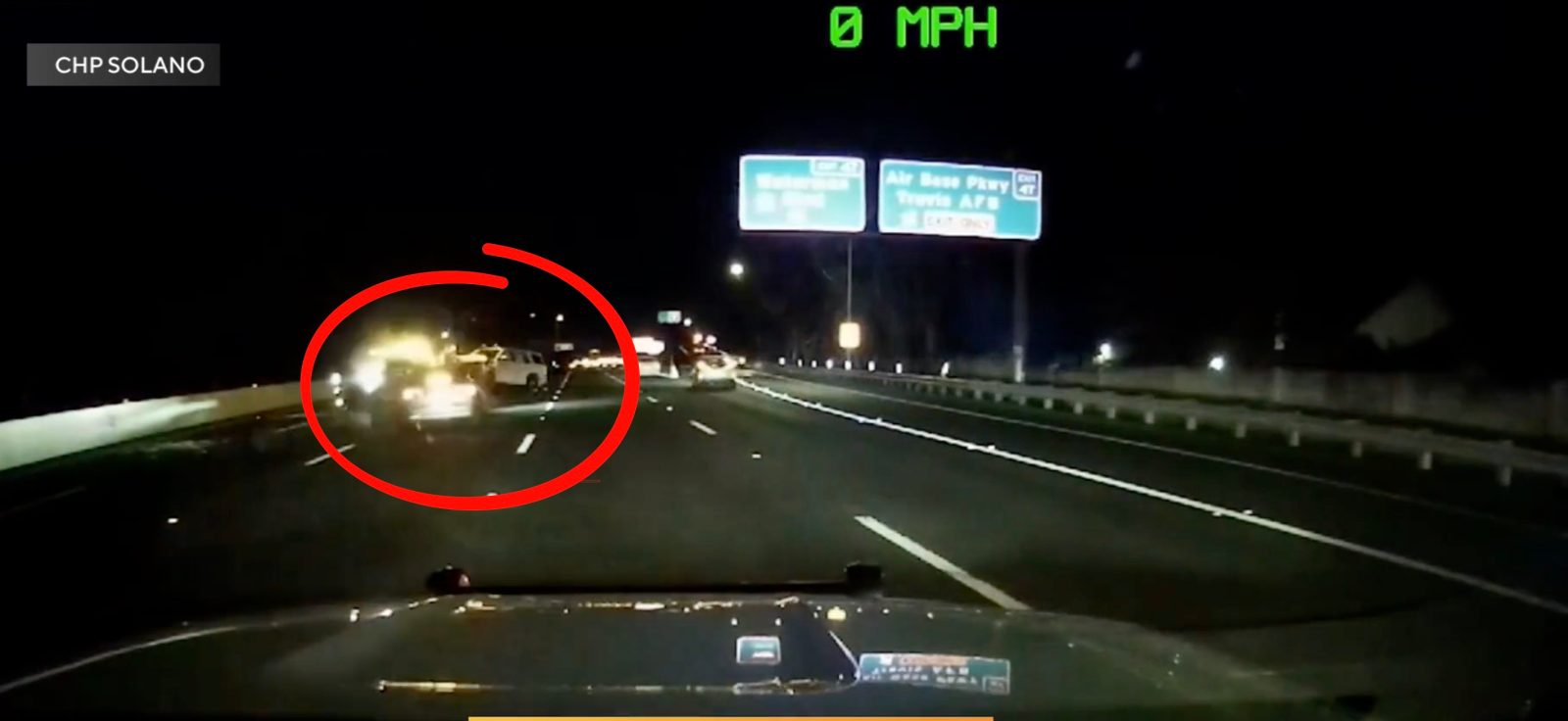
CHP released dashcam video of the impact Thursday. It’s the latest Tesla to launch in an emergency situation, a failure that federal regulators began investigating five years ago.
Flares, cones and four lanes closed
The crash occurred shortly before midnight on Tuesday, Oct. 13, on eastbound I-80, west of Air Base Parkway. Officers were on scene at a fatal accident: About an hour earlier, a 19-year-old from San Pablo lost control of his Honda Civic and was struck by a Chevrolet Tahoe. He didn’t survive.
Four lanes were already closed behind flares and cones when the Tesla arrived at highway speeds, according to CHP. He walked through the closure and got into a Dodge Charger patrol car with the two officers seated in it. Cameras from the Charger and another vehicle at the scene captured the impact.
The Tesla driver, from Sacramento, escaped with minor injuries. Both accidents remain under investigation.
In its statement, CHP emphasized that FSD is a driver assistance feature that requires the person behind the wheel to remain alert and in control: “The technology does not relieve drivers of their responsibility to operate their vehicle safely. »
CHP has not released the Tesla model or software version. And for now, the driver’s word is the only evidence the FSD was on. Tesla’s vehicle logs will solve this problem.
Five years of Teslas traveling to emergency sites
We’ve been here before. In August 2021, NHTSA opened an investigation after a series of Teslas on autopilot crashed into stopped police cars and fire trucks, many at night with flares, cones and flashing lights on site. That investigation culminated in Tesla’s December 2023 recall of more than 2 million vehicles, fixed by an over-the-air update that added more driver attention alerts.
FSD didn’t solve it either. In June 2024, a Tesla on FSD struck a parked police car in Fullerton while officers were dealing with, yet again, a fatal accident. This driver admitted to being on the phone.
A nighttime lane closure lit by flares is as clear a “stop or move” signal as a road can give. If FSD was engaged in Fairfield, it headed directly there at highway speeds.
The problem with driver monitoring
FSD (Supervised) uses the cabin camera to ensure the driver is monitoring the road. He’s supposed to nag, then disengage when someone isn’t paying attention. A sleeping driver shouldn’t get very far.
So either he hadn’t slept in a long time or the camera hadn’t picked it up. We don’t know which one yet. But Tesla has relaxed this monitoring, instead of strengthening it. We recently reported that Tesla drivers can easily bypass the monitoring system, even a simple dollar bill placed in front of the camera can override it.
Last December, Elon Musk claimed that FSD drivers can now text and drive “based on the context of surrounding traffic.” Texting while driving is illegal in California.
Electrek’s point of view
The driver is responsible. If he fell asleep at the wheel at highway speeds, he almost killed two cops who were already cleaning up after a fatal accident, and he should take the consequences. CHP is right on this point.
But as usual, I must emphasize Tesla’s responsibility here. Tesla cannot wash its hands of this. It sells a product called “Full Self-Driving” in the United States, it agreed to drop that name in Europe this month after German regulators called it misleading, and its CEO told owners they could send text messages with it. When you tell people the car drives itself, some people believe you. A 22 year old who goes home at midnight is exactly who you believe.
This is the problem of complacency that I have been talking about for years. FSD becomes more and more dangerous as it improves. You go on social media and legions of Tesla fans think the system is reliable for this. This is clearly not the case.
Juries are starting to see things this way, too. The $243 million Autopilot verdict in Florida placed a third of the blame on Tesla, and the Katy, Texas, FSD crash earlier this year showed the same complacency trap from another angle. Driver fault and Tesla fault are not mutually exclusive.
And there is the technical failure. Emergency scenes are the exact scenario reported by NHTSA in 2021. Five years and a 2 million vehicle recall later, a Tesla equipped with Tesla’s most advanced driver assistance software would have gotten into it anyway. Musk continues to promise unsupervised FSD on customer cars. If Tesla wants to sideline the driver, will it take responsibility for accidents like this? In the meantime, he shouldn’t tell anyone that it’s okay to look the other way.
If you drive an electric vehicle, charging it with solar power on your own roof is the cheapest and cleanest way to run it. With electricity rates up nearly 10% in the last year and expected to continue to rise, turning to solar power is one of the best ways to protect against rising costs. And with leasing and PPA options, you can do it without any upfront costs and start saving immediately. If you want to find the best deal, check out EnergySage. It’s a free service with hundreds of pre-screened installers competing for your business, so you save 20-30% compared to a stand-alone solution. No sales calls until you choose an installer. Get your free quotes here.


FTC: We use automatic, revenue-generating affiliate links. More.
Gn usa