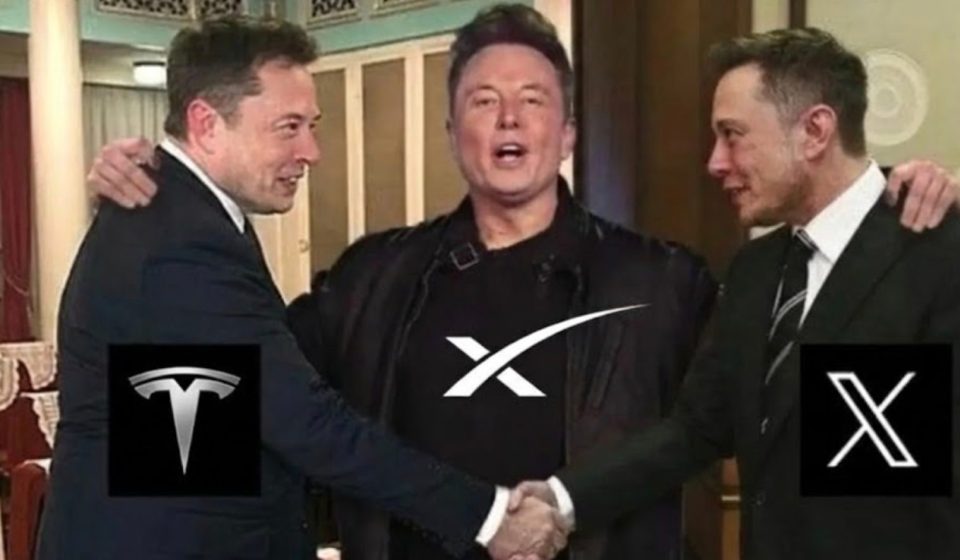

Tesla’s proxy statement for its 2026 annual meeting, filed today, confirms that one of its so-called independent directors now sits on SpaceX’s board. Ira Ehrenpreis, who chairs both Tesla’s compensation committee and governance committee, joined SpaceX’s board of directors in February.
It’s one of several details in the filing that are consistent with a Tesla-SpaceX merger. There’s a three-point ballot, an automatic voting program that goes into effect on the next vote, and Musk pays terms that are based solely on the price of the deal.
Three points, no shareholder proposal
Tesla’s 2026 annual meeting is set for December 3 at Gigafactory Texas, for shareholders of record as of October 13.
They have three items to vote on. The first is to re-elect Elon Musk, board chair Robyn Denholm and JB Straubel to three-year terms. The second is a non-binding advisory vote on salaries, and the third is the ratification of PwC as Tesla’s auditor, a position it has held since 2005.
That’s it. No shareholder proposals were voted on this year. At least, not yet. Last year’s meeting featured several, including one asking the board to invest in xAI, which has since been absorbed by SpaceX.
The board also said it would not bring back proposals to declassify itself or abandon Tesla’s supermajority voting requirements. Its 2025 attempt attracted 73.6% participation but only 39.4% of shares outstanding in support, short of the mark. The staggered board therefore remains, and the three directors appointed this year will serve until 2029.
Denholm’s letter makes the point directly, telling shareholders that “a steady, experienced hand in this time of rapid technological change is essential to Tesla’s success.”
As chairman, Denholm has long been criticized for letting Elon Musk do whatever he wants, without board oversight, but with Musk’s backing, it’s unlikely Tesla shareholders will be able to force her out.
Elon Musk’s salary for 2025: $158 billion on paper
The ballot item asks shareholders to approve Musk’s compensation for 2025, which the proxy reports at $158,359,009,867. Compared to a median Tesla employee making $62,786, that’s a CEO pay ratio of 2,522,203 to 1.
None of this was cash. That figure combines $132.3 billion for the 2025 CEO Performance Award, valued as if each milestone was achieved, and $26.1 billion for the August 2025 “interim award.” Musk waived the interim award in April after the Delaware Supreme Court reinstated his 2018 package.
Tesla adds its own “realized compensation” table showing that Musk received $0 in 2025, for a salary ratio of “0.00:1.” Accurate for 2025. But the same proxy reveals that on June 16, 2026, Musk exercised all of his 303,960,630 2018 options, covering the $23.34 strike price by asking Tesla to withhold 17,531,857 shares. This implies a stock price of around $405 and a value of around $116 billion at the time of exercise.
Tesla’s income statement tells a third story. The 2025 award has generated $689 million in stock-based compensation expenses so far: $162 million in 2025 and $527 million in the first half of 2026. Tesla only counts expenses for milestones it considers “probable,” and out of 12 operational milestones, it rates exactly one as probable: 20 million cumulative vehicle deliveries.
FSD subscriptions, Optimus, robotaxis and all EBITDA targets are in the “unlikely” category, worth $105.8 billion to $120.4 billion in unaccounted spending.
All of this comes after a year in which Tesla’s net profit fell 46% to $3.86 billion and revenue declined for the second year in a row, to $94.8 billion.
How a merger pays off for Musk
As we noted when Tesla obtained SEC approval to automatically vote retail shares, the 2025 grant works differently in the event of a change of control. The docs explain exactly how.
Normally, each of the 12 tranches requires a market capitalization milestone, measured as a six-month, 30-day rolling average, plus an operational milestone. During a change of control, operational milestones disappear. Tesla’s market capitalization is measured once: shares outstanding multiplied by the greater of the last closing price or the per share value that shareholders receive in the transaction. Any tranche earned in this manner vests immediately instead of after 7.5 to 10 years.
With 3.95 billion shares outstanding, the first $2 trillion equates to about $506 per share. A deal valuing Tesla at $3 trillion, or about $759 per share, would net Musk three tranches, or 105.9 million shares, without a single robotaxi or Optimus.
The April 2026 implementation agreement for the 2018 package follows the same logic. The 286.4 million restricted shares Musk received in the June fiscal year don’t vest until January 19, 2028. A change in control while he is still CEO, or leading products or operations, vests them immediately.
Whether a Tesla-SpaceX combination would count as a change of control depends on how it is structured. But both of Musk’s packages are now designed to pay out quickly if that’s the case.
The automatic voting button is coming
This meeting also marks the launch of Tesla’s “Voluntary Retail Voting Program”. Retail shareholders who vote via ProxyVote or Robinhood will be offered the opportunity to opt-in to a standing instruction for all future meetings.
There are two options. The first votes your actions with the board of directors on everything. The second votes with the board on everything except a “special matter,” which Tesla defines as a contested director election or merger, acquisition or divestiture that requires shareholder approval.
There is no option to vote against the board. Shareholders who choose “all questions” will have their actions counted toward the board’s position on a merger, unless they log in and ignore it. Tesla’s only commitment is a reminder before this meeting.
The instructions do not apply to the December 3 vote. They start with the next shareholder meeting, where a deal with SpaceX would come to fruition.
Three of the nine directors linked to SpaceX
Ehrenpreis is not the only link. Elon Musk runs SpaceX and his brother Kimbal Musk, also a Tesla director, served on SpaceX’s board of directors. That represents a third of Tesla’s nine board members.
Tesla’s board still considers Ehrenpreis independent. As chairman of the Nominating and Corporate Governance Committee, his job description includes “considering matters of possible conflicts of interest of Tesla’s directors and officers.”
Tesla is also now a shareholder in SpaceX. Its $2 billion investment in xAI was converted into Class A SpaceX stock after SpaceX acquired xAI Holdings in February and the purchase closed on March 12. The SpaceX S-1 pegged that stake at 18,990,195 shares, or less than 1% of the company.
Money also flows the other way. Tesla’s proxy shows $430.1 million in revenue in 2025 from xAI, primarily from Megapacks, and another $143.3 million from SpaceX, primarily from vehicles.
During the second-quarter earnings conference call in July, Musk said a combination should “be done through the appropriate process.”
Electrek’s point of view
Ehrenpreis has served on Tesla’s board since 2007. The 2018 changes grew out of Tornetta’s mess. And the automatic voting program is being touted as a solution to low retailer turnout.
Put them side by side, however, and it reads like a checklist for a vote on a merger. Musk’s salary packages are paid quickly at a great price. The conflict review director sits on the board of directors of the other company. The board that would negotiate the deal is locked in until 2029. And retail shareholders are offered a button that turns them into permanent votes for the board, including the merger, unless they opt out.
The problem is who is on the other side of the table. Musk owns about 20% of Tesla and controls about 85% of SpaceX’s voting rights. Whatever exchange ratio the two boards land on benefits both sides. This is exactly when Tesla shareholders need the most independent board possible. Instead, the board is moving closer to SpaceX, not further.
Musk is right that this requires “the proper process,” but of course he doesn’t really mean it. He designed Tesla’s board and shareholder base for years to answer to one person: him.
With electricity rates up nearly 10% in the last year and expected to continue to rise, turning to solar power is one of the best ways to protect against rising costs. And with leasing and PPA options, you can do it without any upfront costs and start saving immediately. If you want to find the best deal, check out EnergySage. It’s a free service with hundreds of pre-screened installers competing for your business, so you save 20-30% compared to a stand-alone solution. No sales calls until you choose an installer. Get your free quotes here.


FTC: We use automatic, revenue-generating affiliate links. More.
Gn bussni