
A lawyer defending Texas’ new university protest law acknowledged Tuesday that a campus policy banning all speech activity overnight would be difficult to defend under the First Amendment.
But students who challenge the constitutionality of the law are arguing the wrong arguments and suing the wrong officials, he told federal appeals judges.
The U.S. Court of Appeals for the 5th Circuit heard arguments on Senate Bill 2972, which requires public colleges to restrict speaking activity from 10 p.m. to 8 a.m. and during the final weeks of a semester. A federal judge temporarily blocked key parts of the law last year after students at two University of Texas system campuses sued.
Lawyers for the state are asking the appeals court to overturn the injunction. The students want the court to leave this measure in place while their challenge to the law continues. Here’s what happened at Tuesday’s hearing and what you need to know:
What happened at Tuesday’s hearing?
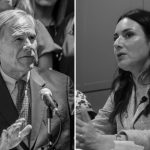
Deputy Solicitor General Daniel Ortner argued that SB 2972 does not itself regulate students but requires colleges to adopt their own speech policies, which students can challenge separately.
Ortner also argued that the students sued the wrong people because Campus deans, not UT System officials, are responsible for enforcing student policies.
But when a judge asked whether a university policy banning everything overnight While expressive activity would be unconstitutional on its face, Ortner responded that such a policy would be difficult to defend.
Adam Steinbaugh, senior attorney for the Foundation for Individual Rights and Expression, or FIRE, which represents the students, argued that the state’s distinction between law and campus policies made little difference in practice.
SB 2972 states that colleges “shall” adopt the restrictions, and the University of Texas at Dallas adopted them almost verbatim, he said.
What does Senate Bill 2972 do?
Known as the Campus Protection Act, the bill requires Texas public colleges to adopt policies prohibiting expressive activity on campus from 10 p.m. to 8 a.m. School policies should also prohibit guest speakers, amplified sound, and drums or other percussion during the last two weeks of a semester or quarter.
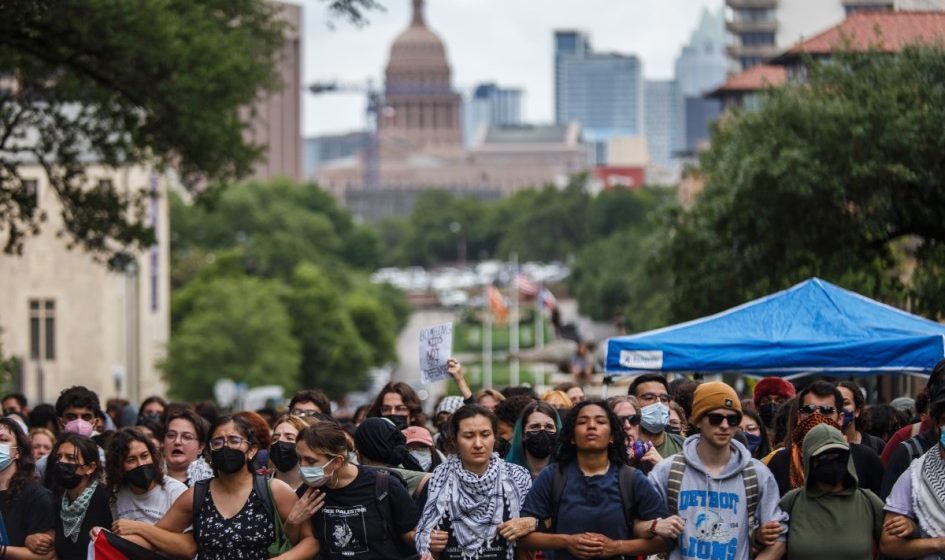
Lawmakers passed the measure in 2025 after pro-Palestinian protests swept college campuses across the country.
Protests intensified after Columbia University students set up an encampment in April 2024 and later occupied a building. Days later, hundreds of students walked out of the University of Texas at Austin to demand that the university system divest from the arms manufacturers that supply Israel. Then UT-Austin President Jay Hartzell called in state troopers, saying he didn’t want the university to become “the next Columbia.”
Then, Sen. Brandon Creighton, who would later author SB 2972, praised the response.
“The First Amendment does not protect violence or harassment,” he wrote on X on April 24. “What we have seen at Columbia and Harvard is plain and simple harassment of Jewish students. »
The law came into force on September 1, 2025.
Why was the law challenged?
Students and student groups at UT-Austin and UT-Dallas filed the lawsuit, arguing that the restrictions on speech activity overnight and during the last two weeks of a semester are so broad that they could encompass activities that have nothing to do with the type of protests that prompted the law’s passage.
They argue that the law could prevent a student journalist from publishing a story from a dorm room at 10:30 p.m.; a Christian group worshiping quietly with a guest minister; or a percussion group to perform in a space designed for music.
“The Texas Legislature cannot put the First Amendment to bed at 10 p.m.,” FIRE lawyers wrote in a brief.
An Austin-based federal judge sided with the students on October 14, 2025, and temporarily blocked UT System officials from enforcing the challenged provisions. He ruled that the students were likely to succeed in their First Amendment claims and that the restrictions were unconstitutionally broad. UT System officials appealed, leading to Tuesday’s hearing on the injunction.
What are the two parties arguing about?
Lawyers for the state argue that the law itself does not prohibit students from speaking after 10 p.m. or during exams. Instead, it directs colleges to draft campus policies that balance free speech with preventing disruptions to testing, studying and sleeping.
They point out that the law explicitly notes that “nothing in this section shall be construed to limit or impair a person’s right to free speech protected by the First Amendment.”
Lawyers for the state say UT-Austin does not ban all speech on campus at night, only in common outdoor areas and speech loud enough to be heard in a dormitory. Restrictions on amplified sound during finals also apply to sound that may be heard inside academic, administrative or residential buildings, according to the policy.
Student attorneys counter that SB 2972 gives colleges little leeway: The law says schools “shall adopt” the restrictions and requires disciplinary action.
They argue that the law cannot be saved by promises that authorities will enforce it responsibly.
“We would not uphold an unconstitutional law simply because the government promised to use it responsibly,” they wrote, citing a 2010 U.S. Supreme Court decision.
The two sides also disagree on whether the law treats speech differently based on its content.
The students’ lawyers say that’s the case because it exempts commercial speech, such as selling merchandise or soliciting donations. Lawyers for UT System officials say commercial speech is regulated separately and that students have not shown the law discriminates based on messages.
The Texas Tribune partners with Open Campus for higher education coverage.
Disclosure: The University of Texas at Austin has been a major financial supporter of the Texas Tribune. Open Campus has provided financial support over the past five years. The Texas Tribune is a nonpartisan, nonprofit news organization that is funded in part by donations from its members, foundations and corporate sponsors. Financial support plays no role in our journalism. Find a full list of them and more information about our financial and disclosure policies here.