Art collectors, rejoice. An investment whiz says the value of your Renaissance paintings will skyrocket.
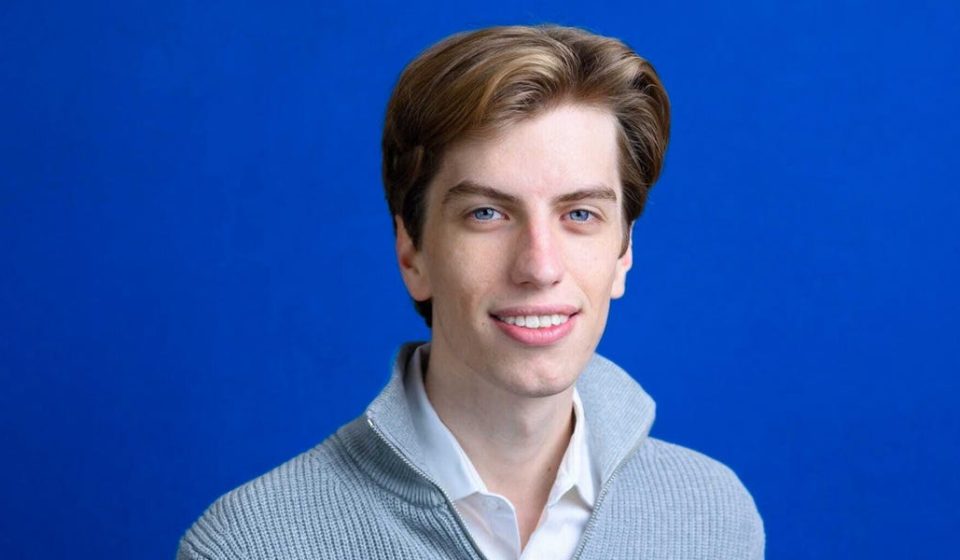
The prodigy in question is Leopold Aschenbrenner, a former OpenAI researcher whose hedge fund nearly collapsed in July during an AI selloff – just as he and his wife, Anthropic CEO Dario Amodei’s chief of staff, were getting married.
In a 167-page letter to investors that was first leaked to the Wall Street Journal and then published online by a stock analyst, Aschenbrenner laid out his vision for how AI will affect a number of major industries.
According to Aschenbrenner, for example, the gold is out and the art is back. Nvidia will decline and Anthropic will rise. And cities will lose value as robot armies refocus industry in distant locations.
Aschenbrenner argued in 2024 that artificial intelligence would transform the economy much faster than most people anticipated.
Many of his predictions came true, and investors in the fund Aschenbrenner eventually created (which he called Situational Awareness) initially enjoyed astronomical returns.
Situational Awareness, however, was overexposed to the AI’s actions. When the market briefly turned around in July, Aschenbrenner could not weather the storm.
The fund was rescued at the last minute by Ken Griffin’s Citadel, and Situational Awareness lost part of its public equity portfolio as a result.
As Aschenbrenner prepares for his return, here are five of his wildest predictions about the impact of AI on the economy.
The gold is out
Countries have hordes of stuff hidden deep within their central banks, and cautious investors have turned to them for decades in times of market uncertainty.
But for Aschenbrenner, gold is no longer a safe bet.
He said asteroid mining would become more practical by the early 2030s, a development that would flood the market with cosmic ingots, driving up its price.
Real estate will become cheap
A New York skyscraper is expensive these days, Aschenbrenner said, for two things: its location and its quality.
In the future, Aschenbrenner predicted that the existence of AI-powered robots would neutralize both of these qualities.
On the one hand, he said cities as a whole would lose their economic importance as armies of robots relocate industrial hubs to deserts, oceans and “perhaps eventually beyond this planet.”
And regarding the current structure, Aschenbrenner predicted that robotics engineering teams would reduce the cost of replacing large buildings.
The Mona Lisa is fine
Aschenbrenner called Leonardo da Vinci’s famous painting of a half-smiling Italian woman “perhaps the best ‘buy and hold’ asset we can offer.”
Even in a world where robots build skyscrapers, well-known works of art like the Mona Lisa will still command exorbitant prices due to their status as historical objects.
“Unfortunately,” writes Aschenbrenner in his letter, “the French Republic is not selling.”
Nvidia will decline
Aschenbrenner, once the world’s most valuable company, is pessimistic about the successful chipmaker’s continued profits.
He said recursive self-improvement, the process by which AI models improve, will eventually allow AI models to design and build chips at much lower cost.
“The advancement of AI models will make NVDA’s engineering expertise as obsolete as that of mathematicians, the equivalent of millions of engineers far better and faster than any human,” he wrote.
Anthropic will become the most valuable company in the world
Situational Awareness has long been a major investor in the company where Aschenbrenner’s wife works, Anthropic.
In his letter to investors, Aschenbrenner said he remains optimistic about Claude’s creator. He called the company a network of top AI talent, with a more scalable product than OpenAI.
Aschenbrenner also predicted that Anthropic would further optimize its models to consume less computing and provide more intelligence.
“As a result, we believe that, by some measures, Anthropic could be the most profitable company in the world by EOY27,” he wrote.
Gn bussni