
Updated October 21, 2026, 6:07 p.m. ET
Warnings about El Niño continue to come. The United Nations weather agency weighed in on Oct. 21, calling the powerful weather model a “monster” and a “wrecking ball.”
“It will ravage Latin America, eastern and southern Africa, Asia and the Pacific, with extreme heat, droughts and floods,” said the UN’s Tom Fletcher, warning of profound humanitarian consequences.
El Niño, a natural warming of Pacific Ocean waters that affects weather and climate patterns globally, tends to cause rising global temperatures and disrupt precipitation patterns across large regions, resulting in droughts in some areas and heavy rains in others.
It triggers disruptive weather events that often impact agriculture, infrastructure and supply chains, potentially causing trillions of dollars in damage worldwide.

This El Niño is already reaching record strength and is expected to continue to intensify in the coming months, NOAA’s Climate Prediction Center said.
“It will definitely be a historic El Nino,” Michael Mann, a climatologist and professor at the University of Pennsylvania, told USA TODAY. It will be the “largest event ever recorded,” but because reliable records only go back less than a century, it’s difficult to assess how unusual it is in a longer-term context, Mann said.

“Unprecedented strength”
As ocean temperatures continue to warm in the eastern Pacific, the World Meteorological Organization (WMO) warned on October 21 that the developing El Niño could be “unprecedented in intensity.”
“This literally exceeds the monitoring graphs we have used over the last four decades,” said Celeste Saulo, WMO secretary. The event is expected to peak later in 2026, “but its impacts will be felt long afterward,” Saulo said.
The WMO expects the El Niño event to become extremely severe, with temperatures in the central Pacific rising more than 6 degrees (3.8 Celsius) above normal between November and January, peaking around December.
Already reported extreme weather events are expected to “multiply – and cascade – as El Niño intensifies,” WMO warned.
Forecasts for the event are “very reliable now and the very strong El Niño will certainly last for the next few months,” said Emily Becker, deputy director of the Cooperative Institute for Marine and Atmospheric Studies at the University of Miami’s Rosenstiel School for Marine, Atmospheric and Earth Sciences.
El Niño is likely to strengthen further, but at this point forecasters already have as much information as they will ever have about expected impacts, and the seasonal outlook reflects that, Becker said. She added that it is “important to remember that weather is always full of surprises, and even in the event of a strong El Niño, it is essential to monitor short-term weather and sub-seasonal forecasts.”

El Niño worsens the effects of climate change
One of the important things to note about this El Niño event is that it converges with the impacts of human-caused climate change, such as sea level rise, said Fraser Shilling, director of the UC Davis Road Ecology Center at the Institute of Transportation Studies, in a recently published study for California.
Warming from El Niño “is adding to human-caused warming in such a way that we see new records being set every time we face a major El Nino event,” Mann said. He is a lead author of a study published earlier this year that found El Niño “contributed substantially to record global temperatures in 2024.”
“Science isn’t really clear on whether we’re seeing or expecting to see an increase in the magnitude of El Nino events due to human-caused warming,” Mann said, with many models predicting the opposite.
Extreme levels of heat associated with major El Niño events are temporary, he said, but events such as those discussed in the United Nations statement give us a glimpse of “what our future will look like if we continue to warm the planet.”
Impacts of El Niño in the United States
In the United States, a very strong El Niño is tipping the scales toward stormier weather in the South, said Ken Graham, director of NOAA’s National Weather Service. Graham warned the nation earlier in October to prepare for its impacts. “While higher chances of rain and snow can bring relief to drought-affected areas, too much precipitation on dry soils can fuel flash floods and destructive mudslides,” he said.
In California, Governor Gavin Newsom recently declared a state of emergency to prepare for the impacts of the event.
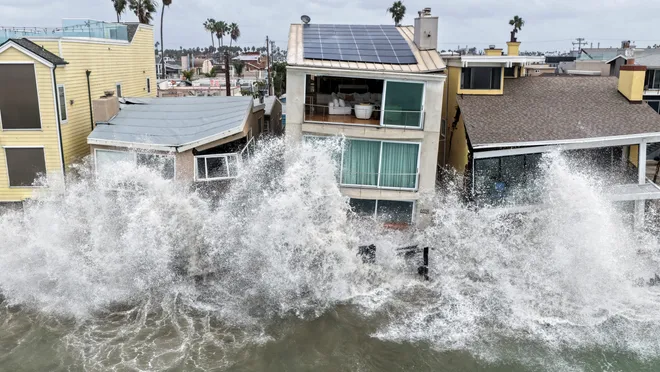
Shoreline flooding already seen along the Southern California coast with this El Niño raises concerns for the coming months, according to the report released by Shilling. California Highway 37 and other coastal roads are “extremely vulnerable to flooding and outages during the next El Niño this winter,” Shilling said. “It is important to be informed about the risks to be able to make decisions.”

WMO report details global impacts
The WMO outlook warns of the following potential impacts this winter:
- Americas: Increased precipitation in southern western South America and parts of North America and the northern Caribbean, while the risk of drought increases in parts of Central America, the southern Caribbean and the Amazon.
- East Africa: Conditions likely wetter than normal during the October-December rainy season, increasing concerns about heavy rains and flooding.
- Southern Africa: Increased risks of drier conditions could affect agricultural production, water availability and livelihoods from the usual start of the rainy season in November.
- Southeast Asia: Warmer conditions and rainfall deficits increase the risk of heat exposure and place additional pressure on agriculture and water supplies, such as the increased risks of wildfires and smoke that we are already seeing.

Contributor: Reuters
Doyle Rice and Dinah Voyles Pulver are national correspondents for USA TODAY, focusing on climate and weather. Contact them at drice@usatoday.com and dpulver@usatoday.com.
Gn headline